


/file/publisher-c1a3f893382d2b2f8a9aa22a654d9c97/2025/11/42b233118734b4cce88cdee8e363d70f.jpg)

Health Ministry to establish caucus on drugs policy reform
The Health Ministry will establish a parliamentary caucus to review existing drug policies and laws, focusing on evidence-based approaches rather than purely punitive measures.
Announcing this, Deputy Health Minister Lukanisman Awang Sauni stressed that drug issues should be viewed as humanitarian concerns requiring comprehensive engagement.
The Health Ministry will establish a parliamentary caucus to review existing drug policies and laws, focusing on evidence-based approaches rather than purely punitive measures.
Announcing this, Deputy Health Minister Lukanisman Awang Sauni stressed that drug issues should be viewed as humanitarian concerns requiring comprehensive engagement.
“We must look at the drug issue in a bipartisan manner, not representing any political body, religion, or belief, but as a humanitarian issue.
“This matter must involve multiple stakeholders and not operate in isolation,” he said during a press conference after officiating the Drug Policy Summit Malaysia 2025, held at a hotel in Kuala Lumpur today.
According to the deputy health minister, the government aims to reform drug policies to strike a better balance between enforcement, treatment, and rehabilitation.
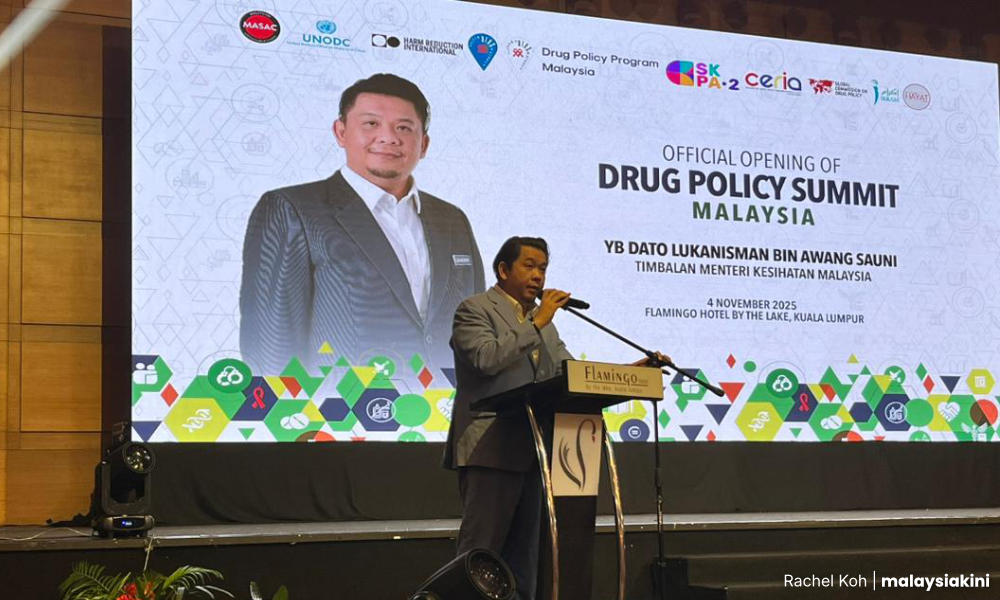
The two-day summit, organised by the Drug Policy Programme Malaysia under the patronage of the Malaysian Aids Foundation, brings together more than 170 participants, including 14 international delegates comprising public health experts, enforcement officers, academics, psychiatrists and addiction professionals, as well as representatives from NGOs and community treatment centres.
The summit will discuss a reassessment of the national drug policy, emphasising the need for a more inclusive, evidence-based approach that upholds humanitarian values and societal well-being.
‘No more punishment under colonial-era laws’
Elaborating further, Lukanisman said a special task force has been set up to review laws and policies related to minor drug offences.
He added that a decriminalisation policy will also be introduced to provide a second chance, particularly for addicts who can be treated through the health sector.
“We don’t want these offences to be seen as permanent crimes, because data shows that the highest rates of addiction are among youths aged 19 to 39.
“This is the productive generation, the generation that contributes to the economy.
“We do not want to see them punished under outdated acts - still trapped in the colonial era,” he said.
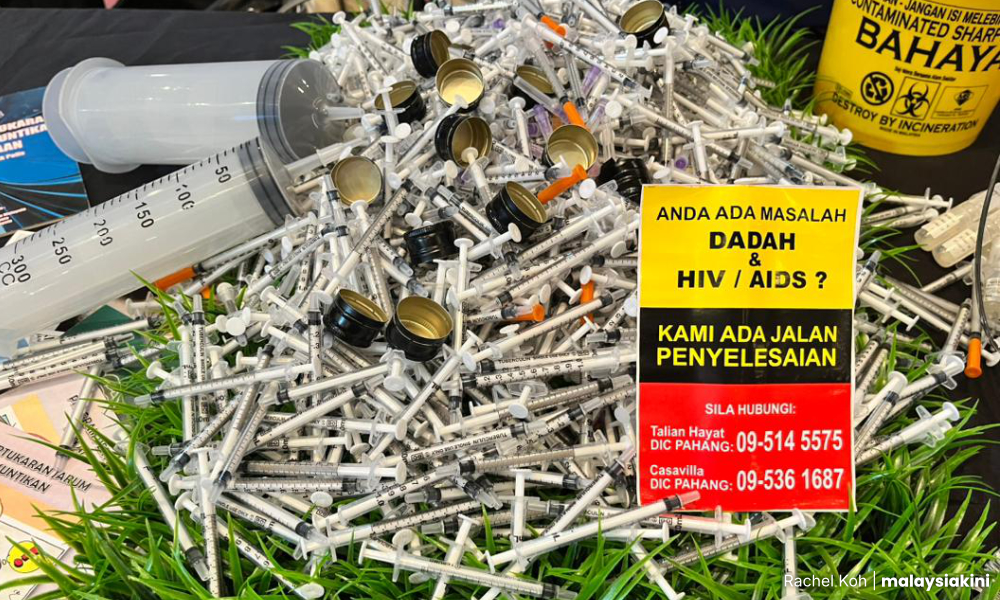
He also stated that the Decriminalisation Working Committee has convened three times since June 2024, while the technical group and the national special task force have held two meetings to discuss the way forward on drug-related issues.
The government will also focus on a more holistic treatment process through collaboration between the National Anti-Drugs Agency (AADK), other ministries, and NGOs.
According to data from AADK, Malaysia recorded 192,857 individuals involved in drug abuse and addiction in 2024, with 60.3 percent (116,245) being youths aged 19 to 39.
The most commonly abused drugs were amphetamine-type stimulants at 72.5 percent, followed by opiates (20.6 percent), and cannabis (3.7 percent).
/file/publisher-c1a3f893382d2b2f8a9aa22a654d9c97/2024/07/ed2f76ed0914a9569074a4d1254e94f2.jpg)
/file/publisher-c1a3f893382d2b2f8a9aa22a654d9c97/2019/06/212c119a6cce81f185b4c3de58104e62.jpg)
/file/publisher-c1a3f893382d2b2f8a9aa22a654d9c97/2025/09/721f496adc3d38773ba66ce2ab81403f.jpg)
/file/publisher-c1a3f893382d2b2f8a9aa22a654d9c97/2020/10/05cc3403db1fe1e99fe5e81a3416e291.jpg)
/file/publisher-c1a3f893382d2b2f8a9aa22a654d9c97/2024/10/eab3a187b5a4878aa2afc061e9cbc650.jpg)
/file/publisher-c1a3f893382d2b2f8a9aa22a654d9c97/2024/04/386882ce803fa087cf2c4e01a982c25c.jpg)


