


/file/publisher-c1a3f893382d2b2f8a9aa22a654d9c97/2025/11/f4f1bd9e48e8ce03b79984cc9399dd6d.png)

PM: M'sia-US trade deal will not restrict three 'sensitive' major sectors
PARLIAMENT | Ahead of an official visit to Africa, including an upcoming participation at the G20 Leaders’ Summit, the prime minister has reaffirmed Malaysia’s stand on three key sectors deemed “sensitive” to US interests.
The sectors include rare earth, semiconductor and currency denomination.
Anwar Ibrahim cited...
PARLIAMENT | Ahead of an official visit to Africa, including an upcoming participation at the G20 Leaders’ Summit, the prime minister has reaffirmed Malaysia’s stand on three key sectors deemed “sensitive” to US interests.
The sectors include rare earth, semiconductor and currency denomination.
Anwar Ibrahim cited ongoing projects within the three sectors and his G20 appearance, an annual global event being boycotted by US President Donald Trump, to counter critics of the Malaysia-US reciprocal trade agreement signed at the recent Asean Summit.
“Today I’m heading to Africa, from Ethiopia to South Africa. South Africa is for the G20, which America has boycotted. America will not send any of its officials, but we are going - at the invitation of the South African president.
“So please take this into consideration. While we can have differing views on whether we should be overly friendly with America or trade with America, it is not appropriate to say that we are surrendering to the US,” said Anwar during Minister Question Time this morning.
“America is very firm on the three matters I mentioned, and strongly opposes participation in Brics - and we have not skipped any Brics meeting, whether it’s me, the foreign minister, or the international trade minister,” he said in response to a supplementary question from Awang Hashim (PN-Pendang).
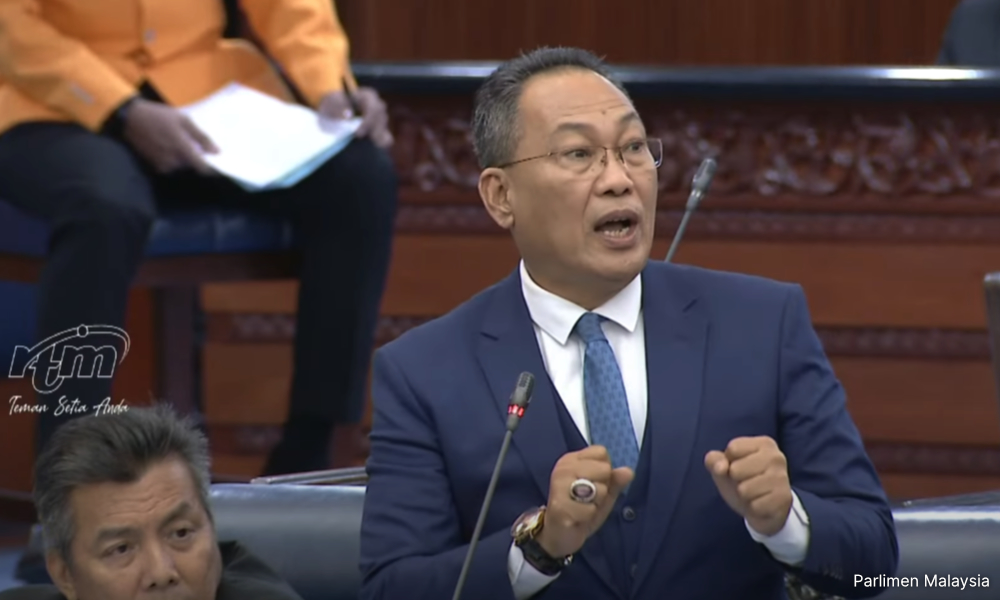
Awang had repeated concerns on alleged threats to Malaysia’s sovereignty following the trade deal signing, through clauses which focused on “consultation” with the US on matters of national interest.
Anwar, however, again reaffirmed that the term “shall consult” the US as used in the agreement has not prevented Malaysia from pursuing trade deals or investments with countries, including China.
“There is now a major plan to widen Sungai Perak to meet water needs in Bukit Merah, Krian and Penang. That project is entirely with China.
“Should America be informed? We can inform them. Does it prevent us from cooperating with China? Not at all. So that’s why, while criticism is allowed - I accept it,” he said.
“Our colleagues (the backbenchers) can criticise, Arau criticises even more strongly - but the fact is, it (the Malaysia-US deal) does not hinder anything,” he added.
Domestic monetary policies
On concerns of US influence on domestic monetary policies, Anwar reminded that annual discussions between the International Monetary Fund (IMF) and Bank Negara have been an annual affair since Malaysia's independence.
"The IMF - who determines its direction? The US… They can negotiate, give views, reprimands, criticisms, but our central bank still has the independence to set its own policies," he stressed.
As for semiconductor exports from Malaysia, Anwar noted US objections to China-bound exports by US-based companies here, but stressed the trade deal does not restrain operations of other local or foreign companies.
Report by Alyaa Alhadjri, Zarrah Morden, Shakira Buang
/file/publisher-c1a3f893382d2b2f8a9aa22a654d9c97/2025/11/a420ada9917fdc3132150bfb65923d76.jpg)
/file/publisher-c1a3f893382d2b2f8a9aa22a654d9c97/2024/11/488a7d96ee328356d361d599a93c4477.jpg)
/file/publisher-c1a3f893382d2b2f8a9aa22a654d9c97/2025/10/41a30721a151a02ecdc173d07bc3e365.jpg)
/file/publisher-c1a3f893382d2b2f8a9aa22a654d9c97/2025/11/d12e1307f8a45a530faeb58c5e4999ed.jpg)


Are you sure you want to delete this comment?
This action cannot be undone.