


/file/1350/a59048940402f69b52cd726f71422fc5.jpeg)

Middle East war will test M'sia's capability to maintain RON95 subsidy
Experts warn that continuous aggression by Israel and the US against Iran, and Tehran's retaliatory attacks, would further drive up crude oil prices at the prospect of sustained supply disruptions...
Malaysia's ability to maintain the price of subsidised RON95 petrol at RM1.99 per litre might be tested soon as the global oil market continues to react to the latest crisis in the Middle East.
Experts warn that continuous aggression by Israel and the US against Iran, and Tehran's retaliatory attacks, would further drive up crude oil prices at the prospect of sustained supply disruptions.
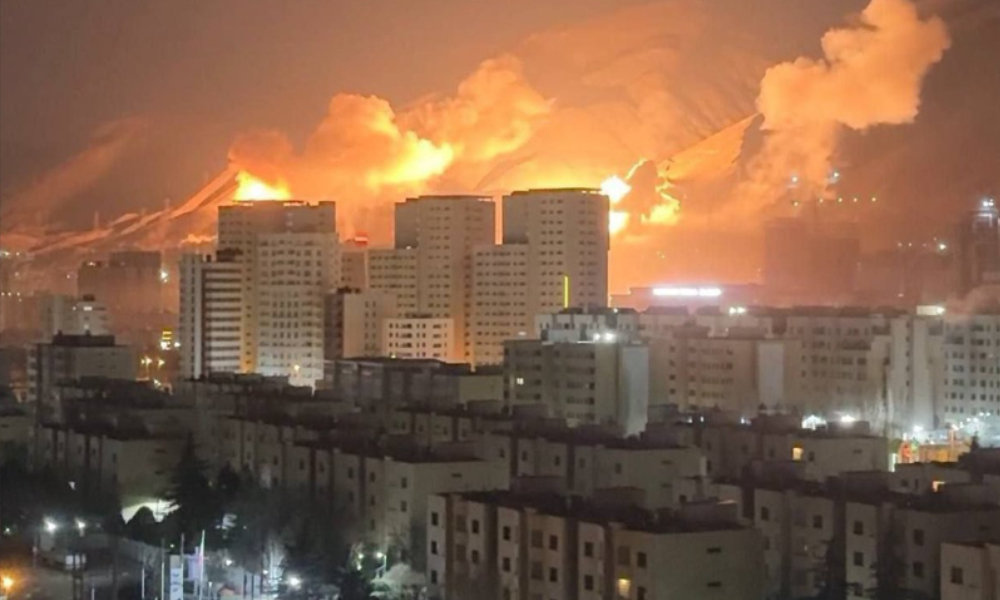
According to analyst Nazery Khalid, the oil market has already reacted "in a jittery manner" since Israel and the US began their strikes on Iran on Saturday, where crude oil price rose by six percent to US$71 (RM277) per barrel.
"It would be hard to imagine the government maintaining prices of RON95 at current levels for long and keeping the subsidy going as oil prices go up.
"Some authoritative international oil analysts like JP Morgan have forecast that oil prices could breach US$100 (RM391) per barrel in the days ahead.
"This would surely have a dire domino effect on our oil-dependent economy," he told Malaysiakini.
Nazery is an expert on maritime economics and offshore oil and gas. As of press time, the crude oil prices stand at US$77 per barrel (RM301).
After the US-Israeli attacks over the last weekend, Iran had practically shut down the Strait of Hormuz, threatening to fire on any ship that tries to cross it.
The chokepoint provides the only sea passage from the Persian Gulf to the open sea and serves as a very crucial route for global oil trade.
Since September last year, the government implemented a targeted subsidy programme called Budi95, where it floated RON95 to market price and provided a 300-litre monthly quota for citizens with a valid driver's licence to buy the fuel at RM1.99 per litre.
At today's market rate of RM2.59 per litre, the government subsidises RM0.60 for each litre bought under Budi95.
Dire effect on economy
Nazery added that the expected rise in oil prices would have dire consequences on the country's economy, which is heavily dependent on oil.
"About a third of our total primary energy supply is based on fossil fuels, which acts as a major component of the nation's energy consumption.
"Being a net importer of petroleum products, with imports accounting for a quarter of total oil consumption, the price at local pumps and the economy as a whole are sensitive to the ebb and flow of the global oil market and will be dictated heavily by the current conflict.
"Higher oil price means higher prices of other commodities, and goods and services - leading to slower consumption and business or industrial activities which would subsequently exert inflationary pressures on the economy," said the academician.
Meanwhile, economist Ahamed Kameel Mydin Meera pointed out that the expected rise in oil prices would also increase oil revenue for Petronas.
He believed the significant increase in revenue would enable the country to continue subsidising RON95, a move that he backs.
"... whether the RON95 retail price would remain put or not, depends on the government's willingness to absorb the additional subsidy needed.
"In my opinion, it is better to keep the price stable because the revenue increase will be significant.
"If the war continues longer and spreads to other countries, then many variables would change - global aggregate demand, manufacturing, employment, logistics, financial, etc.
"Things will become very complex if that happens," Kameel added.
/file/publisher-c1a3f893382d2b2f8a9aa22a654d9c97/2026/03/624549827395dd3020d2d6939b8bd1e4.jpg)
/file/publisher-c1a3f893382d2b2f8a9aa22a654d9c97/2026/03/c0190b1e8b81cc85a6553796d8950e23.jpg)
/file/publisher-c1a3f893382d2b2f8a9aa22a654d9c97/2026/02/c0a4a09a6e32e9d8393da1e56bef6f68.jpg)
/file/publisher-c1a3f893382d2b2f8a9aa22a654d9c97/2025/06/a157fc519319352148c9b93c93885279.jpg)


Report this comment
Are you sure you want to delete this comment?
This action cannot be undone.