


/file/publisher-c1a3f893382d2b2f8a9aa22a654d9c97/2023/02/b0ccbd52dcd6cfd768b98ecb98f5a9a4.jpg)

KINIGUIDE | Lynas production expansion: What you need to know
The project at the plant in Gebeng, Pahang, will result in a total of 2.55 million metric tonnes of WLP by March 2031, the report stated.
This marks an increase of over 140,000 metric tonnes. Without the expansion, the total WLP waste generated would have reached 2.41 million metric tonnes.
This KiniGuide explores what this means and why it is important.
What is the EIA process about?
The Environment Department put the 770-page EIA report on public display...
KINIGUIDE | There will be a 16 percent increase in radioactive water leach purification (WLP) residue with the expansion of the Lynas Advanced Materials Plant’s (Lamp) production, according to an environmental impact assessment (EIA) report.
The project at the plant in Gebeng, Pahang, will result in a total of 2.55 million metric tonnes of WLP by March 2031, the report stated.
This marks an increase of over 140,000 metric tonnes. Without the expansion, the total WLP waste generated would have reached 2.41 million metric tonnes.
This KiniGuide explores what this means and why it is important.
What is the EIA process about?
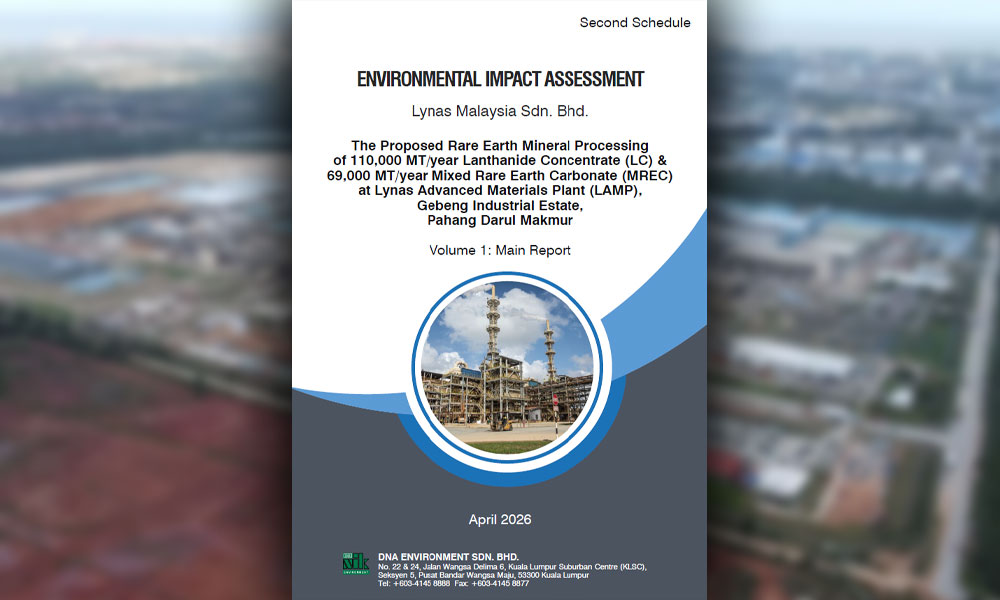
The Environment Department put the 770-page EIA report on public display from April 10 to May 9 to solicit public feedback on the project before deciding whether to greenlight Lynas’ expansion plans.
While the public display period is now over, the department is still accepting feedback on the project until May 24.
In the meantime, the report is no longer publicly accessible, nor was it readily downloadable during the public display period.
What do we need to know?
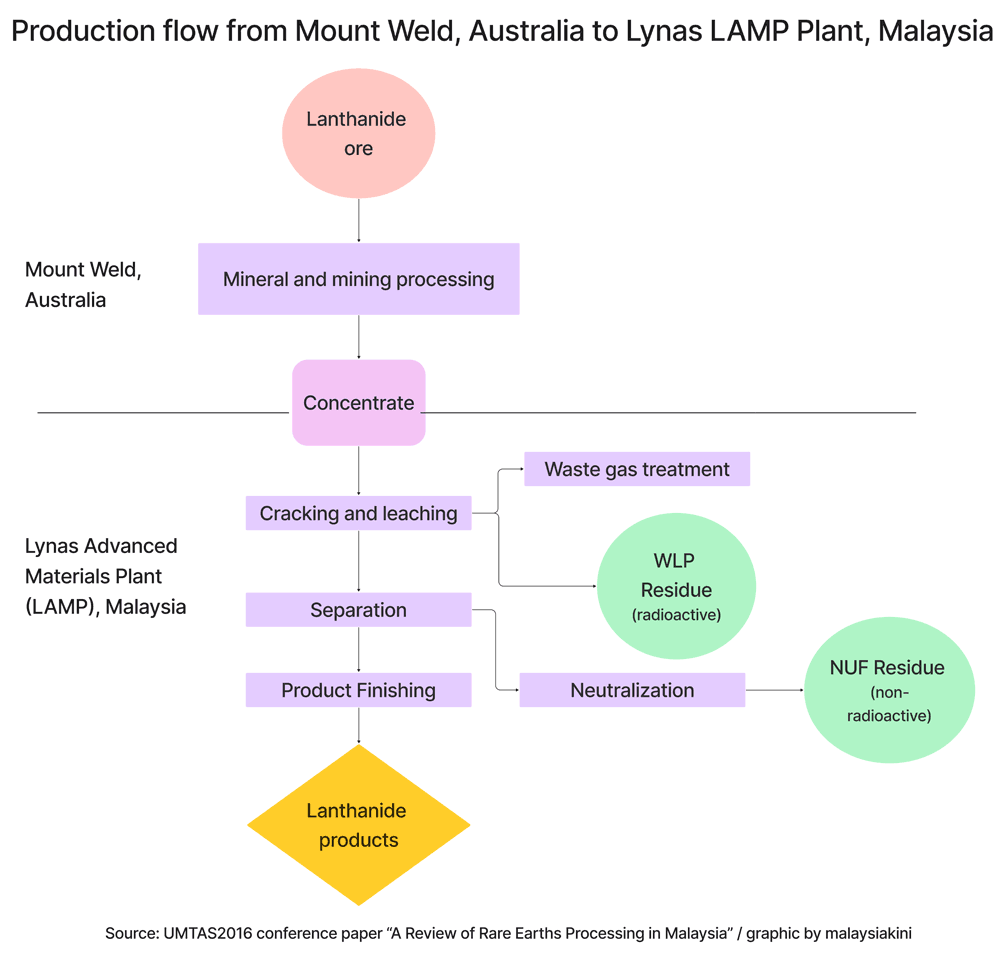
WLP residue is generated from cracking and leaching - the first of three processes essential to the extraction of rare earth elements (REE).
The “cracking” process refers to refining rare earth elements from lanthanide concentration with high-temperature sulphuric acid under high atmospheric pressure. Then, water is leached to produce a lanthanide sulphate solution.
Based on standards of Malaysia’s Atomic Energy Licensing Board (AELB) and the International Atomic Energy Agency (IAEA) based in Austria, WLP residue is considered radioactive waste because it contains more than one becquerel per gram (Bq/g) of Thorium-232 (Th-232).
However, Science, Technology, and Innovation Minister Chang Lih Kang said in February that WLP contains only six Bq/g, which classifies it as “very low level waste” as per the IAEA’s safety guide.
Where will extra waste be stored?
The primary contingency plan is to use the on-site residue storage facilities (RSFs) to store newly generated WLP once the existing permanent disposal facility (PDF) is filled.
The RSFs - which were intended to store neutralisation underflow (NUF) residue - will provide additional storage of about 0.5 million metric tonnes, or just enough to be repurposed for WLP storage.
The NUF residue will, in turn, be transferred and stored in a proposed new off-site long-term storage facility located about 800m west of the Lamp.
The facility will be located on a plot of land owned by the Pahang State Development Corporation, about the size of nearly 95 football fields, or 252.95 acres (102.37ha)
As for the existing PDF, it was reported to be about 84 percent filled as of February this year, the report stated.
What is the thorium extraction project?
The EIA report highlighted Lynas Malaysia Sdn Bhd’s expectation to transition to thorium extraction in March 2031 to eliminate the generation of WLP residue.
The process will generate two “valuable” by-products: non-radioactive iron phosphate for fertilisers and a thorium-rich product.
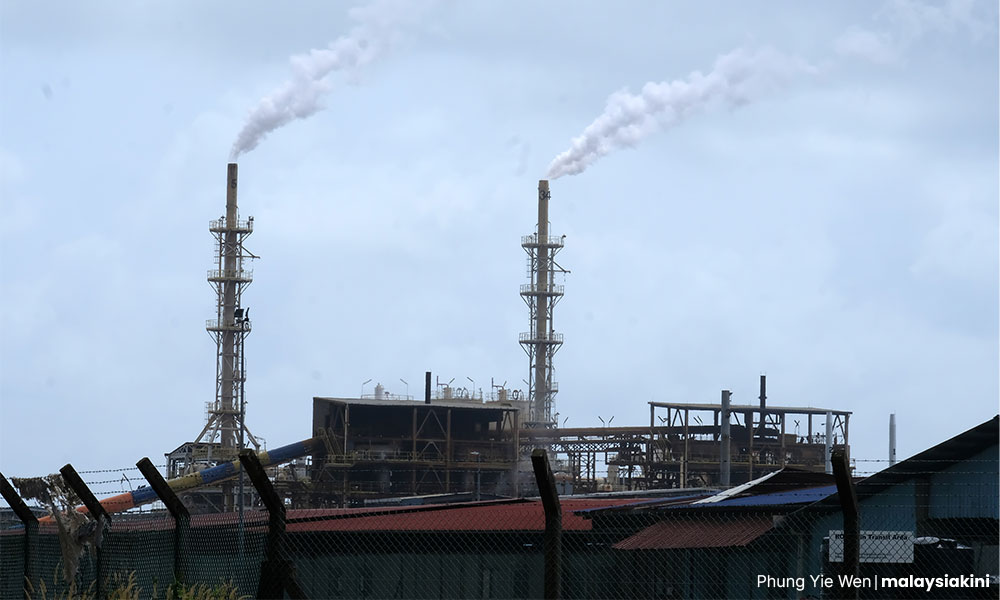
However, the report stressed that thorium extraction will only use newly generated WLP residue.
The project entered its industrialisation phase in March this year, while physical construction and modifications to the plant for thorium extraction will be carried out within the next five years.
In March 2031, the project will reach full industrialisation, with the sale of extracted thorium expected in the following year.
Named after Thor, the Nordic god of thunder, thorium is a naturally occurring metal. Due to its high melting point, the non-radioactive form of thorium is used to make items that require heat resistance, such as materials for the aerospace industry, ceramics, and lab equipment.
However, there is increasing interest in harnessing the radioactive form of thorium - Th-232 - as nuclear fuel for power generation, as it is more abundant in nature than uranium.
This was corroborated by the EIA report, which stated that the extracted thorium would have “potential applications in nuclear energy and other advanced technologies”.
Previously, Chang said the thorium could be sold as fuel to countries that use nuclear energy, but did not elaborate on which countries this would be and what plants would use the thorium. At this stage, the technology remains experimental.
However, some countries investing heavily in thorium reactors - India and China - are looking to leverage their own vast thorium reserves as a means to boost their energy security.
What is the Lynas production expansion about?
Not only will the production of lanthanide concentrate be increased from 95,000 to 110,000 metric tonnes per year, but the plant will also introduce the processing of 69,000 metric tonnes of mixed rare earth carbonate annually.
On April 9, Lynas Rare Earths Ltd announced plans to expand its production in Malaysia with the extraction of three “heavy rare earth oxides” highly sought by industries, after China restricted its REE exports last year.
Dysprosium, terbium, and samarium are used in high-performance magnets for advanced industries such as electronics and aerospace, according to an AFP report quoting Lynas officials.
REE refers to a group of 17 metals and their oxides used in various high-tech applications. They are of strategic importance in the ongoing trade war between the US and China.
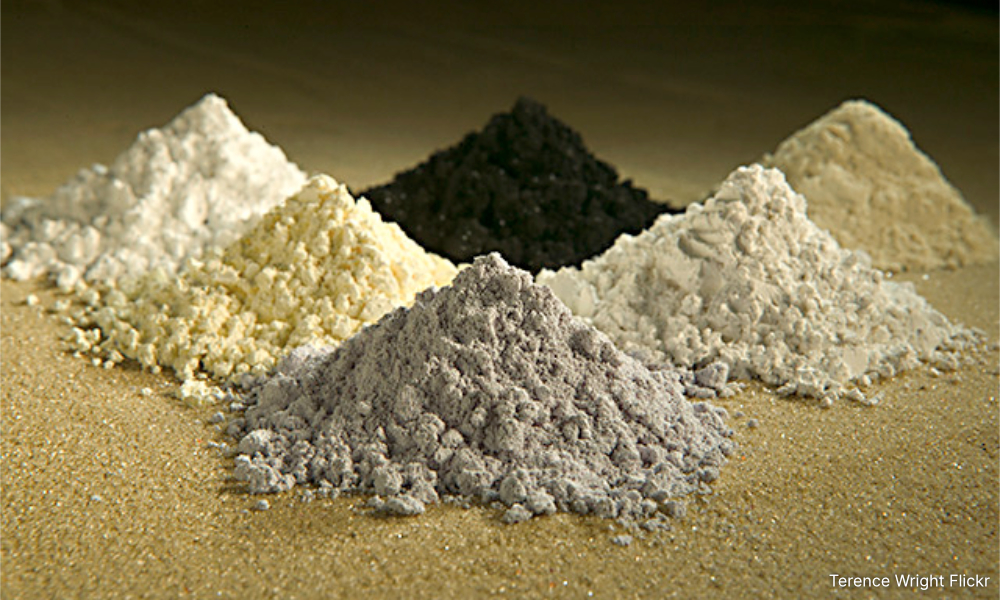
Lynas’ Pahang facility is not only capable of producing light REE but is also the only significant producer of heavy REE outside China, and therefore the only producer not subject to China’s export controls on critical minerals.
Lynas mines rare earth minerals from Mt Weld in Western Australia, processes them, and then ships them for refining and separation into rare earth oxides at Lamp.
Why does Lamp’s production need to be expanded?
According to the statement of need in the EIA report, the expansion was justified by global demands for REE.
The report cited an REE demand boom due to emerging technologies and advancements in sectors such as medical, automotive, electronics, and healthcare.
Malaysia is well-positioned to emerge as a key player, it stated.
“However, the country faces significant challenges in achieving this ambition, particularly in identifying the right players with the technological advancement required to sustainably and efficiently develop the REE’s upstream, midstream, and downstream sectors,” it commented.
Assessments also showed that the plant’s existing pollution control systems can handle the increased load without any major upgrades.
Further, the expansion was deemed consistent with several key national and regional planning frameworks, including the National Mineral Policy and the Fourth National Physical Plan.
What other conditions are part of Lynas’ licence renewal?
Starting March 3, Lynas’ operating licence in Malaysia has been extended for 10 years.
According to the Science, Technology, and Innovation Ministry, the renewal comes with conditions, which include:
A review every five years,
no more PDFs will be built for the disposal of WLP residue exceeding limits under the Atomic Energy Licensing Act 1984,
Lynas must cease production of all new WLP radioactive residue by March 2, 2031,
any waste produced in the interim must be neutralised to reduce its radioactivity level, and
it needs to contribute one percent of its annual gross sales revenue to R&D.
Chang also said Lynas was given five years until 2031 to stop WLP waste production after laboratory tests demonstrating the feasibility of “neutralising” its radioactivity through thorium extraction.
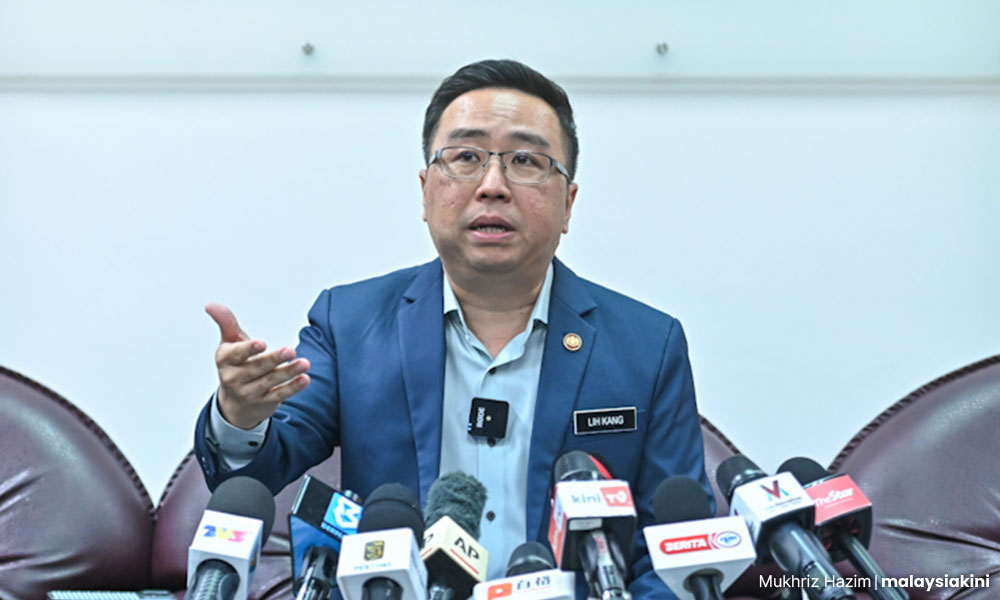
“However, scaling any R&D breakthrough from lab to industrial level typically takes seven to 10 years. We are giving Lynas five years to retrofit its equipment and scale up operations.
“This is a firm but accelerated timeline, and they have committed to meeting it,” he said.
Separately, Chang told Parliament last year that Lynas is required to comply with the Atomic Energy Department’s radioactive waste management plan covering legal compliance, monitoring, and risk mitigation.
What criticisms have been directed at Lynas, govt?
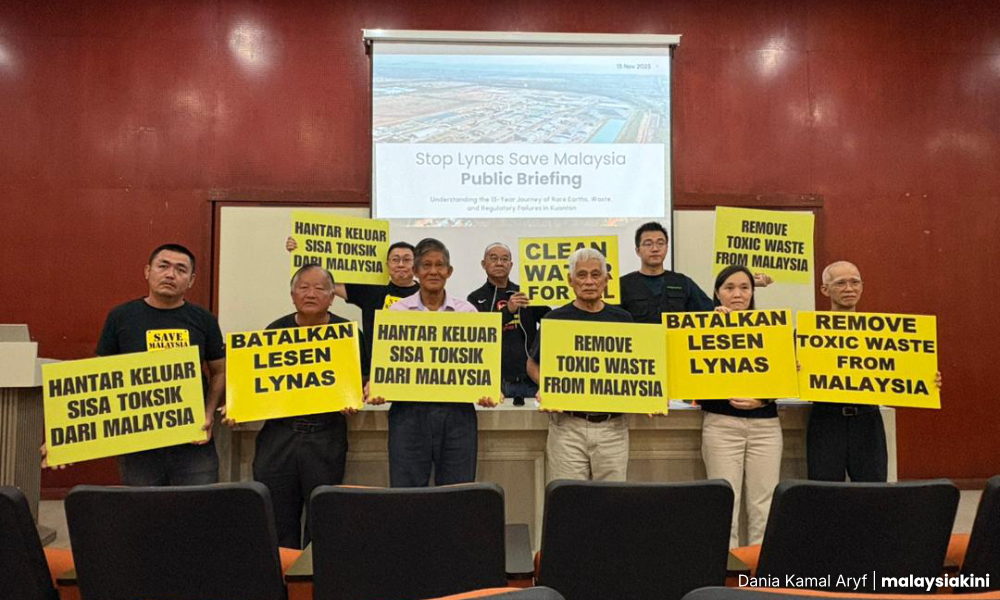
Environmental groups and activists have expressed concern regarding the storage of radioactive waste in Malaysia, fearing long-term risks to health and the environment, particularly when it comes to radiological contamination.
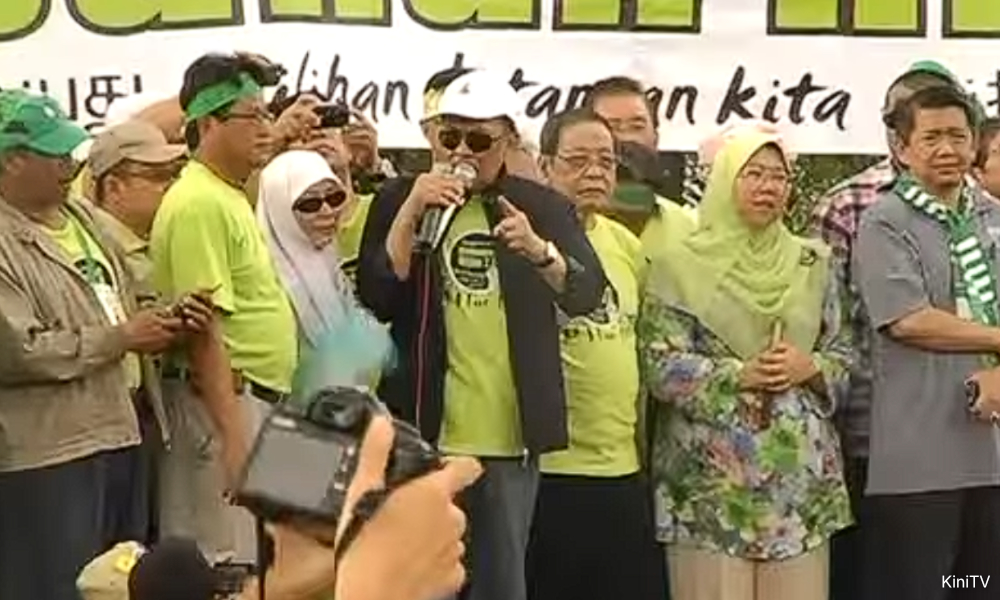
At the same time, Sahabat Alam Malaysia (SAM) floated concerns that conditions attached to the licence renewal appear to be a “smokescreen” to maintain the status quo while allowing the rare earth processing company to continue producing and accumulating radioactive waste.
SAM secretary S Mageswari also said discussions around R&D are speculative in nature, accusing the government of backtracking on earlier requirements for Lynas to return its waste to Australia.
Similarly, Greenpeace Malaysia and Save Malaysia Stop Lynas asserted in a joint statement that thorium extraction is “economically and technically impractical” as WLP residue contains only 1,758 parts per million thorium on average.
Further, the Malaysian Consultative Council for Islamic Organisation (Mapim) questioned the “double standard” of exporting hazardous industrial processes to developing countries.
Other concerns centre around Malaysia’s complicity in military activities linked to violations of international humanitarian law, with pro-Palestine advocates pointing to Lynas’ deal with the US government to supply critical minerals for its defence industry.
What Lynas said about the criticisms?
A Lynas spokesperson told Malaysiakini that Lamp has been the subject of four independent scientific reviews, which found that operations are low risk as well as compliant with regulations and international best practices.
The spokesperson said the plant operates under and adheres to strict safety and environmental management requirements, which are enforced by the appropriate regulators, adding that regular monitoring is undertaken by Lynas, independent experts, and regulators to ensure compliance.
The plant also complies with strict safety and environmental requirements under the enforcement of regulators, while Lynas itself undertakes regular monitoring.
“Lynas has never been involved in an incident resulting in harm to public health or the environment, reflecting the strength of our processes and policies,” said the spokesperson.
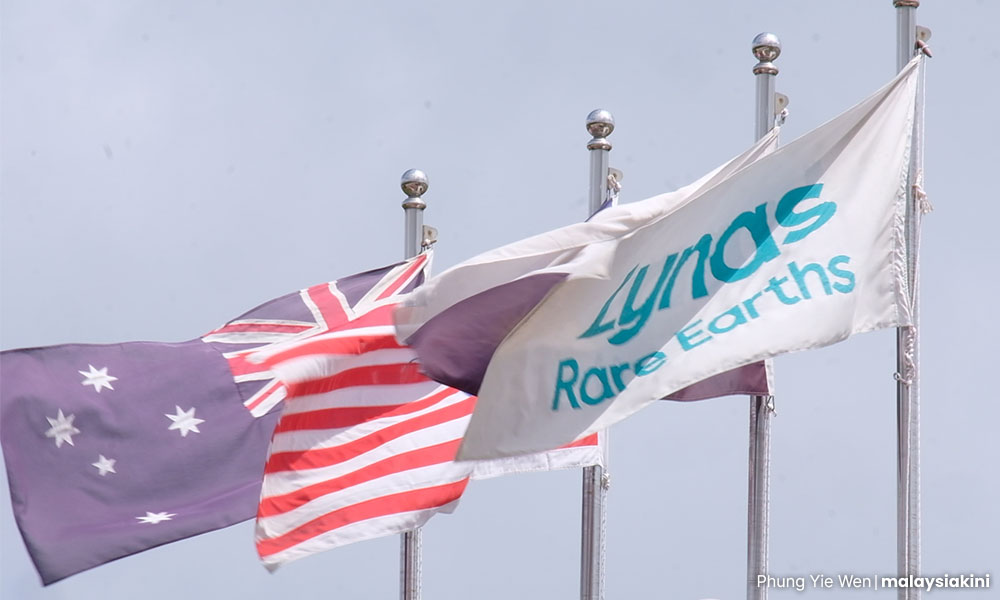
In February last year, Lynas highlighted its handling of waste and by-product management, stressing its transparency in appointing Gading Senggara Sdn Bhd as the contractor for its PDF for WLP residue.
The company further pointed to statements from the Pahang Environment Department, which it said found that water leaving the Gebeng Industrial Estate is of higher quality than water entering the area.
On its website, Lynas describes its plant in Malaysia as a “state-of-the-art, environmentally responsible rare earths processing facility”.
“Environmental monitoring carried out by Lynas and regulatory authorities (air, water, ambient air) since Lynas Malaysia commenced operation in 2012 has shown there is no environmental impact of Lynas Malaysia’s operation on the public and the environment,” it said.
Public scepticism
The criticism of Lynas’ operations in Malaysia is emblematic of public scepticism over the processes behind the production of green technology.
While the intensifying conflict in West Asia has underscored the importance of a transition away from fossil fuels, such concerns continue to mount among activists and communities alike.
Although public accountability and transparency measures do much to ease these anxieties, they raise an important question: What is the environmental cost of going green?
/file/publisher-c1a3f893382d2b2f8a9aa22a654d9c97/2026/04/cf72b89e52b3fb1658043c097567fc1f.jpg)
/file/publisher-c1a3f893382d2b2f8a9aa22a654d9c97/2023/02/b0ccbd52dcd6cfd768b98ecb98f5a9a4.jpg)
/file/publisher-c1a3f893382d2b2f8a9aa22a654d9c97/2026/04/573a986cbc936e18552254ddb9001f55.jpg)


Are you sure you want to delete this comment?
This action cannot be undone.