


/file/publisher-c1a3f893382d2b2f8a9aa22a654d9c97/2022/05/113eeb3cec712a4e8a517c6d21670e34.jpg)

Lynas operating licence extended for 10 years
Lynas Malaysia Sdn Bhd’s operating licence in the country has been extended for 10 years, effective March 3.
In a statement today, Lynas’ Australian parent company said it had received a letter from the Atomic Energy Department informing it of the decision.
Lynas Australia CEO...
UPDATED 3.32PM | Added Science, Technology, and Innovation Ministry’s clarification that Lynas’ licence renewal comes with stricter conditions.
Lynas Malaysia Sdn Bhd’s operating licence in the country has been extended for 10 years, effective March 3.
In a statement today, Lynas’ Australian parent company said it had received a letter from the Atomic Energy Department informing it of the decision.
Lynas Australia CEO Amanda Lacaze thanked Putrajaya for the lengthy extension, saying it provides greater investment certainty for the company, its supply chain partners, and customers.
Separately, the Science, Technology, and Innovation Ministry said the renewal comes with stricter terms and a review every five years.
It said no more permanent disposal facilities (PDF) will be built for the disposal of water leach purification (WLP) residue that exceeds limits under the Atomic Energy Licensing Act 1984.
After the first five years, the production of radioactive residue must be halted completely.
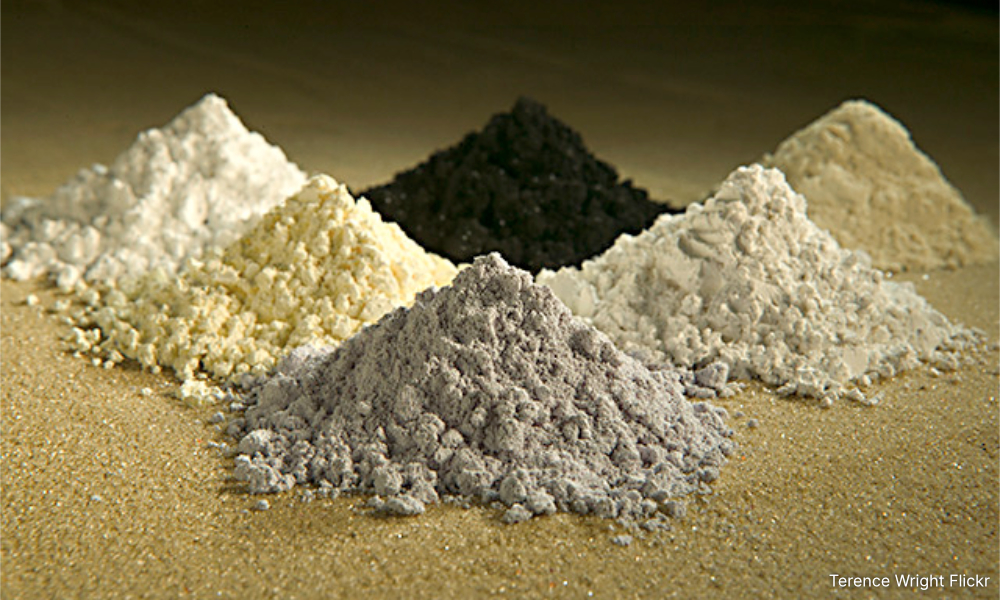
Any residue produced in the interim needs to be “neutralised” through thorium extraction or other approved treatment methods to reduce the radioactivity below 1 Bacquerel/g – the control limit under the thorium radioactivity, above which a substance would be considered a radioactive material regulated by the Atomic Energy Department.
“This means there would be no further accumulation of radioactive residue after the five years. This is in line with the government’s commitment to ensure there is no more accumulation of radioactive residue in our country,” the ministry said.
It added that the licensing conditions also require Lynas to apply its successful research and development work at an industrial and commercial scale, collaborate with local research institutions and industry, and contribute one percent of its annual gross sales revenue to research and development.
“The ministry, through the Atomic Energy Department, will implement stringent monitoring and continuous enforcement to ensure all licensing conditions are fully complied with, including radiation safety, environmental protection, and waste management,” it added.
Meanwhile, when asked about the existing residue, Science, Technology, and Innovation Minister Chang Lih Kang told a press conference at Parliament that the PDF is now 75 percent complete, and should be finished by the end of the year.
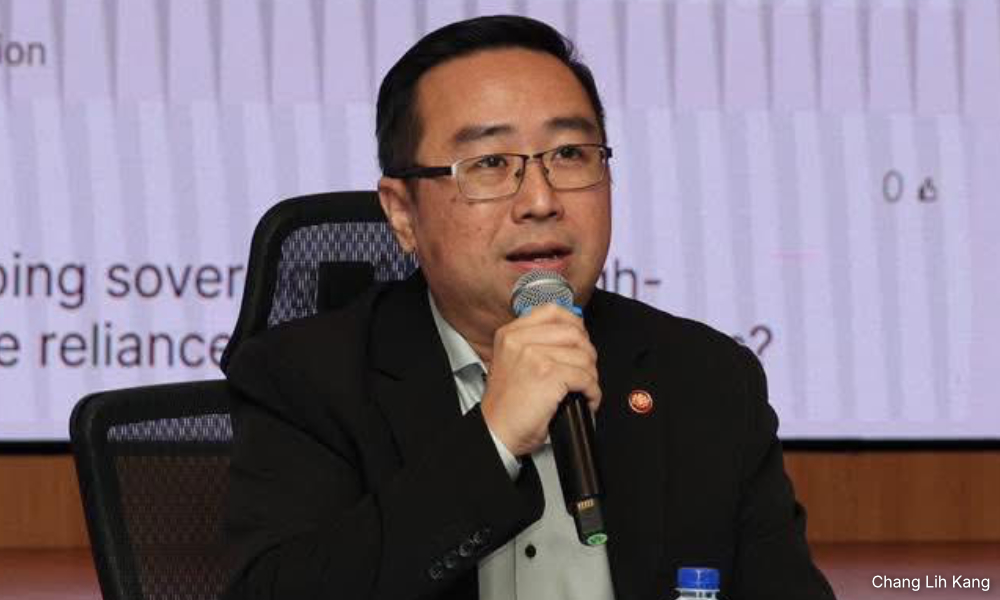
He also denied that the extension would amount to a betrayal of Pakatan Harapan’s past promises about Lynas’ operations in Malaysia.
“It is not a betrayal. What we opposed is the continuous accumulation of radioactive waste in Malaysia,” he said.
Reiterating the conditions being imposed on Lynas, he added, “This is a commitment by the government to the rakyat and foreign investors - if they follow the licensing conditions, they will be allowed to operate”.
The minister also explained in a Facebook post that Lynas was given five years until 2031 to stop WLP waste production after laboratory tests demonstrating the feasibility of “neutralising” its radioactivity through thorium extraction.
“However, scaling any research and development breakthrough from lab to industrial level typically takes seven to 10 years. We are giving Lynas five years to retrofit its equipment and scale up operations.
“This is a firm but accelerated timeline, and they have committed to meeting it,” he said.
Harapan’s history with Lynas
Harapan has a rocky relationship with Lynas, having previously championed calls for its closure over fears of environmental and health risks.
In 2023, there was back-and-forth between the company and the government, with Putrajaya insisting that Lynas relocate the cracking and leaching facility at Gebeng, Kuantan, which produces radioactive WLP residue, out of Malaysia before July 2023.
However, this condition was ultimately lifted after Lynas proposed to the government to extract thorium from both the lanthanide raw feedstock and the WLP residue.
It was proposed that the extracted thorium could be sold as nuclear fuel, but this was criticised by experts as “speculative” as thorium-fuelled nuclear reactors are still at an experimental stage.
The company was still required to build a permanent disposal facility (PDF) to store radioactive waste and contribute to a research and development fund, as per the original terms the government gave when extending Lynas’ licence to 2026.
‘Thorium-free’ extraction, real-time monitoring
Last month, Chang revealed that the government will eventually require Lynas to apply its thorium extraction technology to import “thorium-free” rare earth ore.
“Moving forward, we will require (Lynas) to complete the thorium extraction process in Australia before shipping it over,” he said.
Chang also said that his ministry operates Environmental Radiation Monitoring Systems inside the Lynas rare earth plant and at its PDF.
All related data will be uploaded to an upcoming public platform that provides real-time environmental data.
/file/publisher-c1a3f893382d2b2f8a9aa22a654d9c97/2023/02/d47429f28aef8acfd50d7c37df731cac.jpg)
/file/publisher-c1a3f893382d2b2f8a9aa22a654d9c97/2025/11/4722140a2ac7676fab005838427ea562.jpg)
/file/publisher-c1a3f893382d2b2f8a9aa22a654d9c97/2024/10/24740d1f3f5335107d476cca4e71c62d.jpg)
/file/publisher-c1a3f893382d2b2f8a9aa22a654d9c97/2024/10/05d2d96bb078e3be8db36be8303fd06b.jpg)
/file/publisher-c1a3f893382d2b2f8a9aa22a654d9c97/2023/02/b0ccbd52dcd6cfd768b98ecb98f5a9a4.jpg)


Report this comment
Are you sure you want to delete this comment?
This action cannot be undone.