


/file/publisher-c1a3f893382d2b2f8a9aa22a654d9c97/2026/05/6d198c4c004a7b6576c4bc09d97ee578.jpg)

'T20' fuel subsidy cut: High income does not mean rich, DAP MPs tell govt
A DAP MP reminded the government that income bracket labels do not necessarily reflect a person’s actual financial circumstances.
In a statement today, Kepong lawmaker Lim Lip Eng stressed that any plan to remove the full fuel subsidy for those in the T20 high-income group must be supported by a sound and effective mechanism.
He said the government must not make...
A DAP MP reminded the government that income bracket labels do not necessarily reflect a person’s actual financial circumstances.
In a statement today, Kepong lawmaker Lim Lip Eng stressed that any plan to remove the full fuel subsidy for those in the T20 high-income group must be supported by a sound and effective mechanism.
He said the government must not make the mistake of looking only at income while ignoring real-life expenses.
Lim also urged the government to first clearly explain the mechanism, including who will be affected, how income will be assessed, and whether household burden, living costs, dependants, loans, and daily travel needs will be taken into account.
“The government cannot throw around labels like T20, T15, T10, or T5 and expect people not to panic.
“High income does not mean rich. A household above the national T20 line may still struggle badly in Kuala Lumpur, Selangor, or the Klang Valley after paying for housing, car loans, children’s education, insurance, elderly parents, and daily living costs.
“These are not millionaires. These are ordinary middle-class families working hard just to keep their heads above water,” Lim added.
Prime Minister Anwar Ibrahim recently said that the government agreed in principle to withdraw fuel subsidies from high-income earners, but is still fine-tuning the mechanism.
According to the premier, the government is looking into eligibility to ensure the move will not burden the upper-middle-income group.
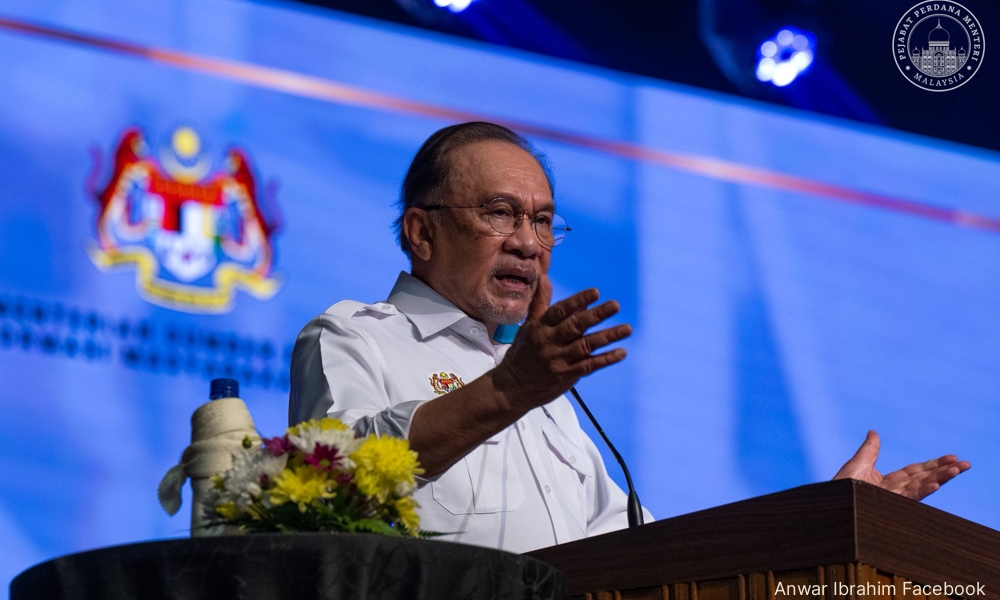
However, Putrajaya had acknowledged that it is facing challenges in implementing targeted RON95 fuel subsidies, particularly in ensuring the aid reaches only those who genuinely need it.
Economy Minister Akmal Nasrullah Nasir said the government is still grappling with how to determine the eligibility threshold for the Budi95 subsidy scheme, particularly regarding the M40 middle-income group.
He said the matter was raised in a recent National Economic Action Council meeting, where Anwar reiterated Putrajaya’s commitment to implementing targeted subsidies.
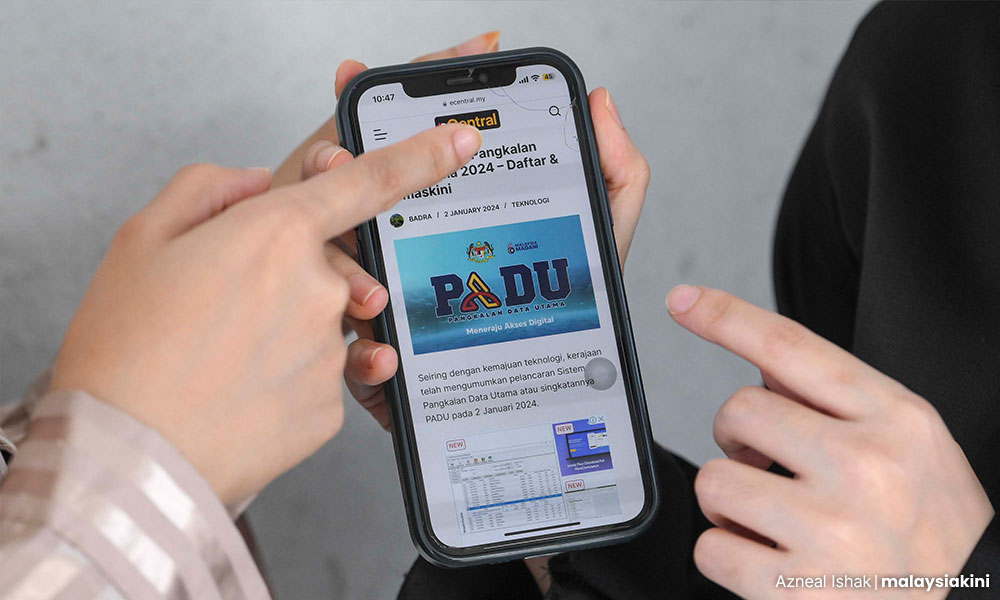
The Johor Bahru MP said the government has yet to decide whether the Central Database Hub (Padu) will be used to classify individuals under the T20 high-income category.
What's Padu for then?
In his statement, Lim also took the government to task on its formation of Padu, reminding the administration that the system cost RM85.27 million to develop and implement and therefore “must not be treated as a decoration”.
“If the final decision is still based on broad labels without proper assessment, then what is the point of Padu?
“The government must answer basic questions. Is the cut based on personal income or household income? Will it consider where a family lives? Will it consider the number of children, elderly parents, housing loans, car loans, and daily travel distance?
“If these questions cannot be answered clearly, then the government is not ready to implement the policy," Lim added.
He also reminded the government that Malaysians are not against reform, but against unfair, unclear, and careless reform.
Lim also warned that the “biggest victims” of this planned policy may be middle-class families instead, who sit just above the line.
“They earn slightly more on paper, but their burden is still heavy. The government sees figures, but not pressure,” he added.
Lim said middle-income earners are already carrying heavy taxes, high living costs, housing pressure, and education expenses, and must not become convenient targets whenever the government wants to save money.
“Do not turn the middle-class into the government’s ATM.
“People who work hard, earn more, and move up in life should be encouraged, not punished. If Malaysians begin to believe that the harder they work, the more they lose, the country will pay a heavy price.
“Stop creating fear with unclear standards,” Lim said.
Fuel prices affect all
DAP’s Puchong MP Yeo Bee Yin also echoed Lim’s sentiments and pointed out that fuel price hikes are never contained within a single demographic as the ripple effect is felt throughout the supply chain.
“Many within the T15/T20 categories are small business owners, service providers, and employers. When their transportation and operational overheads rise, these costs are inevitably passed down to the consumer.
“This creates a secondary wave of inflation for essential goods and services, ultimately hurting other lower-income groups.
“Furthermore, the T15/T20 group is a primary engine for domestic private consumption. By sharply increasing their fuel bills, the government risks stifling demand in the retail, hospitality, and service sectors.
“The combination of higher inflation and shrinking domestic consumption will severely worsen an economic outlook already burdened by the ongoing West Asia conflict,” she added.
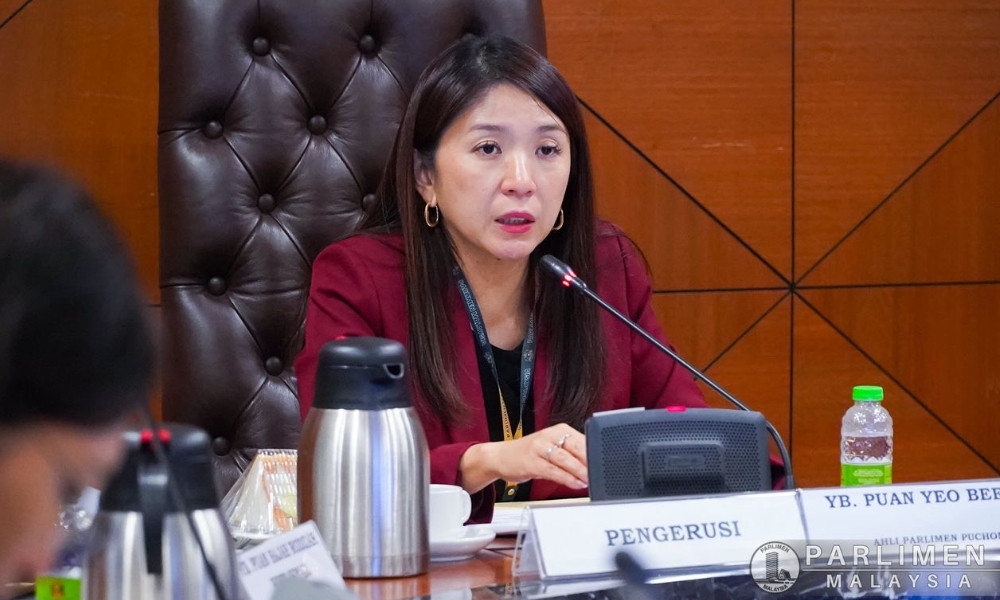
Yeo warned that if the subsidy policy is not managed properly, Malaysia risks sending its already fragile economy, with the ongoing West Asia conflict, into a full-blown economic downturn.
She said the government must look beyond immediate fiscal savings and account for the inevitable costs that will follow in the form of a supplementary budget.
“Putrajaya must answer this: is there truly a net positive impact on the economy when the government uses one hand to remove subsidies - effectively hiking inflation and contracting demand - and the other to cushion the inflation and to stimulate demand through a supplementary budget?
“Even if the government believes subsidies can be removed in the midst of a crisis, the question remains: How? What is the mechanism to fairly determine eligibility for RON95 subsidies beyond a simple, arbitrary income ceiling?" Yeo further asked.
She explained that a household earning RM13,000 (roughly the T15 threshold) in a rural area may live comfortably, while a dual-income professional couple in the Klang Valley earning that same amount, while supporting three children and elderly parents, will become the “struggling urban middle-class”.
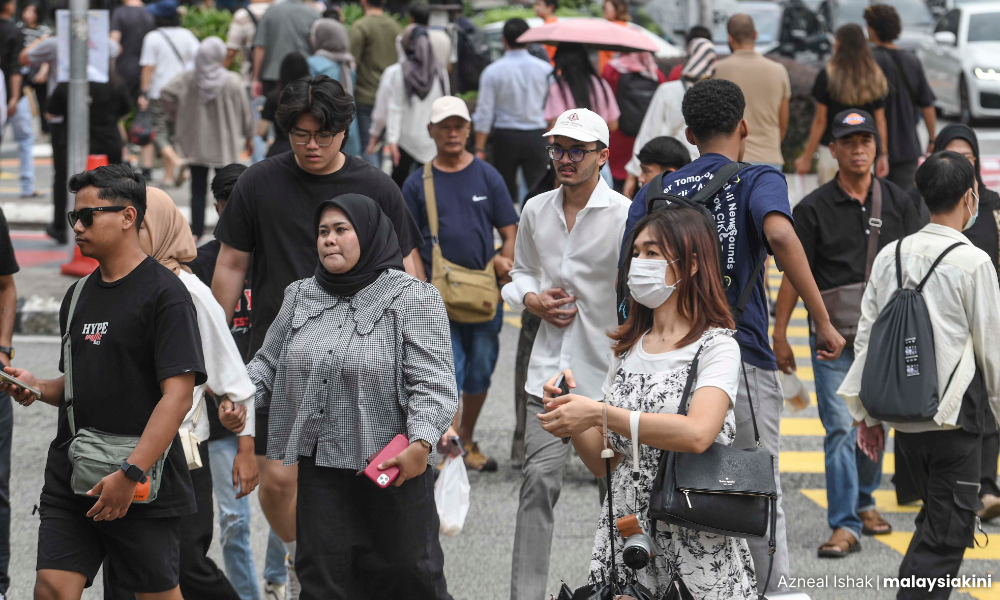
“For additional context, if the T15 threshold is implemented, nearly one-third of households in Selangor and Kuala Lumpur, as well as 40 percent of households in Putrajaya, will be affected.
“This policy risks further squeezing the urban middle class, many of whom are already struggling to keep up with the high cost of living.
“All in all, we should be strengthening our economy in these volatile times, not creating a self-inflicted cost-of-living crisis,” Yeo added.
/file/publisher-c1a3f893382d2b2f8a9aa22a654d9c97/2025/08/e64799d812fb4b190ace661dde2c49a5.jpg)
/file/publisher-c1a3f893382d2b2f8a9aa22a654d9c97/2026/04/2888175969b45a6675f090d91c98e33d.jpg)
/file/publisher-c1a3f893382d2b2f8a9aa22a654d9c97/2025/08/3d5ab6207a4a989f2fa36a2733aec7e7.jpg)
/file/publisher-c1a3f893382d2b2f8a9aa22a654d9c97/2026/04/63f555ed57de0fee9276c4b2cdb38b22.jpg)
/file/publisher-c1a3f893382d2b2f8a9aa22a654d9c97/2026/05/38f566e926f6871da2893dc31a8978aa.jpg)


Report this comment
Are you sure you want to delete this comment?
This action cannot be undone.