


/file/publisher-c1a3f893382d2b2f8a9aa22a654d9c97/2026/07/1e4b654b0f9bc73fda25edce8cb713ad.jpg)

Harapan candidates sound alarm over alleged 'phantom voters'
In a Facebook post, PKR’s Senggarang hopeful Onn Abu Bakar said he was informed that a voter in the constituency had lodged a police report after being unable to vote.
Onn said the voter was turned away after Election Commission (EC) officials at SMK Senggarang...
JOHOR POLLS | Two Pakatan Harapan candidates have raised concerns about alleged “phantom voters” following complaints from members of the public who were unable to cast their ballots.
In a Facebook post, PKR’s Senggarang hopeful Onn Abu Bakar said he was informed that a voter in the constituency had lodged a police report after being unable to vote.
Onn said the voter was turned away after Election Commission (EC) officials at SMK Senggarang informed them that a vote had already been cast using their MyKad details.
This was despite the voter insisting they had not yet voted, pointing to the absence of indelible ink on their finger.
DAP’s Wong Bor Yang also described a similar case involving another voter, with the Senai candidate calling it a “unique case” involving a “highly rare voter complaint”.
Wong said the voter arrived at the SK Taman Malaysia polling station this morning to exercise her right to vote, but the EC’s identity verification system showed that she had already done so.
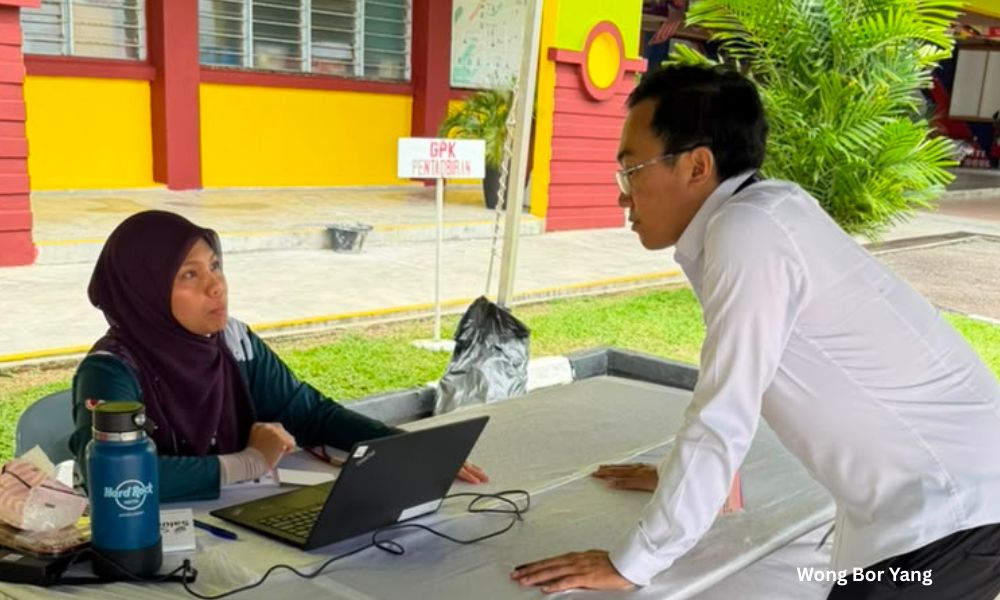
“Since her name on the electoral roll had been crossed out, she did not meet the basic requirement to receive a ballot paper.
“The presiding officer issued Form 10A (refusal to issue ballot paper), leaving her unable to fulfil her civic duty,” he said in a statement.
Wong, the Senai incumbent assemblyperson, added that his representative immediately reported the matter to the EC and the National Registration Department (NRD).
NRD officials have since verified the authenticity of the voter’s MyKad, while she was advised to lodge a police report.
Pitfalls of visual inspection
Wong said an investigation was needed to determine whether the voter’s MyKad had been misused or if there was a loophole in the electoral roll system.
“According to preliminary investigations, it is possible that someone of the same gender, race, and similar age had previously cast a vote using a similar document, or by impersonating this voter,” he added.
He also noted that polling station officials primarily rely on visual inspection to verify identities rather than chip-reading devices like those used by banks.
This, he said, makes it difficult to immediately detect an “impersonator” who may closely resemble the genuine voter.
/file/publisher-c1a3f893382d2b2f8a9aa22a654d9c97/2022/04/954a1943b23ce9da1656ddb63599e934.jpg)
/file/publisher-c1a3f893382d2b2f8a9aa22a654d9c97/2026/07/9c97239a7131e8cfe836e762bbe76336.jpg)
/file/publisher-c1a3f893382d2b2f8a9aa22a654d9c97/2022/10/5755a646553ee1533305a30928e3b65a.jpg)
/file/publisher-c1a3f893382d2b2f8a9aa22a654d9c97/2026/02/a0cba1c477d5118d0197bd2a4c0e5ca6.jpg)


Report this comment
Are you sure you want to delete this comment?
This action cannot be undone.