




Women march on in election campaign
Polling day in Malaysia will share the limelight with International Women’s Day, but it’s mere coincidence that more women candidates are being fielded than ever before.
Polling day in Malaysia will share the limelight with International Women’s Day, but it’s mere coincidence that more women candidates are being fielded than ever before.
Tomorrow, the names of 128 women will appear on ballots across the country, but gender-equality advocates stress that this alone will not dismantle the systemic barriers to women’s participation in politics.
Despite the government’s commitment in the Ninth Malaysia Plan (2006-2010) to ensure that women occupy 30 percent of decision-making positions in the public sector, they only form 8.2 percent of the election candidates.
Since 2004, the percentage of women candidates has risen only 2.2 percent. Not only is this improvement nominal, activists contend that the ways in which women are fielded and targeted in elections leave much to be desired.
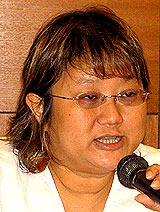 “The political parties (are) waking up to reality,” said Honey Tan, executive director of the All Women’s Action Society, a non-governmental feminist organisation.
“Women make up 50 percent of the population (and by extension, represent) 50 percent of the voters.”
Egged on by women’s groups, she said political parties are fielding more female candidates that mirror and can respond to the various constituencies. But, she cautioned, “there are many obstacles”.
Tan said crucial questions need to be asked, such as: Has gender-awareness training been conducted for men and women so that they are more accepting of women leaders? Were women fielded with sufficient funds allocated to their campaign?
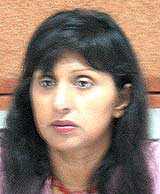 Women’s Aid Organisation president Meera Samanther raised similar concerns, also saying that parties tend to place women candidates in contests against other women or in “not so winnable positions”.
The MCA, for example, has nominated Carol Chew against Seputeh incumbent parliamentarian Teresa Kok of DAP. In Lembah Pantai, PKR Nurul Izzah Anwar is battling BN’s popular incumbent Shahrizat Abdul Jalil.
Alluding to Chew, who launched a controversial poster campaign , Meera said: “(It’s) a sad state of affairs, (to) use sex appeal or use sexist caricatures. Women are targeted as sex objects; it demeans them.
“You don't see male (candidates) targeted that way, especially during (the) elections. The female as sex symbol (card) is played."
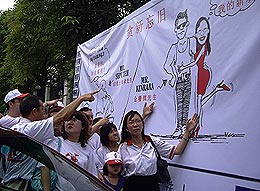 Chew had quickly dropped that hot potato, caving in to pressure especially after DAP women candidates in the Klang Valley flashed it as an election issue in their ceramah and on blog-sites.
While activists bemoan the state of thespolitical landscape for women, the candidates see themselves in a fair and welcoming playing field. Here’s what some of them had to say.
R Kumutha, 29, a PAS Supporter’s Club member running on a PKR ticket in the Tiram state seat, Johor
Over the past few years, more women have been in the office or in politics, (they’re not only) doing housework. So opposition or BN, I don’t mind, actually. Women are showing that they can (contest for public office).
Teo Nie Ching, 27, DAP newcomer in the Serdang parliamentary seat, Selangor
It’s not easy being an MP, so women are reluctant to run. The commitment is greater than that demanded in office jobs. Usually, children will be the first priority. I’m single, that’s why I don’t have this worry.
Ng Siew Lai, 47, Penang Gerakan Wanita chief defending the Bukit Tengah state seat, Penang
(The number of women contesting) is a change for Malaysia and we are asking that 30 percent of representatives be women. This is a good start. Women are more committed than men. Young, old, there’s no difference. Women of all ages are committed.
Gan Pei Nei, 27, PKR candidate in the Rawang state seat, Selangor
Women will vote for women. People like to see different young (people) coming out.
Nosimah Hashim, 57, Umno Wanita leader in the Cempaka state seat, Kelantan
The workload and responsibility are the same as for all candidates, so (being a woman) has no special advantage or disadvantage. We need to work as hard as possible. And we need to take care of our constituents.
Jenice Lee, 28, DAP contender for the Teratai state seat, Selangor
he media - especially the Chinese papers - always portray women candidates as very masculine, with terms like cili padi and ‘jalepeno’ but we don’t always raise our voices... As a woman, it’s easier to get to the crowd and the community because women - and even men - don’t think you are threatening or that you want to cause harm.”
Ong Chong Swen, 58, MCA candidate in the Subang Jaya state seat, Selangor
From a woman’s point of view, I’m glad to have new, vibrant ladies interested. At one point in time, politics was dirty. I’m glad that there’s new blood in the (elections).


