




Agricultural practices worsen food crisis
The government's focus on conventional methods of agriculture will lead to an environmental and social crisis and will not address the food crisis, advocacy group Third World Network (TWN) said today.
The government's focus on conventional methods of agriculture will lead to an environmental and social crisis and will not address the food crisis, advocacy group Third World Network (TWN) said today.
TWN research officer Lim Li Ching stressed that while climate change is posing a serious challenges to the country's long-term food supply and security, conventional agriculture is also adding to climate change woes because of its energy-intensive activities, among others.
Rather than addressing these dangers, however, the food crisis looms large because of the government's failure to acknowledge the destructiveness of 'mainstream' agriculture and give serious consideration to 'sustainable agriculture', she said.
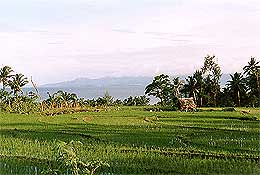 "There is a clear need for a systematic redirection of investment, funding and research focus on sustainable agriculture in Malaysia," Lim told a conference on Sustainable Agriculture organised in Kuala Lumpur by the Consumers' Association of Penang (CAP).
Outlining the adverse environmental impact of the current agriculture methods currently favoured by the government, Lim said these include the emission of greenhouse gases by the manufacture of agro-chemicals such as fertilisers and pesticides.
Using them has also impacted adversely on the health of farm workers as well as consumers, the environment, and caused pesticide resistence in pests while harming insects that are beneficial to farmers, she added.
Current agricultural methods have also led to the loss of agricultural bio-diversity as farmers and producers have specialised in input-intensive 'mono-cultures'.
Such methods have also led to the buildup of salinity and water logging, the decline in soil nutrient status and the increased incidence of soil toxicities, and placed a strain on the country's limited water resources depleting water tables.
The social impact of conventional agriculture, according to Lim, include the loss of traditional methods such as 'seed saving' and seed exchange. Extra burden is placed on farmers as they are forced to purchase new seeds for every planting season, said Lim.
Apart from the loss of social and cultural values, farming communities have also lost their cohesiveness, she added.
Decline in rice productivity
In light of the current worldwide food crisis, Lim pointed out that mainstream agriculture has also seen a decline in rice productivity, a phenomenon which has been observed in Malaysia.
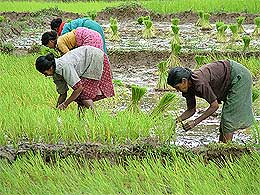 "Farmers are starting to put in more and more inputs in order to get the same (output of rice)," said Lim.
"In Malaysia, for example, if you look at the data and statistics from the FAO (Food and Agriculture Organisation), there was a yield increase in rice after the 1960s, when you saw a sharp jump.
"But that started flattening out and (output) was getting increasingly smaller. The last four to five years, actually, it has kind of flattened out to about 3,000 to 3,600 kg per hectare. We should start asking ourselves if this is happening and why it is happening," she added.
The universal trend, said Lim, indicates that 'intensive rice monoculture systems' have led over the long term to declining effectiveness of inputs such as fertilisers and pesticides.
An alternative option for the government to consider supporting is such forms of sustainable agriculture which maximise the best use of nature such as biological pesticides, minimise "non-renewable inputs", and rely on the knowledge and skills of farmers, said Lim.
Sustainable agriculture - which include such methods as agro-ecology, organic farming and ecological agriculture - has been defined as farming that is ecologically sound, economically viable, socially just, culturally appropriate and humane and based on a 'holistic scientific approach'.
Within Malaysia there are many examples of successful sustainable farming that can convince the sceptics among policy-makers if only they invest in the time to study these ventures, she added.
The two-day conference - which aims at discussing and resolving on ways to move sustainable agriculture 'from the grassroots level into mainstream policies' - will see the testimonies of farmers from - Kedah to Sarawak - pertaining to their success in sustainable farming.
Experts from India are also slated to speak on their experiences in the subcontinent.


Report this comment
Are you sure you want to delete this comment?
This action cannot be undone.