


/file/attachments/orphans/najibrazak1_740838.png)

Rayer: Prison Dept must spell out Najib’s house arrest dos and don’ts
The Prison Department must publicly disclose the terms and conditions of former prime minister Najib Abdul Razak’s house arrest, said Jelutong MP RSN Rayer.
Speaking to Malaysiakini, Rayer said the arrangement had attracted considerable public attention and people deserved to know what Najib would be allowed to do.
“The prison authorities must set out very clearly the terms and conditions of the house arrest.
“We’re talking about...
The Prison Department must publicly disclose the terms and conditions of former prime minister Najib Abdul Razak’s house arrest, said Jelutong MP RSN Rayer.
Speaking to Malaysiakini, Rayer said the arrangement had attracted considerable public attention and people deserved to know what Najib would be allowed to do.
“The prison authorities must set out very clearly the terms and conditions of the house arrest.
“We’re talking about him being given the privilege of house arrest. The people need to know - what are the dos and don’ts?” he said.
Rayer (below) was responding to a reported statement by Najib’s lawyer Shafee Abdullah that the former Pekan MP had received the conditions governing his house arrest but was told not to disclose them publicly.
The DAP lawmaker said this should not prevent the Prison Department from explaining the arrangement.
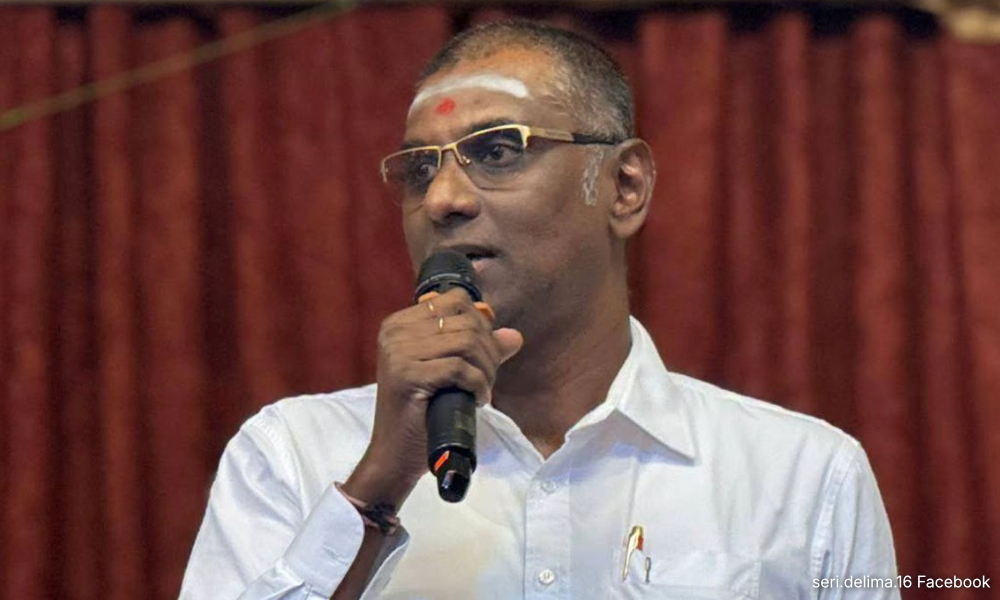
“Of course Najib can keep quiet, but the prison authorities must explain.“
He said the lack of clarity had led to speculation over what Najib could do while under house arrest.
“Some say no phone calls, some say he might not be with his family, some say he will be in a confined space. So the prison authorities must come out and explain,” he said.
What is the legal basis?
Separately, Amanah vice-president Mahfuz Omar questioned the legal basis for implementing Najib’s house arrest, noting that proposed legislation governing such arrangements had yet to come into force.
In a statement today, the former Pokok Sena MP said the Home Ministry and Prison Department must identify the law or provision allowing a convicted prisoner to serve a custodial sentence under house arrest.
/file/publisher-c1a3f893382d2b2f8a9aa22a654d9c97/2025/09/cc2b611698503e1dd1eb12c419494d1b.jpg "Mahfuz Omar AMANAH circa August 2025 090925")
Mahfuz (above) said he respected the Yang di-Pertuan Agong’s power of pardon but maintained that questions remained over the legal basis and procedures for implementing it.
“The people have a right to information and to know the true legal position,” he said.
He likened proceeding without first explaining the legal basis to “building a house without a plan” and looking for one only after questions were raised.
“The rule of law is not merely a principle that we proclaim, but one that must be observed,” he added.
Mahfuz ended his statement by identifying himself as a former Kajang Prison inmate.
He was jailed for a month in 2000, when he was the PAS Youth chief and Pokok Sena MP, over an unauthorised protest against an Israeli cricket team that had visited Malaysia three years earlier. Two other PAS activists were jailed with him.
The trio chose to serve their jail terms rather than pay a RM1,500 fine imposed by the Kuala Lumpur Sessions Court. Mahfuz was released from Kajang Prison in the early hours of Dec 8, 2000.
/file/publisher-c1a3f893382d2b2f8a9aa22a654d9c97/2024/06/676a223dc745544ad6e2acdc9537c95b.jpg)
/file/publisher-c1a3f893382d2b2f8a9aa22a654d9c97/2024/12/278f75b0affd0721195ae98e77a64679.jpg)
/file/publisher-c1a3f893382d2b2f8a9aa22a654d9c97/2024/12/21b19b34863fbfe33994ba7c690155e4.jpg)
/file/attachments/orphans/najib23121_480507.png)


It's simple. It looks and sounds like house arrest, but the house arrest SOP is similar to Najib moving freely inside the house. He is now almost free until August 2028. It has become another of Madani's jokes, who has thrown the rule of law under the bus.
Rayer: Pls update on all your earlier issues you have raised. Have any of them been resolved. Looks like Parliament is becoming talk shop only.
Report this comment
Are you sure you want to delete this comment?
This action cannot be undone.