



COMMENT | Banning beer sponsorship is easy, funding sports is hard
COMMENT | Long before rugby sevens became a global phenomenon, members of the Combined Old Boys Rugby Association (Cobra) introduced a 10-a-side tournament in 1967. This was before the Hong Kong Sevens began as a modest club competition and grew into one of the world's premier rugby events, attracting teams from across the globe.
Over the years, rugby has enjoyed support from breweries and liquor companies. But it is hardly alone. The first Malaysian Open golf tournament, inaugurated as the Malayan Open in 1962, has traditionally awarded its champion the prestigious Seagram Trophy, donated by Canadian beverage company Seagram.
From rugby and golf to football and cricket, alcohol-related sponsorship has long been part of the international sporting landscape.
This extends to the biggest sporting stage of all. In 2019, then prime minister Dr Mahathir Mohamad revealed that five Asean countries had informally discussed a joint bid to host the 2034 Fifa World Cup, following proposals championed by figures such as then sports minister Khairy Jamaluddin and Sultan Abdullah Sultan Ahmad Shah.
Had such a bid materialised, would Malaysia have withdrawn its support because...
COMMENT | Long before rugby sevens became a global phenomenon, members of the Combined Old Boys Rugby Association (Cobra) introduced a 10-a-side tournament in 1967. This was before the Hong Kong Sevens began as a modest club competition and grew into one of the world's premier rugby events, attracting teams from across the globe.
Over the years, rugby has enjoyed support from breweries and liquor companies. But it is hardly alone. The first Malaysian Open golf tournament, inaugurated as the Malayan Open in 1962, has traditionally awarded its champion the prestigious Seagram Trophy, donated by Canadian beverage company Seagram.
From rugby and golf to football and cricket, alcohol-related sponsorship has long been part of the international sporting landscape.
This extends to the biggest sporting stage of all. In 2019, then prime minister Dr Mahathir Mohamad revealed that five Asean countries had informally discussed a joint bid to host the 2034 Fifa World Cup, following proposals championed by figures such as then sports minister Khairy Jamaluddin and Sultan Abdullah Sultan Ahmad Shah.
Had such a bid materialised, would Malaysia have withdrawn its support because Fifa's long-time commercial partner, AB InBev, markets Budweiser as the tournament's official beer?
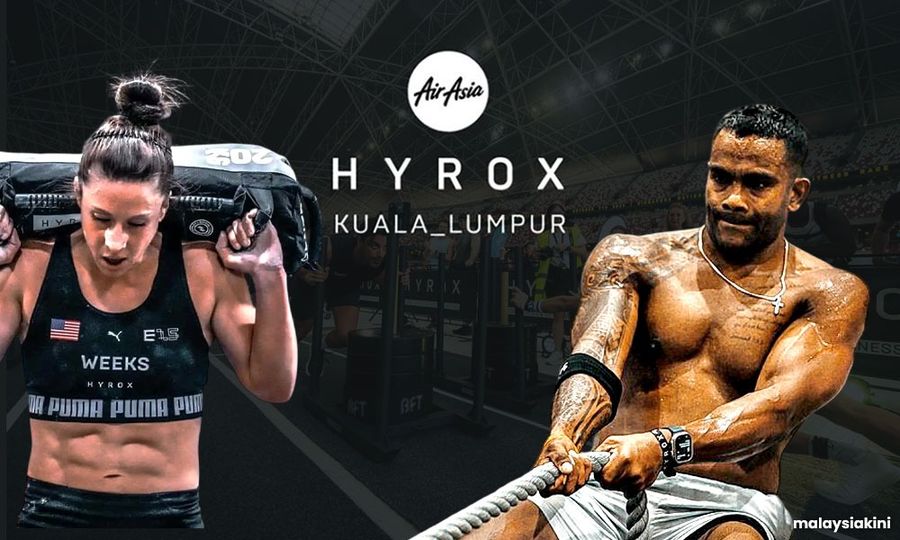
The question is worth asking following Wednesday's announcement that the Youth and Sports Ministry will approve the next Hyrox Kuala Lumpur event only if it drops its beer sponsorship.
Who falls under sponsorship rules?
Hyrox, an international fitness race combining endurance running with strength-based challenges, has now become the centre of a debate that raises broader questions about the ministry's policy on alcohol sponsorship in sport and its implications for sporting bodies, clubs, and athletes nationwide.
In a statement, Youth and Sports Minister Dr Taufiq Johari said the application to organise the event, scheduled for Dec 10 to 13 at the Malaysia International Trade and Exhibition Centre in Kuala Lumpur, was still pending before the ministry.
The ministry's guidelines prohibit tobacco, vape, and alcohol companies from organising or sponsoring sporting activities.
But how broadly do these guidelines apply? Can clubs and organisations not registered with the Sports Commissioner operate outside them?
The question is pertinent because liquor companies organise golf tournaments at selected clubs, some registered under the Companies Act, with winners going on to represent the country in international competitions. Would these tournaments also fall foul of the guidelines? And would talented golfers consequently lose opportunities to compete at the international level?
What about organisations registered with the Registrar of Societies, including NGOs and charities that raise funds through sporting events, particularly golf tournaments? Or old boys' associations and university alumni groups that organise their own competitions?
Some of these tournaments are annual fixtures, while others are held on an ad hoc basis. Must they now stop accepting alcohol sponsorship, or risk breaching the guidelines?
There is also the question of smaller clubs that depend on brewery support to sustain their activities, including inter-club competitions. Would they still be allowed to accept financial contributions, provided no beer brand is displayed or promoted?
The cost of losing sponsorship
And why this particular focus on beer?
Over the years, I have attended prize-giving ceremonies at tournaments backed by breweries, where Muslims were present in halls displaying prominent beer-brand decals. It would be simplistic to assume that the mere presence of such branding, or the designation of a sponsor as the event's official beer, would prompt people to drink.
Refusing to approve an event because it has an official beer sponsor is the easy part. The harder task is finding someone willing to write the cheque once that sponsorship disappears.
For decades, breweries and liquor companies have helped finance sporting events that governments and associations were either unwilling or unable to fund. Their support has enabled athletes to compete, clubs to stay afloat, and tournaments to thrive. One may disagree with their products, but it is difficult to deny the contribution they have made to sport.
If Putrajaya believes such sponsorship has no place in Malaysian sport, it must spell out a coherent, transparent policy and apply it consistently. What it cannot do is single out one event while seemingly turning a blind eye to others.
Until these questions are answered, the Hyrox decision will look less like a principled stand than an exercise in inconsistency.
The real issue is not beer. It is whether sporting policy will be guided by clear rules, common sense, and consistent enforcement, or by symbolism that solves little while making life harder for athletes, clubs, and sporting organisations.
R NADESWARAN is a veteran journalist who tries to live up to the ethos of civil rights leader John Lewis: “When you see something that is not right, not fair, not just, you have to speak up. You have to say something; you have to do something”. Comments: citizen.nades22@gmail.com.
The views expressed here are those of the author/contributor and do not necessarily represent the views of Malaysiakini.


Report this comment
Are you sure you want to delete this comment?
This action cannot be undone.