



Amid discrimination, Indian youths find refuge in arts and sports
Malaysian Indian youths are finding safety and a sense of community through dance schools and sports teams, amid a familiar pattern of racial discrimination from the classroom to the workplace.
According to a report by Iman Research released today, these spaces are especially crucial for socioeconomically disadvantaged youths, who might otherwise be exposed to gang recruitment in their search for safety and belonging.
“These spaces give Indian youths belonging, a positive role model and agency, especially having experienced...
Malaysian Indian youths are finding safety and a sense of community through dance schools and sports teams, amid a familiar pattern of racial discrimination from the classroom to the workplace.
According to a report by Iman Research released today, these spaces are especially crucial for socioeconomically disadvantaged youths, who might otherwise be exposed to gang recruitment in their search for safety and belonging.
“These spaces give Indian youths belonging, a positive role model and agency, especially having experienced systemic failure and a lack of support,” the report stated.
In one dance school interviewed for the study, the owner and instructor acts as a parental figure, particularly for students who lack such support at home. Students turn to the instructor when facing hardships or seeking advice about their career paths.
The school also subsidises students who cannot afford to fully fund their dance education.
“We learn everything here, including cooking from Madam… We also learn music, and recently we started a drum class. People in our community are often surprised to see girls playing the Thappu drums because it is usually seen as something for boys.
“We want to prove that girls can also carry that weight, as I do not like when people compare what boys and girls have to do,” one interviewee said.
The report, titled “Kami Orang Sini Juga: Indian Youths and Democratic Belonging”, did not identify the school or its instructor.
Sports play a similar role in providing safe spaces, particularly for male respondents who are not academically inclined.
Like dance schools, sports teams offer support and mentorship, teaching teamwork while giving youths a sense of purpose, goals, and a place to fit in with their peers.
“This self-creation of co-agency is a healthy outlet for them. They have kinship and a team, a support network that extends beyond just sports,” the report stated, describing a group of young men involved in community football.
Gangs exploit lack of support
The report also highlighted the risks youths face when positive role models and support networks are absent.
Although none of the interviewees had been involved in gangsterism or violence, the researchers noted that gangs were a pervasive presence, with one respondent reporting that they had almost joined one.
Drawing on previous studies, the report stated that gangs offer impoverished youths a false sense of security through membership, community, and brotherhood, particularly when they lack opportunities for social mobility and a sense of kinship.
“Indian youths are not drawn to joining gangs; rather, they end up in them through circumstances. A lack of safety and third spaces, role models, and financial instability are the realities of youths who go down a path of crime.
“While our interviewees did not consist of any active or inactive gang members, the reality is that gangs keep youths disenfranchised - youths who fall into this destructive space because of failures in their communities and the state,” the report stated.
Discrimination across different settings
The study interviewed 111 Indian Malaysian youths aged between 18 and 35 from across Peninsular Malaysia, including three who currently live abroad. The interviews were conducted between August 2025 and April 2026.
The report cautioned that its findings were not nationally representative due to the small sample size, but said they offered insights into youths' perspectives and how their lived experiences shape their understanding of Malaysia's sociopolitical landscape.
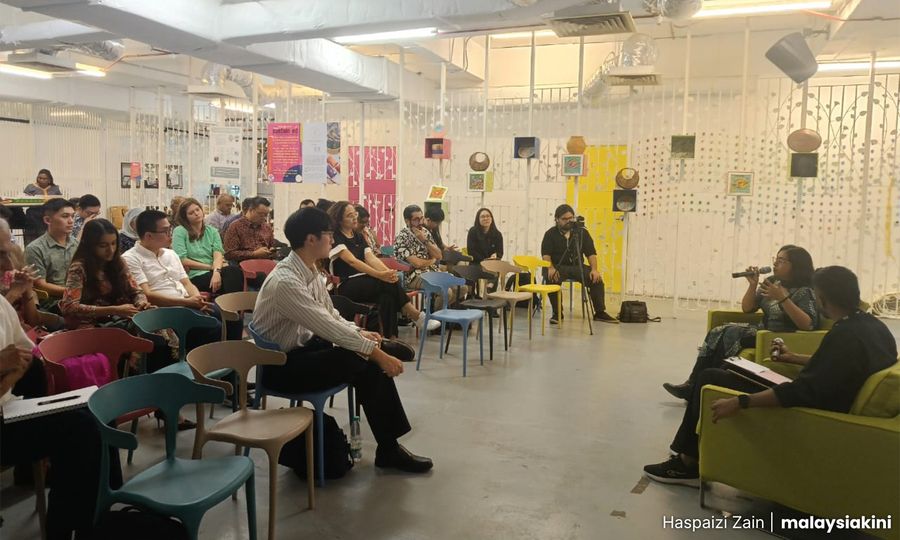
The findings were presented by researcher Shaleen Surendra at an event in Kuala Lumpur today. The other researchers involved were Nadia Lukman, Shalini Muniapan, and Aziff Azuddin.

The study examined how Indian youths experienced hostility, stereotypes, racial slurs, and caste divisions at different stages of life, including in schools, workplaces, housing, and even marriage.
This was despite respondents strongly identifying as Malaysians first.
One respondent reported being called the derogatory term “keling” by a teacher at school. Another said he was fired on his first day at work, despite already making his first sale, after his supervisor said Indians “will steal things”.
Commenting on the root causes, Shaleen told reporters that the situation stemmed from a combination of inherited societal perceptions and racial politics, particularly efforts to court support from specific ethnic groups.
She said inter-ethnic perceptions were often shaped by longstanding stereotypes passed down from one generation to the next.
The report recommended that policymakers introduce sensitivity training for teachers and establish formal channels for reporting racial incidents in schools.
It also called for anti-discrimination legislation covering employment and rental practices to protect tenants and ensure transparent hiring processes.




I’m glad this study listened to young Indian Malaysians. A teacher using a racial slur or a supervisor assuming an Indian employee will steal is racism, plain and simple. I also think it’s fair to ask what role MIC’s own politics played over the years. In my view, years of MIC rhetoric encouraged a siege mentality in parts of the community, particularly among lower-income families the party claimed to represent. Young people can take pride in Tamil and their traditions while learning other languages, getting to know other cultures and feeling at home in the wider Malaysian society. Around Deepavali, I saw a few exchanges on Threads where ordinary questions were taken as attacks on Indian culture. It made me wonder where that defensiveness came from. I also have Indian friends who have been comfortable mixing across cultures for decades. Those different experiences are worth understanding, and a few exchanges online can only tell us so much. I’d like to see a follow-up study on why some young Indian men struggle to find work. Speak to the young men and to the people who make hiring decisions. Look at employer prejudice, access to education and job networks, and how confidence, communication and responses to rejection play out in interviews. How much does each factor matter? And when an employer has had a bad experience with one person, why should the next applicant carry the weight of it? Judge each person on how they show up and what they can do.
Report this comment
Are you sure you want to delete this comment?
This action cannot be undone.