


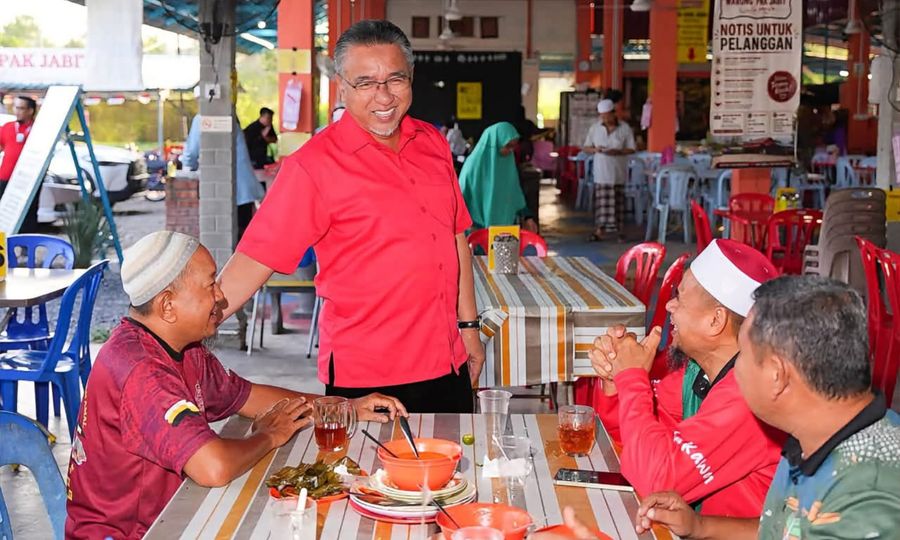

Malacca Malays weigh service over race in state election
MALACCA POLLS | Malay voters make up 71.7 percent of the 687,697 electorate in the Malacca state election this Saturday.
They form the largest voter group in 24 of the 28 state constituencies, a demographic advantage that, on paper, favours the Perikatan Nasional-BN coalition.
However, interviews with Malay voters in three constituencies suggest that race alone may not determine their choices. Instead, voters spoke of wanting accessible representatives who can address local problems, improve basic amenities, and create economic opportunities.
Malaysiakini visited Bukit Katil, Ayer Keroh, and Gadek to gauge their sentiments and expectations ahead of polling day...
MALACCA POLLS | Malay voters make up 71.7 percent of the 687,697 electorate in the Malacca state election this Saturday.
They form the largest voter group in 24 of the 28 state constituencies, a demographic advantage that, on paper, favours the Perikatan Nasional-BN coalition.
However, interviews with Malay voters in three constituencies suggest that race alone may not determine their choices. Instead, voters spoke of wanting accessible representatives who can address local problems, improve basic amenities, and create economic opportunities.
Malaysiakini visited Bukit Katil, Ayer Keroh, and Gadek to gauge their sentiments and expectations ahead of polling day.
Bukit Katil
Bukit Katil has a 65.3 percent Malay electorate, and all candidates contesting the seat are Malay.
The seat was won by former chief minister Adly Zahari from Amanah in the past two elections, securing 41.6 percent of the vote in the most recent one in 2021.
While not an outright majority, it was enough to secure victory amid a split in support between BN and PN.
This time, however, Harapan faces the risk of losing votes in a four-cornered contest, with Bersama and independent candidate Abu Bakar Sabudin adding to the competition.
Voters interviewed by Malaysiakini focused on the quality of service they expected from their elected representative.
"If invited to a programme, he can attend; if there is a problem, he can go down to the ground to listen and help solve it," said private sector retiree Raziq Omar, 56.

Restaurant manager Khairil Annuar Bachik, 45, said residents wanted local complaints to be followed by concrete action.
"If there is a problem with potholes that need paving, we inform them, and immediate action is taken," he said.
Eatery assistant Daim Salim, 34, meanwhile, wants refugee management to be given greater attention.
"We hope the government can resolve it so that it does not cause problems for Malaysians," said the Jalan Bukit Baru resident.

Another voter, Najmi Shaharudin, 30, said he hoped to elect a representative who would address basic infrastructure and amenities issues - including roads, streetlights, and cleanliness.
Ayer Keroh
Ayer Keroh presents a different contest, with Malay and Chinese candidates vying for the seat.
The four-cornered race involves incumbent Kerk Chee Yee from DAP, Muhaimin Lau Abdullah from Bersama, Gan Peng Lam from Gerakan, and Hamnaim Mohamad from Bersatu.

Like Bukit Katil, Ayer Keroh is a Harapan-held seat that could potentially fall to the opposition bloc if Chinese voters shift their support to Bersama as a protest vote.
The constituency has seen a decline in its proportion of Chinese voters, bringing the racial composition closer to an even split, with Chinese making up 45.9 percent and Malays 44.4 percent of the electorate. Indians account for another eight percent.
The preferences of Malay voters in Ayer Keroh remain difficult to gauge, however, with many approached by Malaysiakini declining to discuss their expectations or disclose their voting preferences.
Among those willing to speak, some said a candidate's race would not influence their choice.
"This is a mixed area, close to the town; I feel people don't care whether the people's representative is Malay or of another race.
"More importantly, he can provide good service to the community here," said a voter who only wanted to be identified as Rozilah, 51.
For a first-time voter who wanted to be known as Fikri, a candidate's education, work experience, and community involvement are important considerations.
"Apart from that, I hope the people's representative can bring economic opportunities, jobs, education, and activities involving youths in this area," said the 20-year-old.
Gadek
Gadek presents a different picture, with Indian candidates dominating the contest despite Malays making up 62.68 percent of its electorate.
Chinese voters account for 19.05 percent, while Indians make up 17.21 percent.
MIC is defending the seat with new candidate S Nadarajah, who faces Harapan's K Jegasilan, B Laveen from Bersama, and Laila Morinda Maon from Putra.

As in Ayer Keroh, voters interviewed by Malaysiakini said a candidate's race was not necessarily a deciding factor.
A 26-year-old voter who wanted to be known as Harith was sceptical that the Malay candidate could attract significant support, given that he represents a smaller party.
"I reckon (the Putra candidate) will find it hard to attract the interest of voters here," he said.
34-year-old voter Zack Jamil said the constituency's strategic location as one of the gateways into Malacca was an advantage that had yet to be fully tapped.
"This potential needs to be utilised to turn Gadek into an economic hub capable of attracting investment, creating job opportunities, and invigorating local businesses," he said.
The interviews in these three constituencies do not necessarily reflect broader Malay voting patterns across Malacca, as the findings are based on a small and non-representative sample of voters.



The voters interviewed here are asking the questions every candidate should have to answer. Will you pick up the phone after polling day? When residents report potholes or broken streetlights, will you follow up until they’re fixed? What have you done to help young people find work? A handful of interviews can only tell us so much about how Malacca will vote, but these are exactly the questions I wish we heard more often during elections. For more than six decades, we’ve been taught to look for someone familiar on the ballot, someone of our own race or religion. I see that habit across Malaysian communities. It’s 2026, and we’re still asking what race a candidate is when we could be asking what they’ve actually done for the people they want to represent. Maybe I’m looking back with some nostalgia, but I remember more of a shared life 40 or 50 years ago. We watched many of the same programmes and had something to talk about the next day. With cable, satellite TV and now the internet, it’s become easier to spend most of our time hearing from people who speak our language, share our beliefs and see things the way we do. The government can help change that. Put more Malaysian stories on TV where people of different backgrounds are part of each other’s everyday lives. Support more events in neighbourhoods where people actually get to know one another and do things together. We need more of those chances throughout the year. When we know our neighbours, it becomes easier to see that the things we want from an elected representative are often the same.
Report this comment
Are you sure you want to delete this comment?
This action cannot be undone.