




Tests on all Chinese food products
The Health Ministry today said it will conduct tests on all food products from China as a precautionary measure following the contaminated milk scandal.
Health Minister Liow Tiong Lai said the measure is an additional step to the ban on all Chinese dairy-based products.
The Health Ministry today said it will conduct tests on all food products from China as a precautionary measure following the contaminated milk scandal.
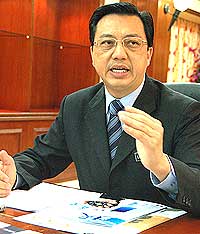 Health Minister Liow Tiong Lai said the measure is an additional step to the
ban
on all Chinese dairy-based products.
Health Minister Liow Tiong Lai said the measure is an additional step to the
ban
on all Chinese dairy-based products.
“With the cooperation of the customs department, products that undergo the Level 6 test (automatic rejection) will not make it into the country,” he said.
“In the meantime, the ministry has also imposed a Level 5 test (hold, test and release) on all (non-dairy) Chinese food products to ensure their safety.”
The Level 6 mechanism was imposed last week to stop imports of all Chinese dairy products after melamine-tainted milk killed four infants and sickened some 53,000 babies in China.
At a press conference today, Liow also revealed that 53 dairy-based products from China have been taken for testing. The results are expected to be announced tomorrow.
Liow added that White Rabbit candy and Yili yoghurt, both found to contain high levels of melamine, have been taken off the shelves.
Low melamine content not hazardous
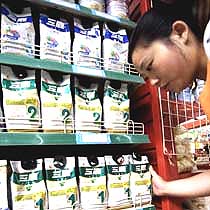 Melamine can also be found in plastic bottles used to bottle commercial mineral water and chocolate and candy wrappers.
However, Liong said the quantity of melamine found in these items was low and not hazardous to health.
Melamine, which has been blamed for causing kidney stones and kidney failure, has been detected in milk powder from 22 dairies across China.
Initially, the crisis was thought to have been confined to baby milk powder but further tests detected high levels of melamine in samples of liquid milk taken from China's two largest dairy producers, Mengniu Dairy Group and Yili Industrial Group, as well as Shanghai-based Bright Dairy.
Melamine, a relatively cheap binding agent used in plastics, is rich in nitrogen and fools widely used tests that check for protein.
It is sometimes unethically added to food products to boost their apparent protein content, based on information obtained from an Internet search.
See Health Ministry's list of safe products


Are you sure you want to delete this comment?
This action cannot be undone.