




From 'sweatshop to smartshop'
The Penang government has outlined an eight-point blueprint to transform the island-state from a labour-intensive economy to a capital and technology-based sustainable socio-economic growth centre in wake of the current turbulent global economic climate.
The Penang government has outlined an eight-point blueprint to transform the island-state from a labour-intensive economy to a capital and technology-based sustainable socio-economic growth centre in wake of the current turbulent global economic climate.
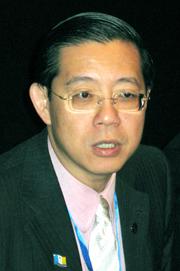 Upon assuming power in March, Chief Minister Lim Guan Eng's new government had resigned to the fact that existing economic strategies relying heavily on low-cost and skilled manpower, cheap land and efficient logistics, are no longer workable to achieve and sustain rapid growth
He said the Pakatan Rakyat government realised the need to restructure and reinvent Penang's economic fundamentals by utilising the state’s large pool of knowledge-based human resources, their expertise, energy, and entrepreneurship.
"We need to reinvent Penang from a sweatshop to a smart-shop," said Lim when delivering his speech on 'How Asia Can Have A Sustainable Future?' at the 4th Asia Economic Summit in Hong Kong yesterday.
The summit themed, 'Reinventing Asian Economies for Sustainable Growth & Prosperity', was jointly organised By the Asia Society And Asian Strategy & Leadership Institute (ASLI) at JW Marriott Hotel.
The eight measures
According to Lim's speech made available to the press today, the eight measures that the Penang government aims to employ to achieve its desired socio-economic growth are:
1. Developing and institutionalising administrative virtues of good governance based on competency, accountability and transparency, and rule of law source of growth.
2. Implementing an education system emphasising on information communications technology, computer knowledge and promote the culture of excellence to meet the demands of global industry and economy.
3. Developing a civil society based on
i) political transformation to achieve political equality, respect for human rights, supremacy of people's power and rule of law;
ii) economic transformation providing equal opportunities and relies on the energy, expertise and enterprise of our human resources; and
iii) ethical transformation to build public integrity, eliminate corruption and pursue socio-economic justice of an equitable share in the economy's prosperity.
4. Encourage creativity, innovation, research and development;
5. Establish international benchmarks for sustainable development that would utilise and preserve available resources for future use.
6. Investments in training programmes for human resources and stimulate human development.
7. Enhance government's productivity, quality services and efficiency at a lesser cost, control the increasing number of civil servants and ensure that the government gets equal returns for each ringgit spent.
8. Adopt a win-win public-private partnership to uphold public interest without forsaking private sector interests of profits, efficiency and productivity. Open tenders and capping the private sector profits at reasonable rates.
Look beyond recession
Pointing out that Penang had been voted as the 10th most livable city amongst 254 cities throughout Asia, Lim is optimistic that the eight-point formula would stimulate the urbanised northern state projected growth as an international destination for investments, tourists and those who aspire for sustainable living.
Currently the popular measures to counter the recession include expansionary budgets and government guarantees for financial institutions.
But Lim told the summit that Asians would have to look beyond the recession and be bold enough to undertake fundamental reforms and reinvent the continent's economy to grow and enjoy sustainable growth and prosperity.
Once a key trading port, Penang has evolved into a major electronics manufacturing hub during the last century, propelling it to a leading state with a RM28,851 per capita gross domestic production, higher than the country's RM 19,189 in 2008.
Despite being the second smallest state in Malaysia and with a population of only 1.4 million, Penang accounted for 27 percent of the country's exports.
Lim assured that his government would uphold the five characteristics for successful growth such as openness to global economy in knowledge and trade, macroeconomic stability, futuristic vision exemplified by high savings and investments, reliance on markets and prices to ensure efficient allocation of resources and a competent public administration committed towards growth.


Are you sure you want to delete this comment?
This action cannot be undone.