




Public should impose ban on polystyrene containers
The public should refrain from using polystyrene-made containers which have been discovered to be a cancer causing agent, the Consumer Association of Penang (CAP) said today.
The public should refrain from using polystyrene-made containers which have been discovered to be a cancer causing agent, the Consumer Association of Penang (CAP) said today.
Besides being a health risk, CAP president S M Mohamed Idris said polystyrene was also detrimental to the environment since its disposal generates huge amount of garbage.
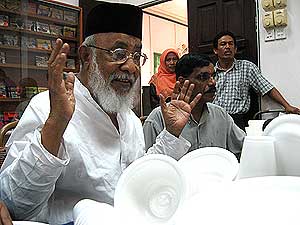 "Research reveals that polystyrene takes about 500 years to degrade in the environment," he told a press conference in George Town.
He said since the government would not institute a ban, the public must self regulate themselves.
Like cigarettes, alcohol, gambling and gaming machines, Mohamed Idris said, the government had shown a lukewarm attitude in banning polystyrene products even though the World Health Organisation (WHO) has classified styrene as a cancer agent.
"The government will not ban polystyrene products because of the all powerful business lobby. Therefore it is up to the people to ban it themselves," he said.
Authorities must assist
Referring to the coming Thaipusam and Chinese New Year festivals, he called on the relevant communities to avert using the polystyrene containers to serve food and drinks.
He also urged the relevant authorities to assist the public by banning the use of polystyrene containers at religious functions.
WHO's International Agency for Research on Cancer (IARC) has classified styrene as a Group 2B carcinogen or cancer causing agent, possibly a human carcinogen.
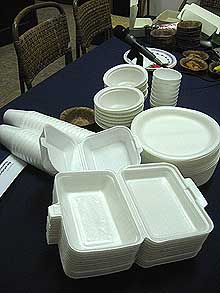 Styrene is also a mutagen (that causes genetic changes). Mutagens in turn may have a cancer risk and may also potentially cause reproductive damage.
Studies have shown that exposure to small quantities of styrene can cause low red blood cells count.
Women exposed to low concentrations of styrene vapours in the workplace have a variety of menstrual disorders.
Polystyrene packaging can sometimes be identified by the number '6' surrounded by chasing arrows or letters 'PS' usually moulded in the bottom of a food container.
Polystyrene packaging normally contains some residual styrene because the manufacturing process is not 100% efficient.
Chemicals from polystyrene can migrate into food when it is new (because they have not fully polymerised or become part of the plastic) and when it is old because it breaks down from heat, sun or wear.
"The styrene migrated into food will end up in the body and eventually affect our health," said Mohamed Idris.
In Malaysia, cancer is the second biggest killer after road accidents, with some 40,000 new cases detected annually.
According to the National Cancer Registry, one in four Malaysians is at risk to contract cancer in his or her lifetime.
"Cancer has become like an epidemic now. Eliminating styrene in the diet would help reduce cancer risks among Malaysians," said Mohamed Idris.


