




Living Islam II

On Valentine's Day, I attended a seminar conducted by the Faculty of Economics and Administration, University of Malaya, "Islam and The West: Which Way Now?" The speaker was a Dr Joshua Muravchik, a resident scholar at the American Enterprise Institute, who had come down to Malaysia to attend the "Who Speaks for Islam? Who Speaks for the West?" Conference that was held from the 10th to 11th February, 2006.
Dr. Muravchik's curriculum vitae looked very impressive on the flyer that was given to the audience. Specialising in ' the studies of the United Nations, neoconservatism, the history of socialism and communism, the Arab-Israeli conflict" he has also written books such as Heaven on Earth: The Rise and Fall of Socialism, The Future of the United Nations and Covering The Intifada. What the flyer diplomatically 'forgot' to add was that the good doctor was a member of the advisory board of JINSA , the Jewish Institute for National Security Affairs, a Washington-based think-tank since the year 2000.

On Valentine's Day, I attended a seminar conducted by the Faculty of Economics and Administration, University of Malaya, "Islam and The West: Which Way Now?" The speaker was a Dr Joshua Muravchik, a resident scholar at the American Enterprise Institute, who had come down to Malaysia to attend the "Who Speaks for Islam? Who Speaks for the West?" Conference that was held from the 10th to 11th February, 2006.
Dr. Muravchik's curriculum vitae looked very impressive on the flyer that was given to the audience. Specialising in ' the studies of the United Nations, neoconservatism, the history of socialism and communism, the Arab-Israeli conflict" he has also written books such as Heaven on Earth: The Rise and Fall of Socialism, The Future of the United Nations and Covering The Intifada. What the flyer diplomatically 'forgot' to add was that the good doctor was a member of the advisory board of JINSA , the Jewish Institute for National Security Affairs, a Washington-based think-tank since the year 2000.
The audience, while predominantly Muslim, was not 100 per cent Malaysian. There was an Australian journalist, a student from Myanmar, representatives from an exchange programme and professionals.
I'm a great believer in diplomacy and engagement, but the meeting was an example of American arrogance and condescension. In short: we were told that we had 'intense rage towards the U.S'; that if the US was attacked by a nation, the US had every right to attack that nation, and one participant was told that he was illogical and Muravchik insinuated that we impoverished Muslims were 'envious' of the superpower that was America.
He probably hadn't heard of China.
Machiavellian
There were a lot of protestations; and like a cat cornered he snapped back that we were behaving just like what we said we were not: that of the aggrieved Muslim.
As Dr. Mohd Hazim Shah (the moderator) said towards the end of the session, one can't always get like-minded speakers all the time. I agree. It's not healthy to be with yes-men at all times, and to get to a destination, there needs to be disagreement, which then leads to a discussion and a solution. You might call it compromise.
Sometimes, you must talk to the Devil.
I believe the audience at the talk that day was protesting not because they were behaving like the aggrieved Muslims Muravchik accused them of; rather, they wanted to engage in a debate but were denied the chance to do so because he had already set his mind. In spite of the facts brought up by scholars, an economist, a foreign journalist and students, Muravchik saw them as the enemy of the US.
The talk certainly livened up our rather dull ah, we poor sods from the Muslim tropics Tuesday morning.
Being a Muslim in the 21st century can beleaguer you. In the last six months, the Muslim world faced many socio-political challenges. I'm not going to repeat them to you: you have read about them, dear reader, and repetition is tiresome. But what struck me as more if not rather pressing concerning Muslims is the internal conflict within our communities. Let's not go far: let's talk about home, which is what the column is about.
From the Moorthy case to the Islamic Family Law debacle, right up to even normal day-to-day interpersonal relations, we Muslims are questioned. Oh yes we are truly a Muhibbah nation, we live side by side in perfect harmony, but we Muslims are being scrutinised increasingly.
If before I had felt it, observed it and talked about it, it was during the one year of writing this column that drove the point home even more: Muslims must be accepting of the various personalities of their own brethren, and must come and work together.
Moderation
At the risk of sounding like an evangelist, this is the only way the image of the religion will not be destroyed.
I'm always asked why I feature all sorts of stories and personalities in I am Muslim. Real Muslims don't behave like that. I was even questioned by a friend as to how I knew apostates, and really, were there such people in Malaysia? I just threw my hands up in the air and sighed. Words were beyond me.
There seem to be a number of Muslims that are very judgemental of other Muslims. And this need not even be conservative Muslims! I know very liberal Muslims that look down on moderates as well as the pious kampong folk and the reverse. Frankly, I think rural Malays are more accepting of people than the so-called middle class and elite Malays.
There is always this credo among ourselves: we are right, therefore we are better than you.
 If you belong to a certain Muslim organisation you are like this and you must behave in a certain way. If you wear the
hijab
or
kopiah
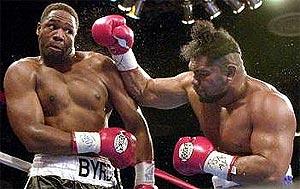
you are above reproach. I'm a liberal, modern Muslim, I have moved on with the times, and you are the repressed traditionalist. Oh, you're a revert, hence you're a lesser Muslim. The list goes on and on. It's always Us versus The Others. Hell hath no fury than an organisation scorned, and I am sure, dear reader, that you have read and noted the slanging matches between Muslim groups A and B, C, and so forth. The way things are going on, on the Net, in real life, politically and socially, maybe what would be good for these hardcore activists is to put them in a boxing ring and let them fight.
Biar dia gocoh gedebak gedebuk.
Malu tau?
Now I'm not saying all Muslims in Malaysia are bad. No. There are many moderate Muslims that are doing good work for the country, such as Datuk Dr. Jemilah Mahmood of Mercy, to name a few. There are writers and thinkers that challenge Malaysians, such as Dr. Zainal Alam of IKIM, Salbiah Ahmad, Nik Nazmi Nik Ahmad, Fathi Aris, Aman Rais, Farish Noor, Zainah Anwar et al. If you read the latest Off The Edge magazine, you would have read that eye-opening interview with Nasharudin Mat Isa of PAS. Conservative or liberal, the number of forward-thinking Muslims that speak out are too few however. There is a great need to engage (this is becoming my favourite word) in debate among the Muslims, and there is a pressing need for Muslims to be heard, whatever kind or type of Muslims they are.
Yet the fear of speaking up scare Muslims. I have friends that have many questions about Islamic rites and rituals who do not dare voice them out, not of out fear of being seen as 'stupid' but because " you're not supposed to question. But Islam is an intelligent religion and I am sure God wants us to behave in that manner: intelligent. But we can't ask. We can't question. This is not Indonesia, whereby there is a culture of debate and openness, in spite of the differing views on Islam."
Yes, by all means, celebrate our differences, but when we create divisions among ourselves, we are asking for trouble.
Sekim cepat kaya
Do we Muslims in Malaysia want to be challenged? Let's go right down to the basics: look at the local Malay women's magazines. It's always about weddings, weddings, jamus, weddings, celebrities and more weddings. The religious section of the magazines are, sad to say, written rather briefly and about mundane matters.
I have been told that I can't expect everyone to be an intellect.
I'm not saying so. Hey, my weekly digest of trash that I read to de-stress are Malay and English tabloid magazines. Yes, I need to know why Angelina Jolie does not want to marry Brad Pitt, and yes, I do need to know the latest hantu pocong story that has hit the nation. Allow me to redeem my reputation: I do read highbrow magazines too (ahem), but God help me, I am addicted to Forum Perdana and NWeekly . And Mastika . And when I go back to KT, Mangga .
We have the money. We have the brains and talent. So how come we can't even come up with simple but beautiful films like Marooned In Iraq and The White Balloon ? The budget for these Iranian (and Iraqi) films are miniscule, compared to our grandiose productions, and yet these films pack a punch.
And how I fear for our young women. There is a growing majority of young women, hijabbed or not, that only want an easy and good life. Each time I go back to Gong Kapas, I have a 'new' cousin. Suddenly they have green or blue eyes. If I find non-tudung women sporting coloured contacts disconcerting, what more hijabed young women with green eyes?
Examples of the Prophet's wives like Khadijah and Aishah were mention, in vain hope that they would be inspired.
"Look, you want to be second wife, 100th wife, gundek , that's your problem but don't you want something more in life? Look at Aishah, The Prophet's (Pbuh) wife. Khadijah, his first wife. They were all productive!" I asked.
" Tak nak lah Kak Dina . As long as I have one or two million in my account, he can do whatever he wants. I just want to look pretty and have a good life."
Wait until you're 50, I shook my head. Botox or no Botox, hymen reconstructive surgery, you'll be discarded once your old man tires of you. All that money won't be worth one bit.
Our young men?
They either want to be a star or get rich quick. If they don't become the shadows of the rich and important, they join Luxor. I should know; one of my male cousins wants me to become his downline.
Another bone to pick on: to this date, I have not been able to gain access to local Islamic organisations' libraries for research. I have sent countless faxes to be allowed in, but I suppose the moment people hear 'malaysiakini', they refuse to entertain my requests. Kedekut ilmu sungguh .
How do you create create a society that is learned then, when it is only the select that are allowed into the hallowed halls?
Sigh . Dah-lah romantically, tak laku. Professionally pun kena reject.
United colours of Malaysia
Malaysia is increasingly becoming more multi-racial, with the influx of migrants (labourers, maids), expatriates and foreign permanent residents. This means it will be multi-Islamic each community will come with its own sets of cultures, Islamic religious traditions and values.
Integration is not going to be easy.
During the last puasa month, I was appalled to be told to my face that the Masjid Wilayah should not have allowed Indonesian labourers in to pray.
"They're Muslims too!" I said.
"They were sneezing and shivering. Ctha! Now I'm caught a cold from them. Why couldn't they attend the Segambut mosque?"
Another friend asked me:
"How come we don't have selective migration policies? We complain about the brain drain in Malaysia, so why can't we create a programme that encourages brilliant Muslim minds to come live here? Instead, we have the Banglas leering at our women, and gigolo-looking Middle Easterners in Bukit Bintang."
Tariq Ramadan wrote an excellent essay "Social Fracture: The French Mirror of Britain" in the 15th issue of Islamica magazine. In it he discussed the social framework of Muslim migrants in Britain and France. The Muslim communities in both countries, while facing different sets of issues, are the least well-off and the most marginalised. "Nonetheless," Ramadan wrote, " these communities remain isolated, rarely mingling with one another." Whether he meant that the these Muslims did not integrate well with their new countrymen or that among the Blacks, Arabs and other migrants themselves there was a problem of assimilation, the point remained the same: we have a problem. Go to Chow Kit and Kampung Baru. They're almost Indonesian ghettoes now. If you go to glittery Bukit Bintang, amidst the hookers, pimps, triad kings and local shoppers, you'll find many Middle Easterners there.
Will the future economic plans include the needs of second and third generation of migrants? Will their children be given scholarships? Can they attend residential schools? Will their brand of Islam be accepted by us?
Islam is not only about cutting off hands and polygamous marriages. Islam is not for Muslims only; its jurisprudence cover the needs and demands of non-Muslims too. Yet to seek a world that some Muslims view as strangers to their faith, Muslims need to let go of their own paranoia, indifference and prejudices.
To the rest of the world and ourselves, we must show that we too are not The Others.
Glossary:
Malu tau - embarassing
Kedekut sungguh ilmu - stingy with knowledge
Sigh. Dah-lah romantically, tak laku. Professionally pun kena reject - Romantically not desired. Professionally not wanted either.
DINA ZAMAN wants to be a librarian at the British Library. Books are nicer than humans.


Report this comment
Are you sure you want to delete this comment?
This action cannot be undone.