




Banding together

Nations around the world went into an overdrive to supply clothing and rations to the people of Yogjakarta, after a powerful earthquake destroyed entire towns and villages in central Indonesia. Many Indonesians were left homeless and hungry by the quake.
While donations and support from neighbouring countries have been encouraging, problems continue to plague the massive operation.

Nations around the world went into an overdrive to supply clothing and rations to the people of Yogjakarta, after a powerful earthquake destroyed entire towns and villages in central Indonesia. Many Indonesians were left homeless and hungry by the quake.
While donations and support from neighbouring countries have been encouraging, problems continue to plague the massive operation.
A few issues
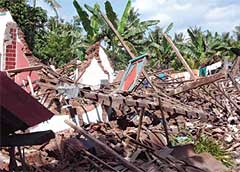 A Reuters report on May 30, 2006, stated that many of the victims were still complaining about the lack of food and tents. In some places, residents were sleeping in the open with only clothing and tents made of rice bags to protect them.
"The logistical bottlenecks are in the field. Calls for assistance are increasing every day, but they may not be met by the system as fast as one would like," said Puji Pujiono, deputy area coordinator for United Nations operations in the quake zone. Another volunteer, Mr Sukiman said, "There are so many victims, I cannot reach them all."
Reuters also reported that the World Health Organisation has said the risk of infectious disease remained high because of the crowded nature of the quake-hit area, but the agency was not expecting an epidemic. Furthermore, British medical aid charity Merlin raised concerns that some of the quake survivors could now be putting themselves at a risk of contracting the deadly bird flu virus. Merlin said it had found more than 100 quake survivors taking shelter in six large poultry sheds.
"I think everyone tried to help us as much as possible," Arie Dyanto, an artist living in Yogjakarta said. "However, emergency relief is not enough, especially for those who live in the hills around Yogjakarta as the area is somewhat remote and cut off."
Arie himself has appealed for help from his overseas friends. He sent emails asking for donations, under the Studio Biru + YUK! (Yogjakarta untuk Keberagaman) Relief Depot. This depot was formed a day after the earthquake hit Yogjakarta and is organized by a group of artists, students, and activists in Yogjakarta and functions out of Agus Suwage's (Indonesian artist) blue studio. "We are still working together until today and don't know when we have to stop since a lot of things have to be done", said Arie.
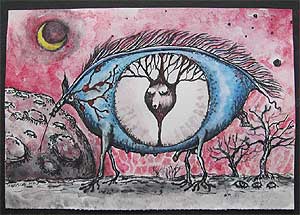 After receiving Arie's appeal, Rafizah Abdul Rahman, the director of
Maya Gallery
in Kuala Lumpur, decided to contribute 10 percent of the income from her gallery's two year anniversary's exhibition directly to Arie.
After receiving Arie's appeal, Rafizah Abdul Rahman, the director of
Maya Gallery
in Kuala Lumpur, decided to contribute 10 percent of the income from her gallery's two year anniversary's exhibition directly to Arie.
"We go right to the point.You can be ensured that there's no delay and the money goes directly to the sufferers. If they appeal to the relief organization, it will take quite a long time and a lot of paper work will need to be cleared, hence resulting in delays," said Rafizah.
Getting on
Back in Yogjakarta, people are trying to get back a semblance of their normal lives, cleaning up the mess the quake had made while starting to salvage the rest of what they have.
MERCY Malaysia , a non-profit Malaysian organization that focuses on providing medical relief and sustainable health related development for vulnerable communities, deployed its Emergency Medical Relief and Surgical teams to Yogjakarta since 28 May 2006, a day after the quake occurred. The relief comes in 3 forms, such as medical, psychological support and shelter.
Under the Medical programme, MERCY Malaysia is concentrating on mobile clinics which include vaccination and health education programmes. The mobile clinics are conducted at various areas in Klaten District, Prambanan District, and Bantul District Central Java and it will continue for at least a month.
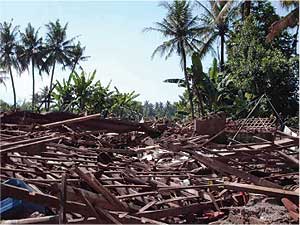 Under the Psychological Intervention program, teams assess and attend to affected communities in the surrounding areas on psychological issues related to post earthquake trauma. So far they have also distributed 300 units of Camp beds, donated by the Human Relief Foundation to the quake victims.
"For me, Yogja's quake is the worst because many survived with terrible injuries. Some had their hands torn off, their eyes split apart and those are the ones we want to save because life is priceless," said Norazam Abu Samah, MERCY Malaysia's Head of Aceh and Nias operations.
He added that the relief route should not based on the severity on the number of dead because those people are already dead but it should concentrate on the living of the sufferers who survived.
Apart from Maya Gallery, members of Five Arts Center , a Malaysian theatre company, contacted a cultural study group called Kunci in Yogjakarta to give them some aid.
"Kunci is our friend", said Fahmi Fadzil, a member of Five Arts Centre and AKSHEN, adding that Kunci had participated in the Asian Youth Art Mall, a conference on how arts groups contributed to the communities using art, hosted by Five Arts last year. In Indonesia, Kunci conducts workshops and has art projects with the communities in Yogjakarta.
"Our own concern on the earthquake is the suffering our friends face," Fahmi recounted. He added that he had contacted them and found out that fortunately, they were safe. People in Kunci had sent out an SMS through the network built from the conference so the others knew what the local situation was like.
Small but big-hearted
"We have a relationship with them. So we thought, 'Let's do something!" Fahmi remarked that short of buying an airplane, which was not realistic, the next best way of helping was to collect money and send to Kunci directly. The main focus of the donation was on the reconstruction process to help them rebuild Yogyakarta and help them continue what they were doing - community work.
"It made more sense to us to ally ourselves with Kunci as they have been working with the local communities". Right now Kunci is busy helping schoolchildren prepare for school - getting textbooks, school uniforms and so forth. The students were about to sit for the National Examination when the earthquake struck. "We feel that by giving money to a larger organization it doesn't necessarily mean we are directly impacting this community," Fahmi said. In his view, large organizations would have provided relief supplies to the city first then to the rural area, which in turn, may not necessarily receive the supplies.
"We are small but we want to help", he say, "This is how ordinary people can help others directly and how a network can work together." Truly, an excellent example of how a community of cultural workers and art practitioners deal with crisis that may occur in the future.
The efforts may seem small to outsiders more used to corporate donations and splashy press conferences, but as we all know, every little bit goes a long way. In fact, in this case, it may hit home straightaway.


Are you sure you want to delete this comment?
This action cannot be undone.