




A leap forward or just talk as usual?
Prime Minister Najib Abdul Razak unveiled his maiden 10th Malaysia Plan in a grandiose manner, trumpeting its inclusiveness and progressive economic growth it promises.
Prime Minister Najib Abdul Razak unveiled his maiden 10th Malaysia Plan in a grandiose manner, trumpeting its inclusiveness and progressive economic growth it promises.
The premier had tabled his RM230 billion development programme in Parliament today, however, it received mixed reaction from members of parliament.
Some of the key criticisms against the 10th Malaysia Plan were on the government's commitment to maintain at least 30 percent of bumiputera corporate equity ownership, extensive privatisation plans and strengthening depleting human resources.
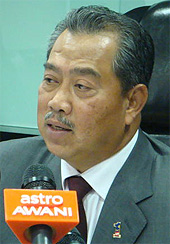 Deputy Prime Minister Muhyiddin Yassin (
right
) at a press conference later stressed that the government is mindful of bumiputera needs but emphasised that it will no longer tolerate rent-seekers or in other words the “Ali Baba” types.
Deputy Prime Minister Muhyiddin Yassin (
right
) at a press conference later stressed that the government is mindful of bumiputera needs but emphasised that it will no longer tolerate rent-seekers or in other words the “Ali Baba” types.
Muhyiddin reiterated Najib's stand emphasising support for bumiputera enterprises with potential as demonstrated by their skills to enable them to move towards higher value added activities in line with government aspiration.
"In the old times, there were quotas, leakages and targets that couldn’t be met. These have all been taken into account so the new approach by the prime minister is to develop bumiputera entrepreneurs who have potential and not the rent-seekers.
Bumiputeras 'must compete in open market'
"We won’t accept (those) who rely on others and not on their own efforts. Bumiputras must accept the fact that they must compete with others in the open market;” he said.
He added that at the same time the government will help them as this will be among the efforts to open up opportunities for them, so that they are not left out in economic development of the country.
"Most importantly, there must be entrepreneurial skills and ability, good track record and not Ali Baba companies. All these will be considered," said Muhyiddin.
The Pagoh MP also said that the government will explain to bumiputra entrepreneurs they will be given a boost in the form of funds and training based on merit and not because "they have connections".
He was confident that the six percent economic growth can be attained based on the market response and said the 10MP can be successful if the people took ownership of the plan.
He added that the Government Transformation Programme (GTP) announced recently will be the catalyst of the economy.
He said that the government delivery system is vital as the plans can only be materialised if the delivery system is enhanced.
Besides Muhyiddin, other members of the government praised and waxed lyrical on the millions allocated to their respective ministries, while opposition members had doubts over the fruition of the plans.
Below are their comments:
Abdullah Ahmad Badawi, Kelapa Batas MP and former prime minister
 The 10MP is a big leap to a new platform which gives confidence of greater success. There will be a strengthening of the economy and a leap that can bring us, God willing, to greater successes in the future.
The emphasis has been very much on human capital, which will be the most important factor in helping us succeed... to me, adding value is going to happen and we are going to have better quality people, people with better qualifications, higher integrity, innovation and greater capability.
This is going to drive the economy.
Khalid Ibrahim, Bandar Tun Razak MP and Selangor menteri besar
 The catalyst for growth in Malaysia is the Klang Valley and Selangor. Unfortunately these two areas were not mentioned in the 10-MP.
The prime minister merely mentioned about an economic stimulus package to make way for a “Greater Kuala Lumpur” which involves only a small part of the Klang Valley.
Selangor which is part of the Klang Valley conurbation, is the heartland of Malaysia's industry and commerce activities.
Selangor has a population of 5 million people, contributing the biggest share of the nation’s tax revenue and it deserves to be in the government’s plan for growth.
The 10-MP’s focus on sector for growth includes financial services, wholesale and retail, tourism, education, IT, private healthcare and all these are centered towards Klang Valley. If we are talking about industrial, incubation and SMIs - Klang Valley is where the action is.
The Najib administration has lost focus on the purpose of the Malaysian Plans. Is the decision to ignore Selangor a political one? If that is the case, it was made at the expense of the rakyat's interest.
Tony Pua, Petaling Jaya Utara DAP MP
 The most obvious contradiction is the fact that in the New Economic Model (NEM), it is clearly mentioned that everything is based on merit, competition and need whereas the 10MP very clearly inserted a chapter that says bumiputera are to achieve and continue to target 30 percent corporate equity and wealth as well as in property, jobs and so on.
You will have problems implementing polices and privatisation programmes where you will say "okay do I do this on merit or race?" So that'll become a major contradiction and that will be the same problem faced by NEM.
My biggest concern is the announcement of a lot of mega projects that will be rolled out.
In the NEM, it has been expressly stated that there will be no tolerance for patronage, rent seeking and we'll be looking at the best proposals, best value for money, open tenders and so on but what we've seen so far is that projects are awarded on a direct basis to specific companies, cronies or otherwise.
There is a big contradiction between what they say they want to do with the NEM and what is actually carried out in regard to the implementation of the 10MP, we are worried that privatisation will essentially put ourselves back to the Mahathir era where there was a lot of privatisation and a lot of failures. We fear a repeat of that and in the future there may not be high oil prices to rescue us from the crisis.
Ng Yen Yen, Tourism Minister and Raub MP
 It indicates clearly the government's trust in the tourism industry as a major economic component, therefore, for tourism to be successful not just up to the ministry of tourism or the key player, the whole country has to participate.
He also mentioned eco-tourism which is really our natural resources... we are the third richest (country with) diversity in flora and fauna.
So for eco-tourism, we have the products but we have to now ensure that the products are developed appropriately and marketed appropriately to the right targets so we shall take all this into consideration.
Liow Tiong Lai, Health Minister and Bentong MP
 It is a comprehensive plan to move the economy faster, more importantly the government transformation programme (GTP) can be carried out speedily because it is a two-year roll plan.
Mostly importantly is the number of doctors, in the next five years, we will be able to increase their number to a higher level.
This year we are training about 3,700 doctors so at this rate by 2015 we should be able to reach the target of one doctor to 592 patients, even where nurses are concerned we should be able to reach the target.
SK Devamany, Deputy Minister in the Prime Minister's Department and Cameron Highlands MP
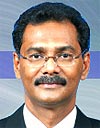 The plan is a reflection of the government transformation plan (GTP), basically I am very much attracted by the idea of inclusiveness which has been clearly laid out.
For instance, for the Indian community, the focus is on estate workers, though we only have about 20 to 30 percent left in the plantations they are in a dire need of development, basically housing, basic amenities and education which is the core.
Then poverty eradication, we are very happy with that, because they have now put 40 percent and below, RM2,400 as their threshold by 2015, right now it is RM1,440.
Missionary schools, Agama schools, Chinese schools and Tamil schools will be getting RM280 million, or RM70 million for each type.
This inclusiveness is important, instead of being segregated into various categories of schools all this while in mainstream education.
Private sector initiative have come out very well here... the private sector is always worried that the government is eating up all the other sectors through the government linked companies (GLCs). This time the prime minister has clearly loosened the structure.
Salahuddin Ayub, Kubang Kerian PAS MP
 On the whole, I see the need for higher commitment and a more serious approach to make 10MP a success.
I hope the government delivery system will be more effective and efforts to fight corruption be more competent and seriously undertaken by Najib's administration.
But I see there is a positive signal for SMEs (small and medium enterprises) which will be given a green lane.
I also welcome efforts to help bumiputera entrepreneurs but the emphasis on meritocracy must be considered and not be merely based on nepotism or cronyism so those who are really committed and want to progress will be given priority by the government, regardless of their background.
I feel if we can help the SMEs then there won't be any problem for us to achieve the 30% bumiputera equity in the future as aspired.
Mustapha Mohamed, International Trade and Industry Minister and Jeli MP
 With the 10MP, the private sector is expected to play the most important role in generating economic growth at the rate of six percent this year... what's important is the need to enhance the manufacturing and services sectors.
The government has decided that China, India and the Middle East have to be given more attention but we will not forget other countries and regions like those in Asean, Europe and, the US.
We need to rise to the challenge to enhance our competitiveness. I hope that when our competitiveness ranking climbs up, the investment climate will improve and private sector investment will rise, not just foreign investment but domestic as well.
Teo Nie Ching, Serdang DAP MP
 I am very disappointed, because in his announcement, he said that the UEC (Unified Examination Certificate) holder can use their SPM (Sijil Pelajaran Malaysia) certificate to attend maktab (teacher's training college), this is very disappointing.
With all the good signals sent out by Najib to independent high schools, I thought that he will say that finally the UEC holder can enroll in IPTAs (public higher education institutions) to further their studies.
It seems like we need to wait for ages or when Pakatan Rakyat takes over, only then we can let them enter the IPTA.
Secondly, he (Najib) wants to ensure that one percent of government servants are disabled persons. But this is not something new, actually in 2006, we already had this policy... but yet in 2010 we are hearing it again in Najib's main speech.
So my question, is if you cannot achieve it in the last five years, how to do in the next five years? Do you have the political will to achieve it? Or will I have to listen to the same thing in the 11th Malaysia Plan.
On paper everything look so good, but does he have the political will to implement it? This is for Najib to prove.
10MP Special Reports
Doubts remain over Najib's reform agenda
PM's 10MP speech - salient points
Faster growth, reducing deficit
Big ticket items lined up for privatisation
Experts: Privatisation drive must be transparent
A leap forward or just talk as usual?
Ibrahim Ali gives thumbs up to 10MP
Clearing the human capital hurdle
Public transport revolution planned for Greater KL
Sg Besi airport to make way for 'Greater KL' plan


Are you sure you want to delete this comment?
This action cannot be undone.