



Passion to preserve Malaysia's visual history
MALAYSIANS KINI When the Puncak Purnama (Lunar Peaks) sculpture was demolished under orders from the Kuala Lumpur City Hall (DBKL) back in July, the local art community reacted with protest and outrage.
The ceramic glass sculpture, which was commissioned by United Malayan Banking Corporation Finance in 1986 and subsequently presented to DBKL, was built by the late national laureate Syed Ahmad Jamal.
MALAYSIANS KINI When the Puncak Purnama (Lunar Peaks) sculpture was demolished under orders from the Kuala Lumpur City Hall (DBKL) back in July, the local art community reacted with protest and outrage.
The ceramic glass sculpture, which was commissioned by United Malayan Banking Corporation Finance in 1986 and subsequently presented to DBKL, was built by the late national laureate Syed Ahmad Jamal.
Those in the art community had said that such works of art should have been preserved and that they were disappointed in the way the national heritage was treated.
That passion to preserve Malaysia's visual history and to give it context is what drives the work of the Malaysia Design Archive (MDA).
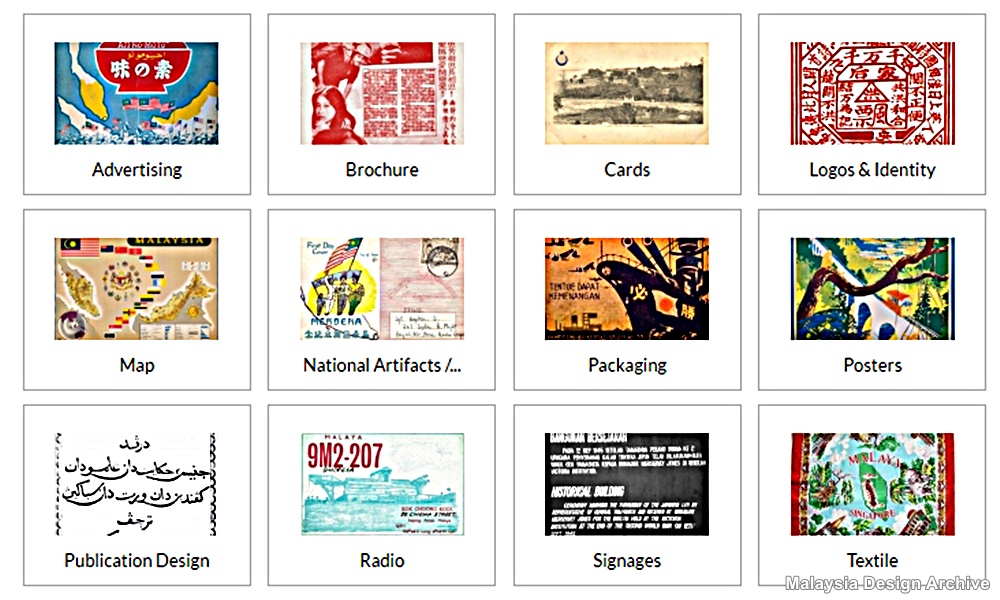
MDA is an online archive of Malaysia's visual and design history, mainly curated into four separate time periods: colonialism, occupation, emergency and independence.
The archive also has a gallery of design works from various periods of time throughout the country's history, as well as transliteration collections and analysis pieces on the website.
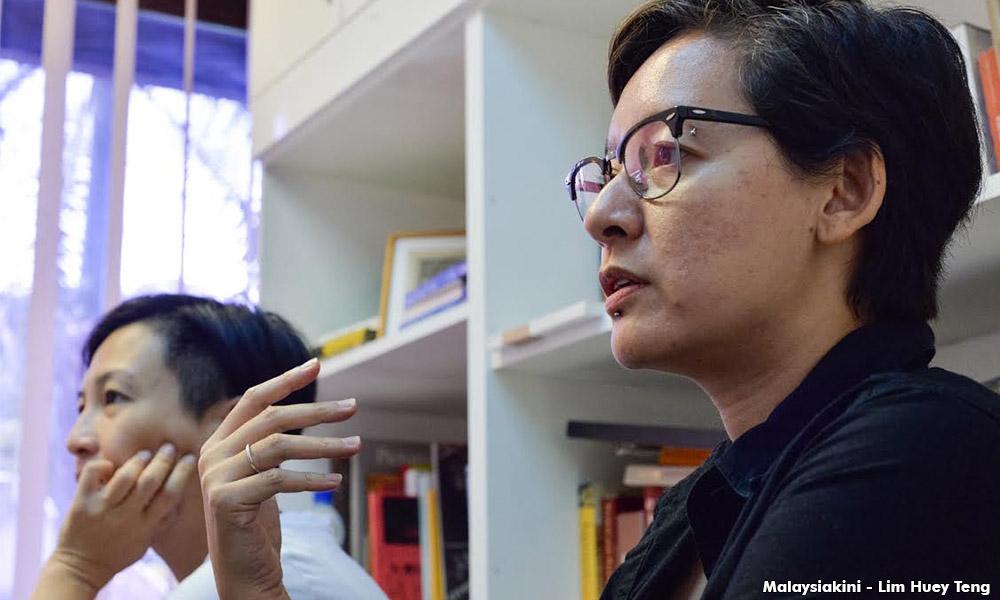 Graphic designer Ezrena Marwan started the archive in 2008 when she realised that, despite her background, she was unable to make sense of Malaysian design work.
Her co-founder Jac SM Kee has been a part of the project since the very beginning but conceded that Ezrena is the "main brains and founder" of the archive. Funding for the project also comes primarily out of Ezrena's pockets.
Another collaborator is Simon Soon, an art historian with a focus on Southeast Asia's art and visual culture, who got involved when he helped the archive transliterate articles in Jawi.
"We're trying to make a conscious link between a critical look at history and looking at design as a kind of historical artifact," Kee told Malaysiakini.
This is their story in their own words:
EZRENA: I COULDN'T REALLY MAKE SENSE of a lot of design work that comes out of Malaysia, I couldn't articulate them.
So I thought of trying to make some sense of them, like what does it mean, how is it Malaysian, and trying to find out more about different designs and symbolism that come out in Malaysia. I recognised that there is a gap between the design, and our own historical narrative.
KEE: BY LOOKING AT DESIGN AS A KIND OF HISTORICAL ARTIFACT, it contains a sense of where Malaysia emerged from. It also started at a time where there was an increasing interest from the visual and arts community to make sense of what's Malaysian (in terms of visuals).
EZRENA: IT'S ABOUT RECOGNISING WHAT YOU PUT UP and asking, 'why is this interesting'? We're sort of trying to get people to think 'why is this here?'. We're also looking at looking through different lenses, such as from gender or racial lenses.
 KEE: ONE OF THE FIRST THINGS THAT HAD TO BE DONE was to do an analysis and reading of design of four particular periods of history in Malaysia – to frame design in four separate time periods.
EZRENA: EVEN THE JOURNEY to come up with that took a long time. It took a lot of reading up on the history of Malaysia, and also sometimes the (length of the) period, naming the period, all of this was very considered.
We also didn't want to impose so much on those who come to the site.
KEE: THAT WAS ONE OF THE MOST EXCITING THINGS, seeing things pop up that matched certain trends at certain periods of time.
Like during the colonialism period, you start to see a lot of imagery of the rising sun, because of the Japanese occupation.
We want to show that there are many divergent views, and also we wanted to resist the nostalgic lens.
It's not just about nostalgia and the romanticised idea that it's pretty because it's old, but that it has meaning because it's old.
EZRENA: PERSONALLY, IT'S REALLY TO INSPIRE YOUNG DESIGNERS to actually think about the role that they play in history, in nation building.
It's not just about creating corporate brochures or creating aesthetics, but creating something that actually has power, weight and to know that designers do have a voice.
KEE: ONE OF THE MORE INTERESTING THINGS that happened recently was how this reading has influenced contemporary design. It's an organic pulling of icons and visuals.
What the archive does is that it provides you with a kind of visual lexicon to read, uncover and unpack.
It's just a reading, not a definition. But if you don't have a dictionary, you can't even read.
SOON: IT ALSO HELPS facilitate debate on visual culture in Malaysia.
KEE: IT'S ABOUT ORDINARY PEOPLE taking something that matters to them, everyday things, and using this to make sense and come up with our own discourse of history. Rather than us taking history from the textbooks, we're taking meaning from things that we use every day.
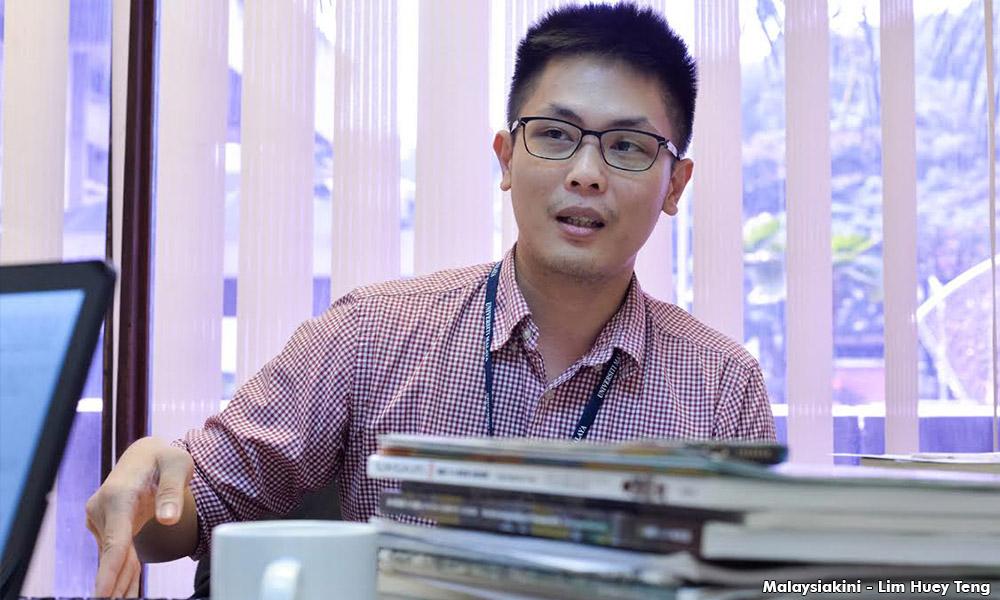 SOON: I'M REALLY INTERESTED IN HOW YOU CAN WRITE HISTORY from below, rather than think of history as written by official channels.
EZRENA: PEOPLE DON'T VALUE GRAPHIC DESIGN VERY MUCH. The Malaysian Film Festival (FFM) just dropped their Best Poster Design category. Why is that happening?
It's really about valuing design work. I really feel like people don't think about those who are actually creating these design works.
SOON: IT'S ALSO REFLECTED in the priorities of whether you would want to take up graphic design as a career.
KEE: WHAT'S REALLY COOL ABOUT THIS is that people are really interested in sharing their collections with us.
Being able to see their collection as part of this (archive) is very valuable to them. It also rests a lot on Ez's personal reputation in the field.
WE STILL DON'T KNOW HOW TO MAKE THIS SUSTAINABLE. None of us have any idea, we just want to make programmes and we're applying for grants now.
Ez has given a lot of talks on this but we haven't really conducted workshops under the MDA banner.
EZRENA: WE'RE TRYING TO REDEFINE WHAT MDA IS. We had small exhibitions but it wasn't so interactive.
This (having programmes and workshops) makes sense as the next phase of where the archive is going, along with Simon's expertise.
We really need a physical space, we really need people to help us scan and analyse the design works.
SOON: WE WANT TO WORK ON A FEW PROJECTS, primarily in workshops. There are limits to what public universities can do and we want to make sure that we bring our knowledge to the larger public.
MALAYSIANS KINI is a series on Malaysians you should know.
Previously featured:
'Osama sent me his regards, but I wasn't interested'
Struck with hot steel, jailed under EO, PSM's Saras defines resilience
Meet Anis Syafiqah, the ordinary student who wants to catch MO1
How one Malaysian bagged seven journalism awards in the US
Beat me on the track, Supermoto champ Husna tells haters
How arguing on drying laundry led to Science Cafe KL
Bringing student activism to Malaysians abroad
Ramli Ibrahim has a reason to dance for joy
Denounced by relatives, ex-engineer battles for indigenous Sarawakians


Are you sure you want to delete this comment?
This action cannot be undone.