


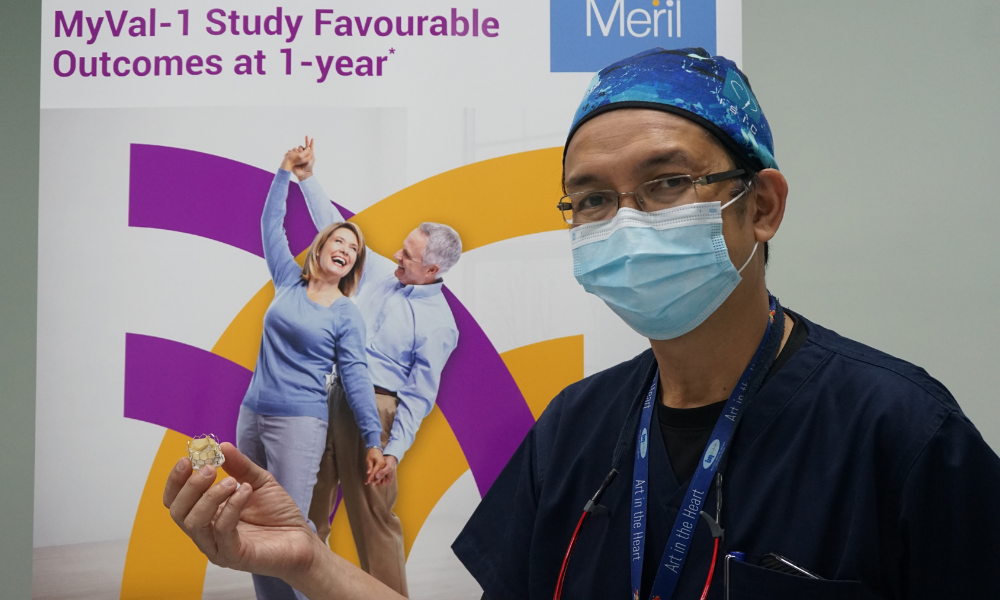

IJN introduces Myval, the latest technology to treat aortic stenosis
As its closing achievement for the year, Institut Jantung Negara (IJN) today made history by being the first hospital in the ASEAN region to successfully implant an advanced man-made heart valve in a patient.
The valve, called Myval, is made of biological tissue, and designed to be used for those who require transcatheter aortic valve implantation (TAVI). TAVI is a relatively new procedure that is commonly used to treat patients with aortic stenosis, particularly who are deemed high-risk for open heart surgery.
The first patient to receive Myval from IJN was an 83-year-old patient with severe aortic stenosis, who was previously experiencing shortness of breath and heart pain due to her condition. The implantation was successfully completed this morning at 10:45am.
One of the most prevalent heart diseases in the developed world, aortic stenosis is a condition where the opening of the heart’s aortic valve becomes narrowed. This in turn restricts the blood flow from the heart to the rest of the body, causing a greater strain on the heart. The condition often develops due to age, as calcium build-up causes blockages to the valve.
Patients may not always immediately show symptoms, but they will eventually experience adverse effects such as breathlessness, chest pains, and blackouts as the condition worsens. If left untreated, aortic stenosis often leads to heart failure and death.
While the conventional treatment for aortic stenosis is open-heart surgery to replace the valve, some 30% of patients are unable to undergo surgery due to risk factors such as other underlying conditions and age.
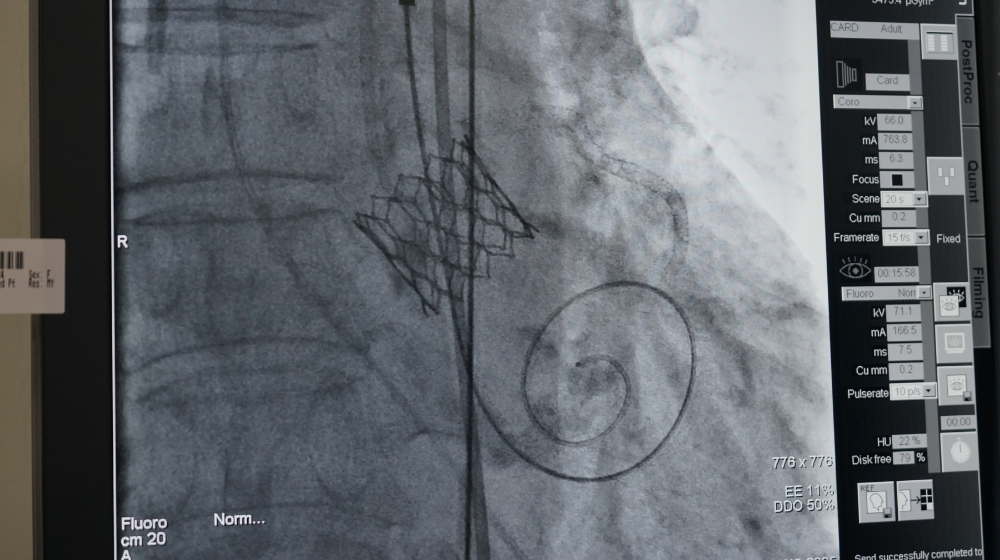
For such high-risk patients, the TAVI procedure is a minimally invasive alternative to treat the condition. In TAVI, doctors will insert a catheter via a small incision in the femoral artery (a large artery in the leg) or chest. A replacement valve is then inserted through the catheter and guided to the heart. Aside from being a viable option for those who are unable to undergo surgery, the procedure is also associated with faster recovery rates, as well as less pain and trauma.
IJN has been a pioneer of TAVI regionally, being the first centre in Asia to introduce the procedure. Since 2009, IJN has successfully carried out TAVI with a multidisciplinary team comprising cardiologists, cardiothoracic surgeons, anaesthetists and paramedical staff.
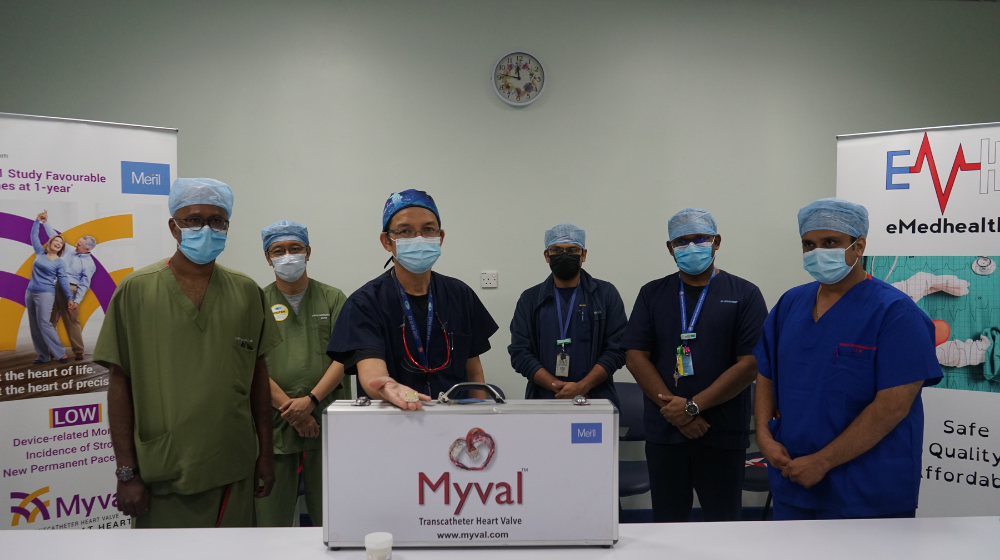
In this regard, the Myval device is an addition to IJN’s existing capabilities. IJN Senior Consultant Cardiologist, Dr. Shaiful Azmi Yahaya explained that due to its unique design, the Myval enables doctors to carry out the procedure with even greater precision.
“For instance, one significant benefit of this device is the ‘navigator delivery system’, which enables the surgeon to guide the valve into the heart more efficiently,” Dr. Shaiful said.
“By improving the accuracy of this valve implantation, we can also reduce the patient’s chances of requiring a pacemaker later on.”
Dr. Shaiful added that such technological improvements to the TAVI procedure will enable more patients to benefit from it, especially those who are unable to withstand the risks of undergoing surgery.
“Continuous innovation is what we need to keep doing what IJN does best; adopt the latest yet safest technology to improve the lives of our patients.”


