



Homegrown universal signing platform aims to support businesses with a cross-border digital signature ecosystem
The adoption of digital signing has gained much traction over the past decade as more businesses begun to embrace digitalisation, especially in the past year and a half as the work-from-home culture became a norm amid the ravages of the Covid-19 pandemic.
Cloud-based signing platform SigningCloud, launched in July 2020 by homegrown digital solutions provider Securemetric Bhd, has grown by leaps and bounds in tandem with the surging demand for digital signing.
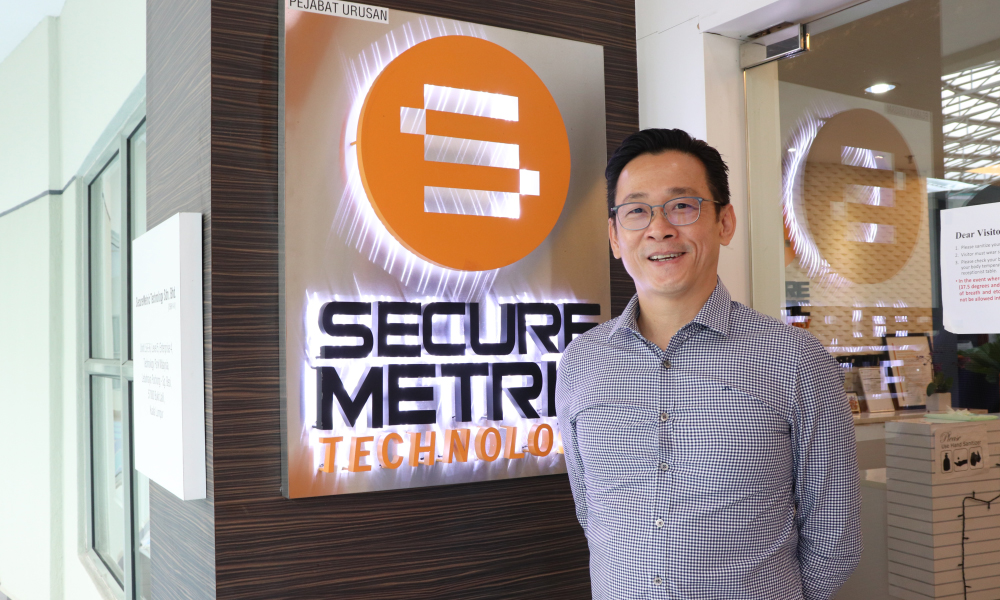
When Covid-19 became widespread, SigningCloud received three times as many requests for demos as companies and individuals wanted a more secure signing option, Securemetric founder and CEO Edward Law shared.
To make its digital processes quicker and more seamless, SigningCloud had further improved on its features and user-interface; it dubs the new version SigningCloud V2.
Buoyed by its success in Malaysia, SigningCloud is eyeing an expansion to the rest of the rest of Southeast Asia. Law hopes that by bringing SigningCloud to more businesses and organisations in Southeast Asia, they will be able to take a conscious step towards becoming more digitally-capable, through digital signatures.
“Our dream is to make SigningCloud the Universal Signing Platform that supports businesses with our own cross-border digital signature ecosystem in a few years,” said Law.
Improving on existing solutions, still prioritising document security
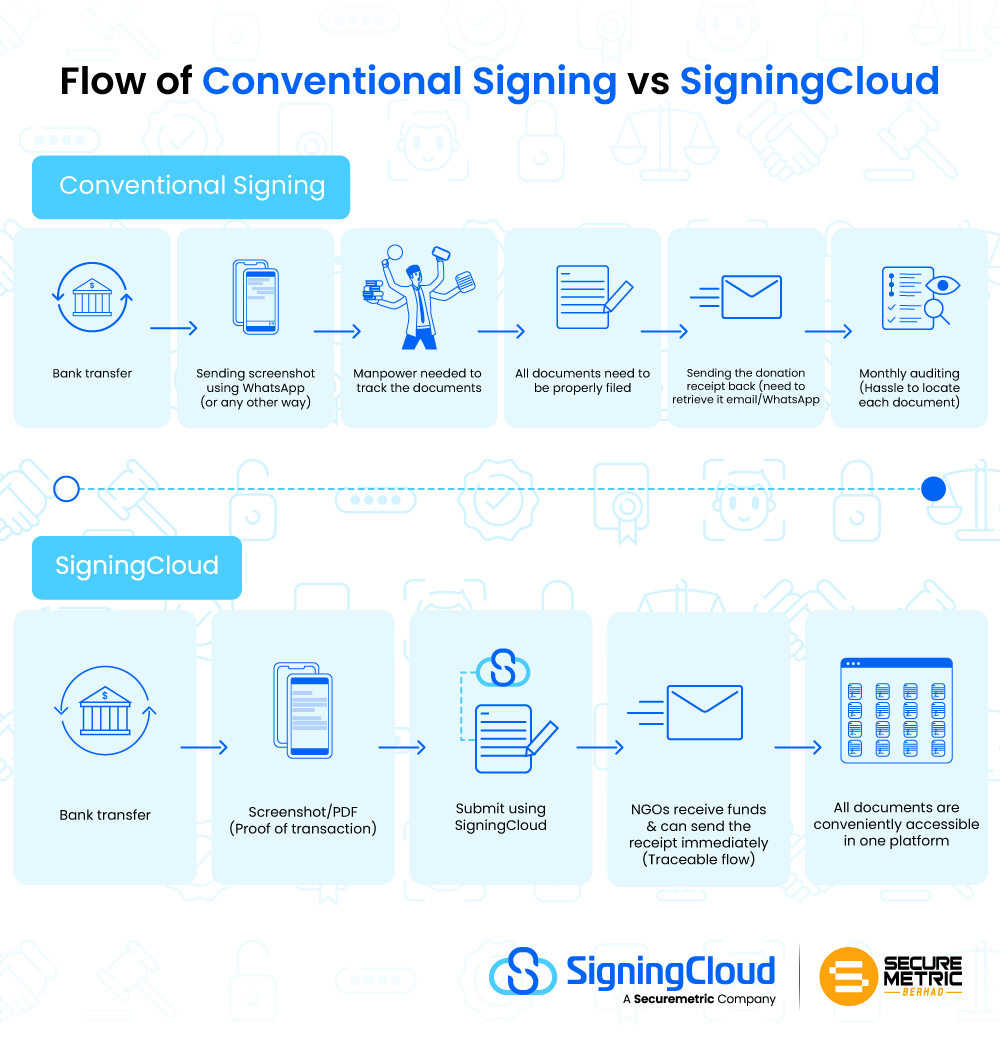
SigningCloud’s mission is to aid in the digital transformation of businesses, making them greener in the process. SigningCloud simplifies the office document workflow from printing, signing and scanning to just sign and send, saving the cost of time and paper, and the hassle in getting a document signed.

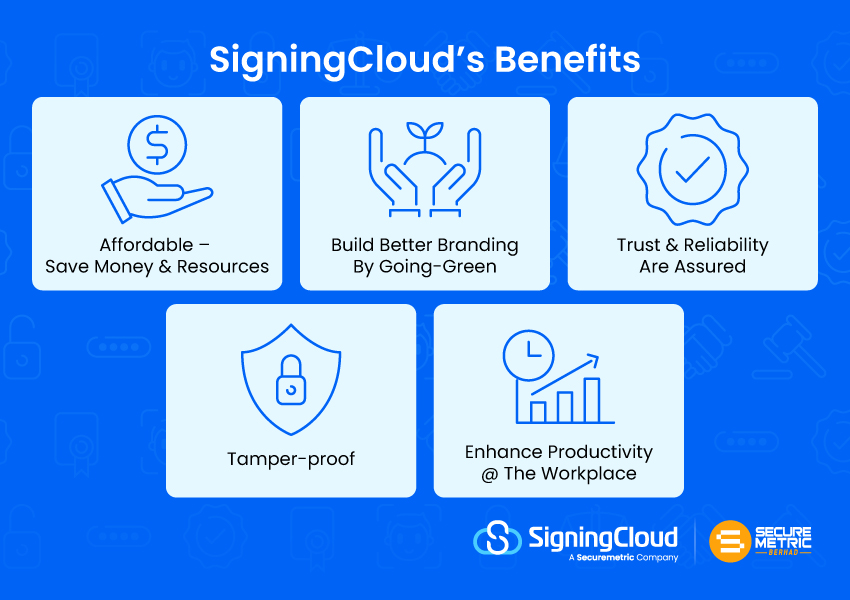
On the surface, digital signatures and e-signatures are similar solutions for online signing. However, a digital signature has more security features and is tamper-proof in the sense that if anyone attempts to alter the signed document, this can easily be detected by running the document through any common PDF viewing tool. The digital signature is so secure one would probably have an easier time just forging a handwritten signature, said Law.
SigningCloud allows users to upload any document and sign it at anytime, anywhere, on any device (mobile access via the SigningCloud app). Compliant with the Digital Signature Act 1997 (DSA), the digital signature issued/placed on the SigningCloud platform is legally valid and will be recognised by any Malaysian court in the event of a dispute.
Law said: “Security is always top on our list. Not only do we utilise one of the region’s top security-compliant cloud service providers, we invest in top-notch security services such as multi-layer firewall, anti-DDoS [distributed denial of service], anti-ransomware, and 24/7 security operation monitoring.”
SigningCloud V2 sports a new design that allows for “an easier document creation and signing experience” said Law. The new design is based on user feedback and industry research on user interface (UI) and user experience (UX). The new UI enables users to quickly refer back to the documents they have signed, or the documents they need to sign, along with other customer-centric changes.
All actions on the SigningCloud platform are traceable, be it minor to major changes. Every signature, amendment, edit and comment made to the document is recorded in a secure audit trail. “Should you be in the need for a comprehensive report for future compliance audits, we’ve got you covered,” said Law.
According to Law, the security of the SigningCloud platform is routinely tested, via simulated attack by a cybersecurity services company, to identify its weak points. This keeps the team staying on top of the situation in case of an attack, rather than figuring out how to deal with an attack only when it occurs.
The platform adheres to the Digital Signature Act 1997 (DSA 1997), where the digital ID of the signer is issued and can be verified by a licensed certification authority (CA). In SigningCloud’s case, users can choose between MSC Trustgate and Pos Digicert as their CA of choice. Users are also free from vendor lock-in, and they can choose the CA of their own volition, based on their pricing and services.
Accessibility-wise, SigningCloud has implemented integrated support for Electronic Document Management Systems (EDMS) in response to customer demand. The new version of SigningCloud supports Microsoft SharePoint and Alfresco EDMS. Users of these programmes can sign their documents digitally through SigningCloud, all without going out of the respective programme, for improved workflow.
SigningCloud aims to add more CA providers as well as integration partners onboard, making it an all-round universal e-signing platform, with the goal of building a cross-border digital signature ecosystem.
Expanding beyond Malaysia
SigningCloud’s next big leap is to aggressively expand from Malaysia into other Southeast Asian countries. It is currently in talks with relevant regulatory parties in three other countries in the region, with an immediate focus on Singapore.
Once the Singapore government signs on, residents of the island state using the Singapore Personal Access (Singpass, Singapore residents’ digital identity account to access government e-services), will be able to sign any legal documents on the Singpass app with SigningCloud’s secure digital signature process.
This process will be governed by the Electronic Transactions Act (Cap. 88) and the Electronic Transactions (Certification Authority) Regulations 2010 in Singapore.
For more information on SigningCloud, click here.


Are you sure you want to delete this comment?
This action cannot be undone.