


/file/publisher-c1a3f893382d2b2f8a9aa22a654d9c97/2026/08/28ef646ee3428f2167d78cf724bfbe8f.jpg)

How do Malaysian homegrown innovations make the leap?
Malaysia has no shortage of homegrown tech. From microelectronics and ICT to artificial intelligence and digital systems, the country has built capabilities with the potential to solve real-world problems.
But developing a technology is only the beginning.
The bigger question is: what happens next?
For Malaysia, the ambition is no longer simply to make things locally. It is to develop, own and commercialise technologies of our own, moving from ‘Made in Malaysia’ towards ‘Made by Malaysia.’
But taking homegrown innovation from the lab to the market requires the right support, partnerships and pathways.
A technology may work in a laboratory, yet still be years away from being invested in and integrated. This is often described as the ‘valley of death’, the difficult gap between proving that an innovation works and making it commercially viable.
Bridging that gap takes more than R&D. It takes infrastructure, technical expertise, industry partners, investment and a clear route to market.
This is where MIMOS is playing a different role.
As Malaysia’s national applied R&D centre under MOSTI, MIMOS has built capabilities and core intellectual property across areas including semiconductors, microelectronics, ICT and artificial intelligence. Its facilities, including the Semiconductor Technology Centre (STC) and AI innovation hub, also provide industry players and universities with access to advanced technology infrastructure, testing and training.
Transitioning to Industry 4.0 and advanced microelectronics often carries high financial and technical risks for local enterprises. MIMOS Holdings uses a distinct market advantage, direct access to over 1,400 national patents, pre-tested technology stacks, and dedicated execution subsidiaries (MIMOS Solutions, MIMOS Services, My Blockchain Infrastructure, MIMOS Academy), to lower adoption costs, de-risk technology transfer, and upskill local talent.

“2026 represents a pivotal milestone in this journey. MIMOS is moving from establishing its commercialisation framework towards execution and scale, while a number of technology platforms developed through the RMK-12 funding cycle are reaching commercial readiness. This creates opportunities for deployment across strategic national programmes, industry applications and potentially international markets,” said Razman Jaafar, Chief Executive Officer, MIMOS Holdings.
Through MIMOS Holdings and the wider MIMOS Group ecosystem, stronger pathways are being established to bring technologies from R&D into commercial deployment, while developing sustainable business models and recurring revenue opportunities.
“In simple terms, MIMOS is evolving from creating technology to creating value from technology, ensuring Malaysian innovation delivers meaningful economic and national impact, while creating opportunities to scale into the global market.”
What does it take to make tech market-ready?
Deep-tech commercialisation is a journey that does not necessarily happen within a single RMK cycle. Technologies evolve at different rates, shaped by factors such as technological maturity, industry validation, regulatory requirements and market readiness. In many cases, multiple development cycles are needed before an innovation is ready for full-scale commercial deployment.
MIMOS’ commercialisation journey reflects this. Some of its commercial successes today can be traced to R&D developed through earlier RMK cycles, including contributions to Malaysia’s early healthcare digitalisation efforts through the Healthcare Data Warehouse and Clinical Information System (CIS), as well as initiatives such as Smart Lokap – Video Analytics.
One important part of that process is working with Technology Recipients, local industry partners that take MIMOS technologies forward into specific applications and markets.
Three examples show what that journey can look like.
1. A blood test without the needle
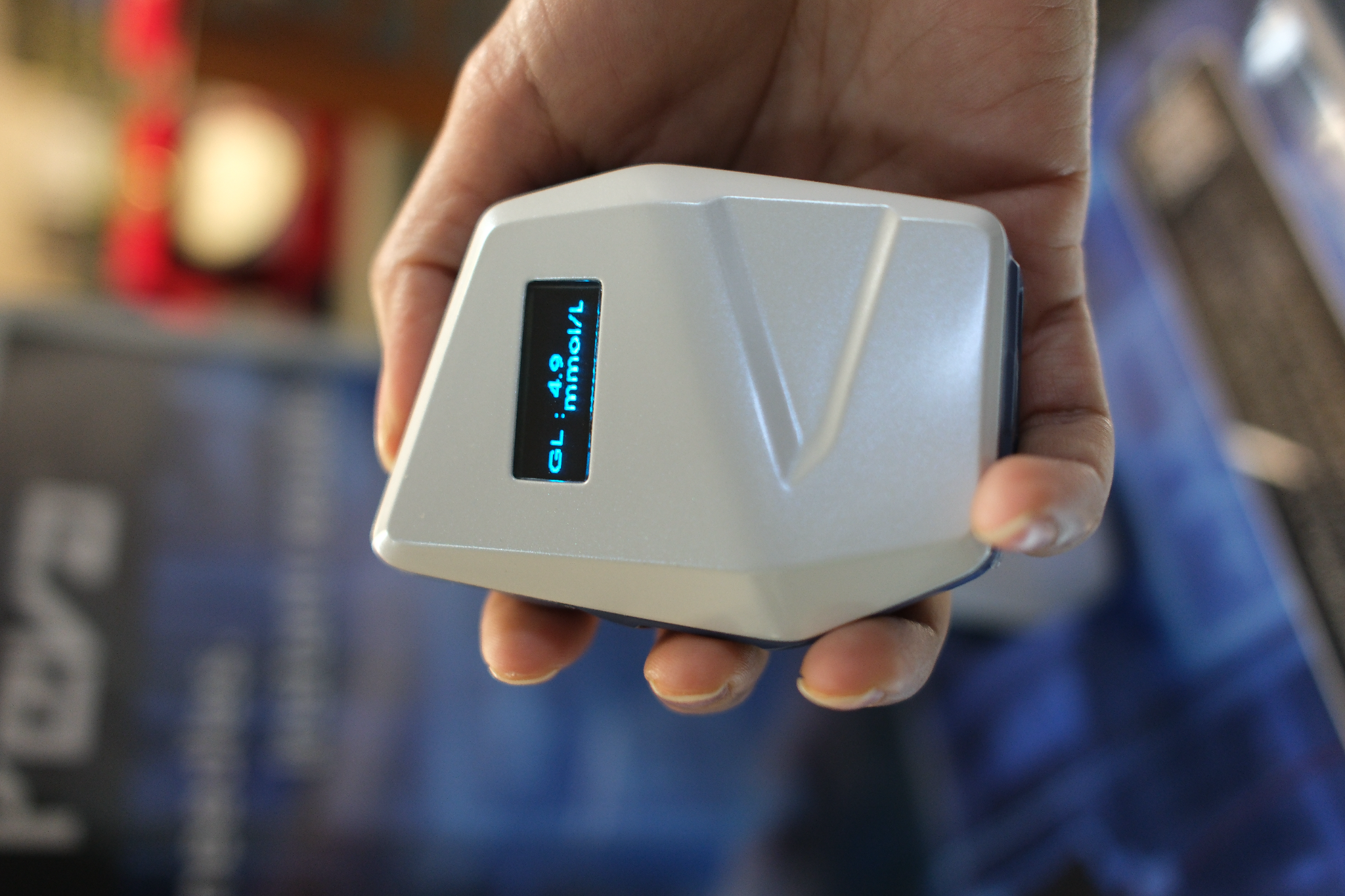
Imagine being able to check your haemoglobin levels and vital signs without having blood drawn.
That is the idea behind REVA Haemoglobin technology, developed by MIMOS and successfully licensed to MIMOS Technology Recipient’s company RECOVE. The technology is designed to make screening more convenient and portable, potentially bringing diagnostic capabilities closer to where they are needed.
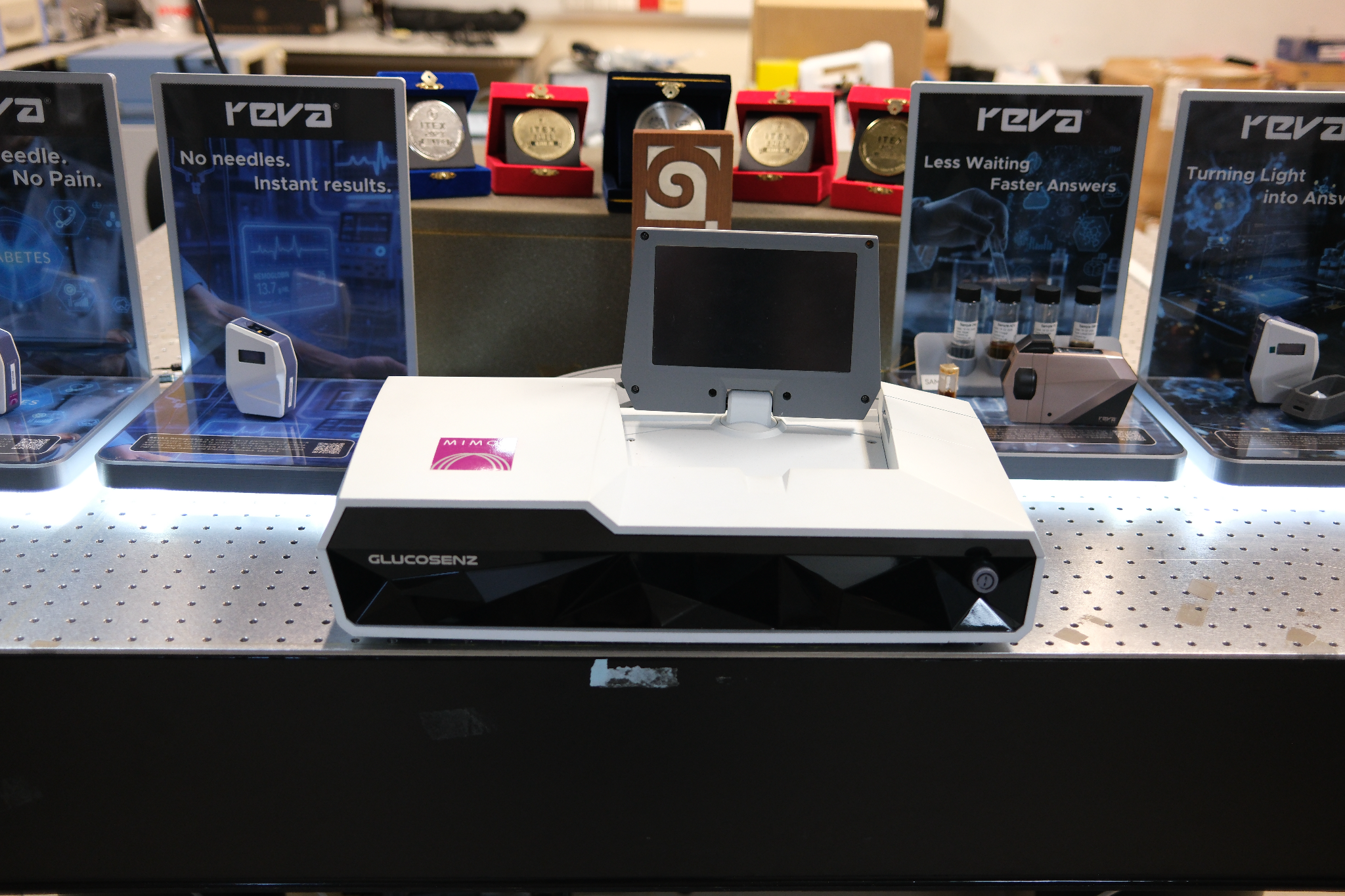
2. Smarter palm oil monitoring
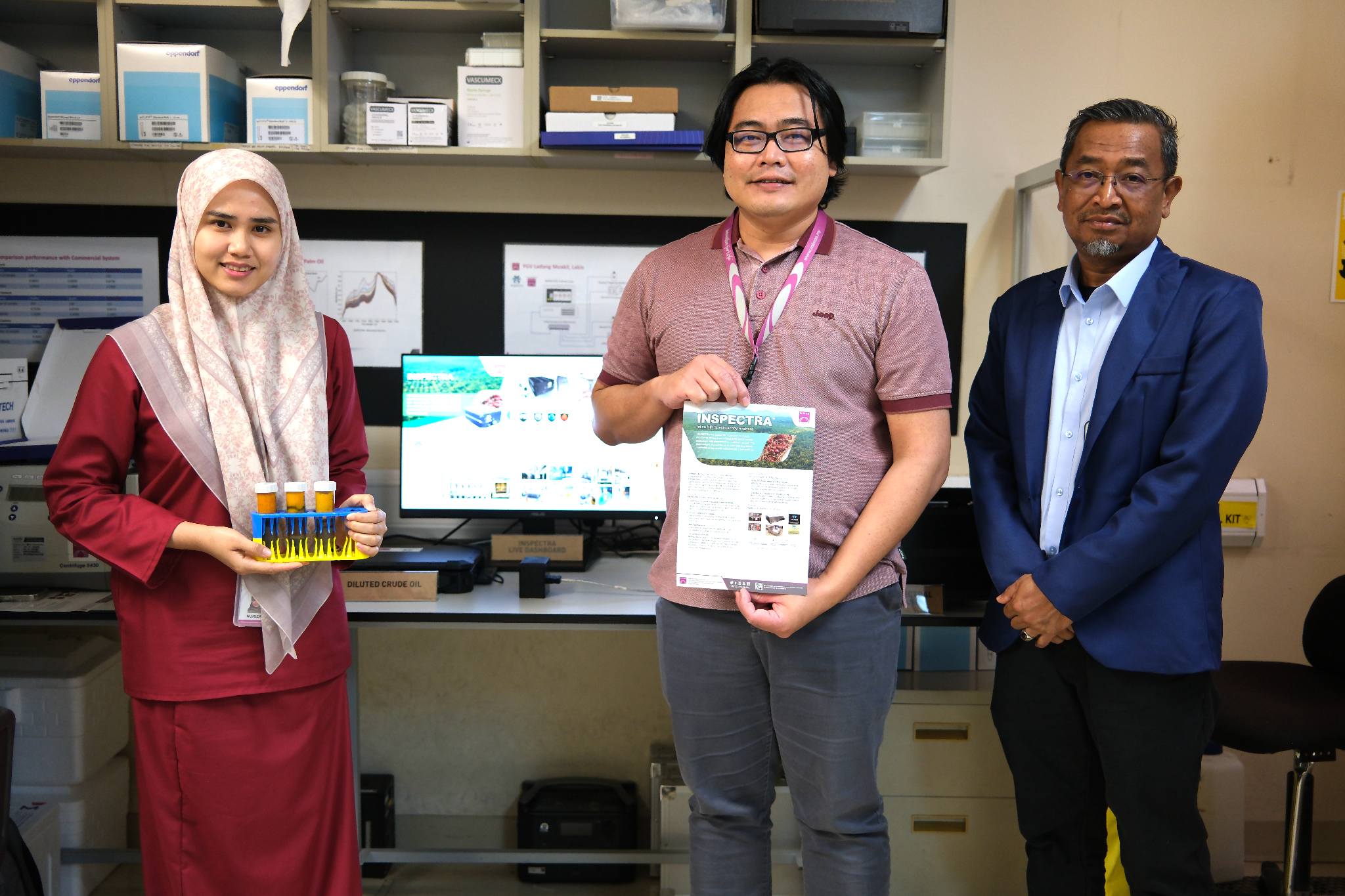
Traditionally, palm oil quality can be assessed through visible changes such as a darker or browner colour, which may indicate spoilage. INSPECTRA™, partnered with MIMOS technology recipient Rodatech, takes a more advanced approach, enabling faster and more accurate real-time testing of palm oil quality and suitability.
Unlike conventional testing, it is non-destructive and reagent-free, meaning products can be inspected without damaging them or relying on chemical testing.
3. Making electronics with conductive ink
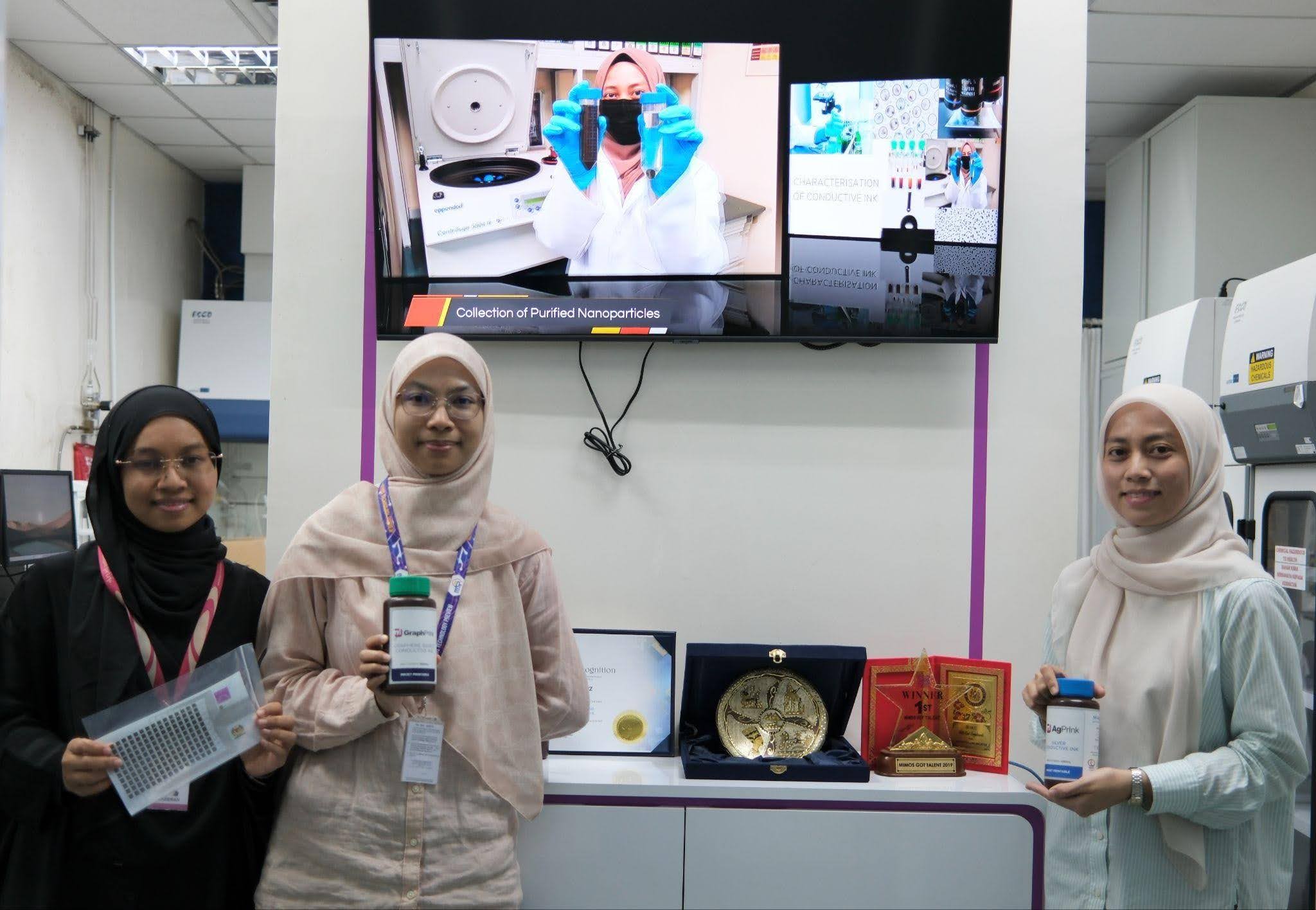
Conductive inks are opening up new possibilities for printed, flexible and wearable electronics. MIMOS has developed silver-based and graphene-based conductive ink technologies designed to deliver strong adhesion and high electrical conductivity for applications ranging from printed electronics to wearable devices and flexible sensors.
By teaming up with MIMOS technology recipient Tanjung Plus to adopt MIMOS' graphene ink technology, the innovation is being taken closer to market applications, demonstrating how locally developed materials can move beyond the laboratory and into new products and systems.
Together, these partnerships show why industry is a critical bridge between R&D and the market. MIMOS provides the technology and technical foundation, while Technology Recipients bring industry expertise, commercial capabilities, investment and access to customers and markets. The result is a pathway that helps turn homegrown technologies into solutions with real-world applications.
Making deep-tech less risky for Malaysian companies
For many local companies, however, adopting advanced technology can be intimidating.
There is the cost of implementation, uncertainty over performance, integration challenges and the question of whether customers will actually pay for the resulting product or service.
“De-risking technology adoption is central to MIMOS Holdings’ commercialisation mandate. Our objective is to give industry greater confidence to adopt Malaysian-developed deep-tech by progressively reducing technical, financial and market risks, while strengthening Malaysia’s technology sovereignty and reducing strategic reliance on foreign technologies.”
“We do this first through technology readiness and validation. Businesses can access validated technologies, prototypes, testing capabilities and MIMOS’ technical expertise before committing to full-scale deployment. This enables potential adopters to better understand both the technology and its commercial potential,” said Razman.
From there, MIMOS encourages a phased approach to adoption, starting with Proof-of-Concept (PoC), pilots or sandbox deployments. This allows businesses to test performance and commercial value in a controlled environment, while MIMOS provides technical support to minimise integration and implementation risks.
MIMOS Holdings also offers flexible commercialisation models, including IP licensing, technology transfer, co-development and strategic partnerships. At the same time, it connects technologies with the right industry partners, investors and market opportunities.
The aim is to progressively reduce uncertainty at every stage, giving Malaysian businesses greater confidence to adopt, scale and turn homegrown deep-tech into sustainable commercial value.This is where MIMOS’ role extends beyond research and development. By creating clearer pathways from technology readiness to industry adoption and commercialisation, they help ensure Malaysian innovation does not stop at invention, but continues to deployment, scale and impact.
Visit https://www.mimos.my for more info.


