


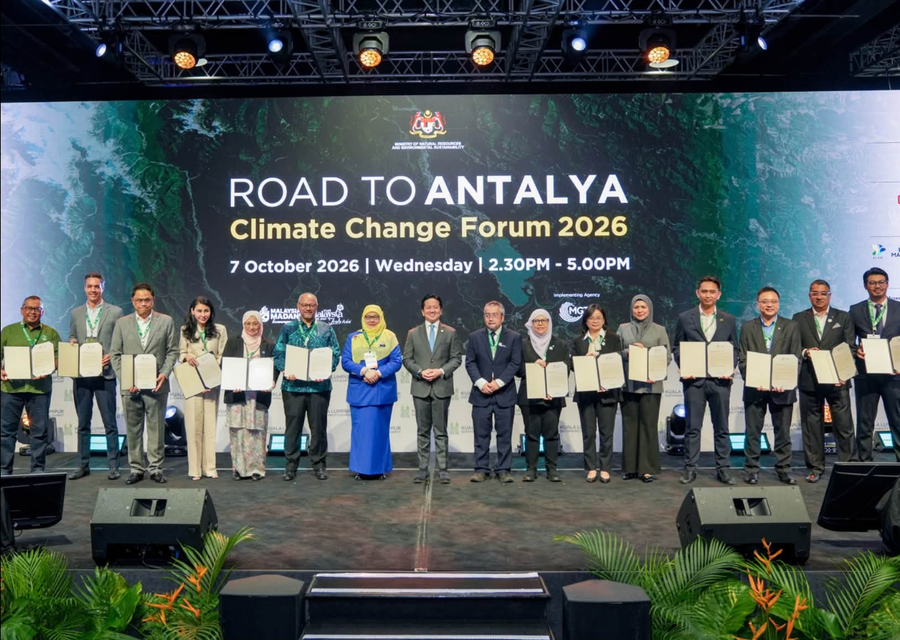

Malaysia’s Road to COP31: Turning Climate Ambition into Collective Action
Climate change knows no borders, and tackling it requires collective action. As former United Nations Secretary-General Ban Ki-moon once said, “There is no ‘Plan B’ because we do not have a ‘Planet B’.” His words remain a timely reminder that addressing climate change requires sustained commitment, cooperation and shared responsibility.
As countries prepare for the 2026 United Nations Climate Change Conference (UNFCCC) COP31 in Antalya, Türkiye, from 9 to 20 November, the stakes extend beyond environmental protection. Climate policy is increasingly intertwined with economic security, livelihoods and public health, making international cooperation more important than ever.
Previous COP summits have helped shape this global response. COP21 in 2015 saw the adoption of the Paris Agreement, establishing a shared framework for limiting global warming. At COP28, countries concluded the first global stocktake, assessing collective progress towards the Agreement’s goals. COP29 subsequently established a new collective quantified goal on climate finance to strengthen financial support for developing countries.
Together, these milestones reflect the evolving priorities of international climate negotiations: setting common goals, assessing progress and mobilising the resources needed to move forward. As COP31 approaches, the focus increasingly turns to how these commitments can translate into practical solutions across economies and communities.
Advancing Malaysia’s Climate Agenda
For Malaysia, COP31 offers an opportunity to bring its climate policies, industry initiatives and homegrown solutions into the global conversation. Beyond showcasing progress, the conference provides a platform to demonstrate how sustainability can support economic development, encourage investment and strengthen the country's resilience to climate-related challenges.
Malaysia’s climate ambitions are increasingly reflected in the policies and frameworks taking shape at home. The proposed National Climate Change Bill (RUUPIN) and Climate Change Authority Bill form part of efforts to strengthen the regulatory foundations for climate governance and provide a more coordinated approach to climate action.
Budget 2027 further supports this direction through extended green technology tax incentives, investments in grid infrastructure and new opportunities in the energy transition, helping to create conditions for businesses to participate in the shift towards a greener economy.
Malaysia has also established important foundations through its Nationally Determined Contribution (NDC 3.0), National Climate Change Policy 2.0, Biennial Transparency Reporting framework and National Carbon Market Policy. Together, these initiatives help shape the country’s climate priorities and provide direction for the transition ahead.
Malaysia's approach is guided by the principle of Common but Differentiated Responsibilities and Respective Capabilities (CBDR-RC), a fundamental principle under the United Nations Framework Convention on Climate Change (UNFCCC) and the Paris Agreement. It recognises that while all countries share responsibility for addressing climate change, their contributions should reflect their respective capabilities and national circumstances. This is particularly important given differences in development levels, financial resources and access to technology, ensuring that climate action is pursued equitably.
Malaysia Pavilion: Showcasing Malaysia to the World
While official negotiations focus on shaping international climate commitments and decisions, the Malaysia Pavilion showcases national action, facilitates knowledge exchange and fosters collaboration to translate climate ambition into practical solutions.
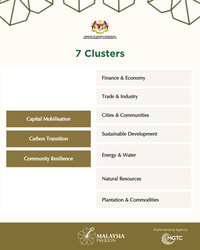
At COP31, the Malaysia Pavilion will provide a platform to showcase the country's climate initiatives, foster collaboration and highlight its commitment to achieving net-zero greenhouse gas emissions by 2050.
Themed “Climate Action Now: Driving Resilient Growth”, the pavilion will bring together seven thematic clusters: Finance & Economy, Trade & Industry, Cities & Communities, Sustainable Development, Energy & Water, Natural Resources, and Plantation & Commodities.
These clusters are organised around three thematic pillars: Capital Mobilisation, Carbon Transition and Community Resilience. Together, they aim to unlock green growth opportunities through climate finance, accelerate economy-wide decarbonisation through technology and nature-based solutions, and empower communities and cities by embedding natural ecosystems into sustainable development.
The framework reflects the interconnected nature of the climate challenge. Mobilising investment is essential to financing the transition, while transforming industrial processes, developing sustainable cities, strengthening water security and protecting natural resources are equally important to building long-term resilience.

From 9–19 November, the Malaysia Pavilion will feature discussions on a range of sustainability and climate-related topics, including sustainable development, environmental, social and governance (ESG) principles, nature-based solutions, climate resilience, biodiversity conservation and sustainable agriculture. Sessions will also explore the role of future-ready cities, water security, responsible commodity supply chains and community-led initiatives in supporting Malaysia's environmental goals.
Other discussion topics include energy transition, regional energy connectivity, green industrialisation, low-carbon technologies, climate finance and carbon markets. The programme will also examine how innovation, education and youth engagement can accelerate climate action, while creating economic opportunities and supporting inclusive, sustainable development.
The panellists will also explore the practical measures and strategic partnerships that can help advance Malaysia’s climate agenda as the country prepares for COP31.
A Collective Ambition
Preparing for COP31 involves more than presenting Malaysia’s climate priorities on the international stage. It also requires bringing together the expertise, experience and perspectives of stakeholders who can help shape the country’s approach to climate action decarbonisation.
In August, the Malaysia Pavilion COP31 Focus Group Discussion brought together representatives from government, industry, academia, civil society and the wider sustainability ecosystem for two days of discussion on Malaysia’s climate agenda.
Structured around the pavilion’s seven thematic clusters, the discussions allowed participants to share ongoing initiatives, identify areas where efforts could be strengthened and put forward recommendations aligned with Malaysia’s climate and sustainable development priorities.
The second day focused on refining these recommendations and translating ideas into actionable programme plans. Presentations from PETRONAS, TNB, Global Tunikara and the thematic clusters further informed the development of a cohesive programme for the Malaysia Pavilion.
Beyond shaping the pavilion’s programme, the discussions allowed participants to learn from initiatives across sectors and consider how their efforts could contribute to broader national goals.
“Participants from diverse sectors, including industry, government, NGOs, and academia, shared valuable perspectives and initiatives related to the cluster. The session provided meaningful insights and highlighted the wide range of impactful efforts being undertaken across different sectors,” said Raira Yuana Isnin, Manager in ESG and Sustainability, JCorp.
Hanis Alwani from the Malaysian Youth Delegation also reflected on the value of learning from different organisations and their approaches to sustainable development.
“Learning from other organisations’ visions and journeys towards a shared goal was truly valuable. The sustainable development dialogue fostered a collaborative dynamic, with everyone striving to support and uplift one another. Many thanks to the facilitators for creating an inclusive and comfortable environment for the focus group discussion,” she said.
As the Focus Group Discussion concludes, its recommendations will help shape the next phase of programme development for the Malaysia Pavilion. The work ahead is to bring these ideas together in a programme that reflects the country's climate priorities and the contributions of stakeholders working towards a more sustainable future.
Malaysia's journey to COP31 is already unfolding at home — in policies being shaped, industries rethinking how they operate, and communities and organisations finding new ways to respond to climate challenges. The Malaysia Pavilion at Antalya will offer a chance to bring these efforts into a wider conversation, share lessons from the journey and build connections that can support the work still to come.
Follow Malaysia’s journey to COP31 through the official Malaysia Pavilion website for updates on the programmes, events and initiatives shaping the country’s participation throughout the conference.


