


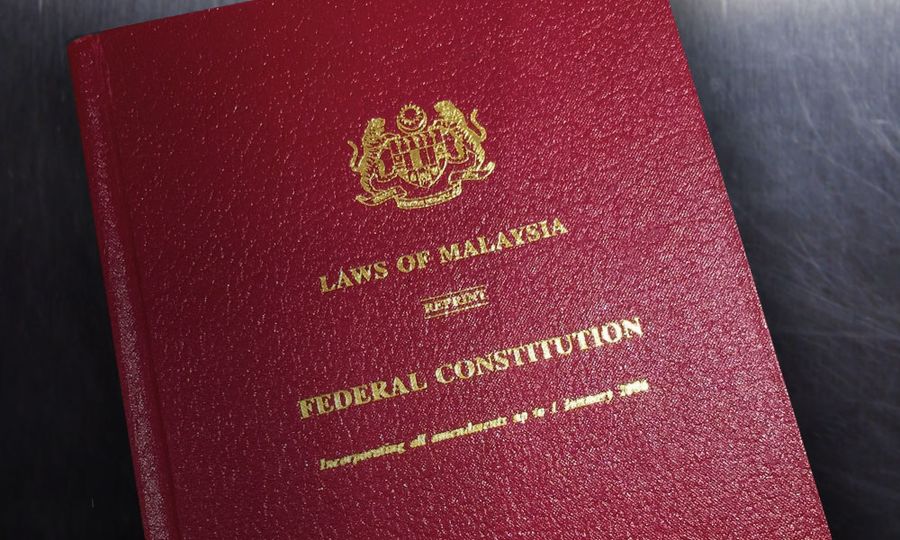

COMMENT | Royal prerogative is not above the Constitution
COMMENT | The royal prerogative of pardon is not an unrestricted personal power. In Malaysia, even the highest constitutional office is subject to the Federal Constitution.
A royal prerogative is a special constitutional power vested in the Yang di-Pertuan Agong, including the power to pardon a convicted person or reduce a sentence.
However, possessing that power does not mean it can be exercised without limits. A driver's licence gives you the right to drive; it does not give you the right to ignore traffic laws.
Likewise, the power to pardon does not give the king the right to disregard the Constitution.
The constitutional wording is plain. Article 42(4) of the Federal Constitution provides that the king...
COMMENT | The royal prerogative of pardon is not an unrestricted personal power. In Malaysia, even the highest constitutional office is subject to the Federal Constitution.
A royal prerogative is a special constitutional power vested in the Yang di-Pertuan Agong, including the power to pardon a convicted person or reduce a sentence.
However, possessing that power does not mean it can be exercised without limits. A driver's licence gives you the right to drive; it does not give you the right to ignore traffic laws.
Likewise, the power to pardon does not give the king the right to disregard the Constitution.
The constitutional wording is plain. Article 42(4) of the Federal Constitution provides that the king "shall act on the advice of the Pardons Board."
It does not say "may”. In ordinary legal language, "shall" imposes an obligation, not an option.
Article 40(1A) of the Federal Constitution, introduced through the 1994 constitutional amendments, goes further.
It provides that where the Constitution requires the king to act on advice, he "shall accept and act in accordance with such advice”.
These two provisions must be read together. They raise a fundamental question: can the king disregard the formal advice of the Pardons Board and substitute his own decision?
If so, what meaning is left for the mandatory language of Article 40(1A)?
Constitutional concerns
This is why the conditional pardon granted to former prime minister Najib Abdul Razak on Sept 18 raises serious constitutional concerns.
Reported declassified minutes indicate that the attorney-general and the federal territories minister opposed the proposal for house arrest.
If the Pardons Board formally advised against it, on what constitutional basis could the king proceed contrary to that advice?

The power to pardon belongs to the king but the manner in which that power is exercised is governed by the Constitution. The distinction between possessing a constitutional power and exercising it without constitutional limits must not be lost.
Some may rely on earlier decisions, including Karpal Singh v Sultan of Selangor and Juraimi bin Husin v Board of Pardons.
However, these must be examined in the light of Article 40(1A), introduced in 1994. The effect of that amendment on the binding nature of the board's advice deserves authoritative determination.
Whether the courts can review the merits of mercy is a different question from whether the constitutional requirements governing its exercise must be obeyed.
Not about Najib
Let us be clear: this is not about whether Najib deserves mercy. The issue is whether the constitutional process was followed, and whether the power of pardon was exercised within the limits of the Constitution.
Respect for the monarchy does not require silence in the face of legitimate constitutional questions. A constitutional monarchy is strengthened, not weakened, when its powers are exercised in accordance with the Constitution.

We therefore call on the government to publish the Pardons Board's formal resolution and the attorney-general's written opinion under Article 42(9).
We further call for the question of the binding effect of the board's advice under Articles 40(1A) and 42(4) to be authoritatively determined by the Federal Court.
If constitutional requirements can be disregarded in one high-profile case, what protection does the Constitution offer in the next?
The king is the head of state. He is not the Constitution itself. Royal prerogative is a power conferred and regulated by the Constitution, not a power above it.
RAJESH NAGARAJAN is an advocate and solicitor.
The views expressed here are those of the author/contributor and do not necessarily represent the views of Malaysiakini.




Well said, Rajesh. Can’t agree more. You hit the nail on the head.
Even if this argument wins in court who would enforce it in malaysia? See indira case.
""We therefore call on the government to publish the Pardons Board's formal resolution and the attorney-general's written opinion under Article 42(9)."" 42(9) - (9) Before tendering their advice on any matter a Pardons Board shall consider any written opinion which the Attorney General may have delivered thereon. SHALL CONSIDER
Report this comment
Are you sure you want to delete this comment?
This action cannot be undone.