




Leaders needed for religious pluralism
Malaysia's religious landscape is pluralistic, steeped in spirituality and Malaysians worship God in many different ways. The mosques , temples and churches in Malaysia's tourist brochures promote a nation where people co-exist peacefully worshipping God according to each community's religious beliefs and practices.
But is there an understanding of religious pluralism among Malaysians? Is it superficial? Do we have knowledge about the major religions in Malaysia ? Where are the leaders for religious pluralism in Malaysia ?
Malaysia's religious landscape is pluralistic, steeped in spirituality and Malaysians worship God in many different ways. The mosques, temples and churches in Malaysia's tourist brochures promote a nation where people co-exist peacefully worshipping God according to each community's religious beliefs and practices.
But is there an understanding of religious pluralism among Malaysians? Is it superficial? Do we have knowledge about the major religions in Malaysia? Where are the leaders for religious pluralism in Malaysia?
Recent media reports highlighted a directive by a non-Muslim officer from the Prime Minister's Office requesting the removal of the iconic crucifixes and also no religious hymns be sung when the Prime Minster joined in a Christmas celebration tea party at Cardjin House , the residence of the Catholic Archbishop. The Prime Minister, it appears, was not aware of the directive.
But what should be of concern to us is not so much the directive of an ignorant aide but the reactions of Malaysians, including politicians and columnists.
These reactions reflect the fact that we are a long way from understanding the practices of pluralism in a society that consists of different communities identifying themselves in religious terms.
As Deepak Chopra, best selling author and medical practitioner says, "The vast majority of us, though we have cell phones and we can make nuclear bombs , our psychological and spiritual evolution is frozen to a level that is very tribal."
Spiritual tunnel vision on display
 For example, the
Mingguan Malaysia
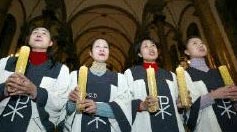
columnist Dr Ridhuan Tee Abdullah, who supported the removal of the crucifix and Christian hymns at the Christmas tea party attended by Najib Abdul Razak, has even called for the scaling down of Christmas celebrations as the Christian population is small (10%).
For example, the
Mingguan Malaysia
columnist Dr Ridhuan Tee Abdullah, who supported the removal of the crucifix and Christian hymns at the Christmas tea party attended by Najib Abdul Razak, has even called for the scaling down of Christmas celebrations as the Christian population is small (10%).
He is no different from the Christian pastor who in a talk in Penang a few years ago raising his voice asked the audience, "and what do you do when you go into the coffee shop for your char keow teow? Bring down the altar!"
The pastor was referring to the non-Christian altars in coffee shops. The audience that included professionals agreed with the speaker.
This pastor is not alone in urging people to give up the ways they had been worshipping God. Indigenous communities have been the target of those who want them to give up their ways of worship, including cultural and cosmological traditions of paying homage to the creator, and instead adopt faith based worship.
The head of an orang asli village in Perak several years ago told a group of activists, "Muslims, Christians, Bahai, Hindus, universities and NGOs have come with promises of help. But our situation has not changed."
Our neighbour offers us some important lessons in political leadership and religious pluralism. The country's fourth president, the late Abdurrahman Wahid or popularly known as Gus Dur was one of the greatest Indonesian Muslim intellectuals who promoted religious tolerance and pluralism. He was a member of the International Board of the International Strategic Dialogue Centre at Netanya University in Israel.
Where all faiths are embraced
Gus Dur was awarded the Magsaysay award from the Philippines for building inter religious relationships in Indonesia.
In May 2007, President Susilo Bambang Yudhoyono attended the bicentennial celebrations of 200 years of the Catholic church in Jakarta. The ceremony was telecast alive over television .
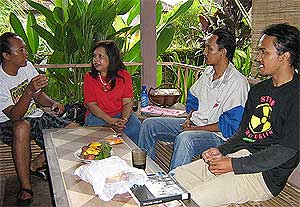 Muhammadiyah , one of the largest Muslim organisations in Indonesia, has offered its schools to Christians to observe Christmas. I was in Indonesia then and was moved by the political support for religious pluralism.
President Obama during his visit to Indonesia in November 2010 in a major speech at the University of Indonesia touched on religious pluralism in the country.
He said: "We are two nations, which have travelled different paths. Yet our nations show that hundreds of millions who hold different beliefs can be united in freedom under one flag... Earlier today, I visited the Istiqlal mosque - a place of worship that was still under construction when I lived in Jakarta. I admired its soaring minaret, imposing dome, and welcoming space.
"But its name and history also speak to what makes Indonesia great. Istiqlal means independence, and its construction was in part a testament to the nation's struggle for freedom. Moreover, this house of worship for many thousands of Muslims was designed by a Christian architect.
"Such is Indonesia's spirit. Such is the message of Indonesia's inclusive philosophy, Pancasila. Across an archipelago that contains some of God's most beautiful creations, islands rising above an ocean named for peace, people choose to worship God as they please. Islam flourishes, but so do other faiths."
Serious attempts to douse conflicts
Of course, there are religious conflicts and increasing radicalism in Indonesia but there are efforts to resolve these conflicts. In 1969, a decree was issued by the government to support inter-religious harmony. In 2005, this was renewed and provinces and districts are establishing Inter-Religious Forums to promote dialogues and programmes.
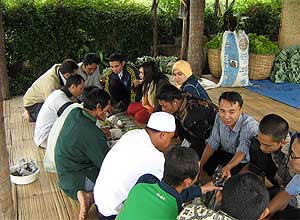 Institutions such as the International Centre for Islam and Pluralism address concerns of religious pluralism through networking and campaigns.
We need a political leadership that is fearless in confronting the challenges of religious pluralism and defend the ways individuals and communities choose to worship God. Greater religious interfaith cooperation is needed and government should support such cooperation.
The role of public policy in religious pluralism is an area that requires greater attention. Courses in religious pluralism should be included in the training of public officials. Sometimes not so prudent decisions are made because public officials are not well informed.
As the intellectual Azyumardi Azra stresses, "Pluralism, Liberalism and Secularism are not ideologies but ways of thinking."
We need thinking leaders.
JOSIE M FERNANDEZ is currently an Asian Public Intellectual Fellow, director of Philanthropy Asia, consultant and researcher. Working on sustainability, philanthropy and anti-corruption actions are some of her current passions besides writing.


