




No stopping the 'MRT Express'
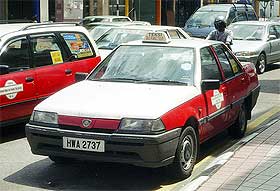
The clamour for better public transportation in Kuala Lumpur is increasing as traffic congestion worsens, taking its toll on the people’s quality of life and affecting business productivity.
The clamour for better public transportation in Kuala Lumpur is increasing as traffic congestion worsens, taking its toll on the people’s quality of life and affecting business productivity.
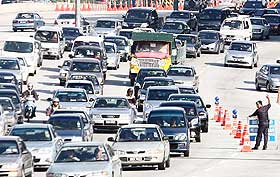 A popular solution is a mass rail transit (MRT) system, which is a feature of most modern metropolises, among which KLites would like to count their city.
Comparisons are drawn between the horrendous traffic jams that have become a standard feature of Kuala Lumpur, and the convenience and efficiency of MRT systems in cities like Singapore, Hong Kong, Taipei and Tokyo.
Given the attraction that an MRT system would add to life in Kuala Lumpur, it may seem odd to ask whether the public interest is best served by the manner in which the MRT project is being implemented.
Of course, it will be a big boon to whiz through the underground after enduring the initial disruption during its construction, which is expected to last for a decade.
Open, participatory, accountable
However, we owe it to ourselves to ensure that the decision-making process in this mammoth public infrastructure undertaking is open, participatory and accountable.
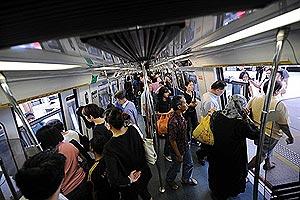 It would be ironic to acquire a First World transportation system at a record price without the benefit of a transparent public procurement process.
The MRT project gained prominence in public transport policy discussions when it was included as a proposal to make Greater Kuala Lumpur one of the drivers of economic growth under the Economic Transformation Programme (ETP) that was unveiled in the middle of last year.
Even in its early stages, the proposal generated much interest not least because the price tag, estimated at about RM36 billion, would make it the most expensive infrastructure project the country would undertake.
Opinion had it that the cost would probably be higher because of the tunneling that would be required to be undertaken for the project.
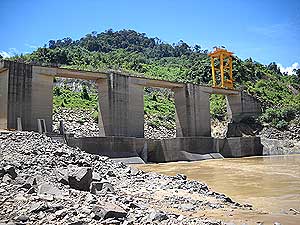 In comparison, the Bakun dam project has an official price tag of RM7.3 billion, not including cost overruns of RM1.7 billion, although external analysts estimate the final cost to be much higher.
Another major infrastructure that could give the MRT project a run for its money is the Padang Besar-Johor Baru double tracking project, which will cost at least RM23 billion.
Before the adoption of the MRT project, it is crucial that a study be conducted on the multi-modal public transport system of Kuala Lumpur in totality in order to determine which aspects of the system needs immediate attention, and which aspects should be undertaken in the middle and longer terms.
Dispensing with the indispensable
Such a study should have been the first priority of the Land Public Transport Commission (SPAD in Malay), which was established in June last year.
This indispensable exercise has been skipped and we now find ourselves rushing into the most expensive of the public transportation options for Kuala Lumpur.
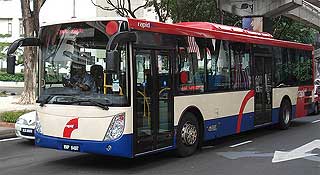 Logically, other lower cost components of public transportation, including the bus, monorail, tram, light rapid transit and train systems need to be fully explored before we put our money into an MRT. Malaysians in urban centres in other parts of the country would rightly feel that a more cost-effective option for Kuala Lumpur would leave ample funds for the public transport systems in their cities to be upgraded.
Instead, we have two prominent private companies, Gamuda Bhd and MMC Corp Bhd, which decided to present a proposal for an MRT project to the government, reportedly last February. Subsequently, the Finance Ministry appointed two consultant firms, Minconsult Sdn Bhd and the Canada-based Andercon Technologies Ltd, to conduct a
feasibility study for the MRT by last September.
In effect, the public is presented with a fait accompli , and public participation in the decision-making process has been sidelined.
 Fast forward to January 31 2011, and the MMC-Gamuda Joint Venture Sdn Bhd announces that it has received a letter of award from the Ministry of Finance-owned Syarikat Prasarana Negara Bhd to be the project delivery partner for the KL MRT project.
SPAD has announced that the proposed routes will be put up for public display in March, the project will be open to bidders in April and land acquisition will take place in May and June.
Good news for some, bad news for others
The decision-making process for public transportation systems requires full transparency and multi-stakeholder participation to ensure that maximum benefit is derived from the project.
All developers in the vicinity of the MRT system’s alignment will be eager to have the MRT route pass through their projects, since this will cause a dramatic increase in their property values.
However, what is good news for developers may not be so for residents who may be robbed of the tranquility of their homes because of increased traffic in their area.
 It is therefore crucial that the decisions on track alignment and the location of stations be open and impartial, so that the MRT captures the highest catchment of users instead of being influenced by developers that have clout with the authorities.
This will help to make the project as financially viable as possible and serve the greatest number of users.
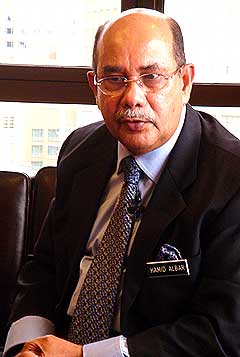
SPAD chairman Syed Hamid Albar ( right ) has said that the MRT project would be funded entirely by the government where a special-purpose vehicle under the Finance Ministry would be set up to advise, manage and raise the funds.
To ensure good governance, which is among the highlights of the National Key Result Areas approach now being promoted by the government, all bidders and partners in the MRT project should adopt the rules of transparency and accountability such as those contained in Transparency International’s Integrity Pact, which will ensure that the financial and project management aspects of this massive exercise can come under public scrutiny.
Above all, the onus is on the public, especially residents in Kuala Lumpur, to commit themselves to participating in the decision-making process of this project, the full costs of which are not known even though the groundwork for its rollout is advancing at a dramatic speed.
Ready or not, KL will get its MRT project.
JOSIE M FERNANDEZ is currently an Asian Public Intellectual Fellow, director of Philanthropy Asia, consultant and researcher. Working on sustainability, consumer protection,philanthropy and anti-corruption actions are some of her current passions besides writing.


