




More farmers, not economists
The headlines and TV cameras have for weeks turned to the Middle East where planting of seeds and harvesting of crops first began. Agriculture has its roots in the fertile crescent of the Middle East from Palestine to Syria, Turkey, western Iran, etc. Today the cameras are focusing on protests in this region that started with spiralling food prices , profiteering and corrupt governments.
In Egypt a regime fell, in Tunisia a leader fled and Libya is bleeding, with a leader going down a violent path.
The headlines and TV cameras have for weeks turned to the Middle East where planting of seeds and harvesting of crops first began. Agriculture has its roots in the fertile crescent of the Middle East from Palestine to Syria, Turkey, western Iran, etc. Today the cameras are focusing on protests in this region that started with spiralling food prices , profiteering and corrupt governments.
In Egypt a regime fell, in Tunisia a leader fled and Libya is bleeding, with a leader going down a violent path.
 The escalating violence in Libya is pushing oil prices higher as the unrest sweeping the greater Middle East shows no signs of abating. Soaring oil prices will further aggravate the access to food for millions globally.
Is this crisis a test of mankind’s ability to feed itself? Hurricanes, earthquakes, volcanic eruptions and government budget cuts are causing severe food shortages in addition to the oil crisis.
Trading in food as a commodity is another factor causing world hunger. Rising global food prices have pushed 44 million more people into extreme poverty in developing countries since June, the World Bank says. “Global food prices threaten tens of millions of poor people around the world,” it stresses.
Added the president of the bank, Robert Zoellick, recently, “The price hike is already pushing millions of people into poverty and putting stress on the most vulnerable, who spend more than half of their income on food.”
Steep rises of staple food prices
It is not just human-induced climate change such as the droughts in Russia and Ukraine, and the cyclones and floods in Queensland that are contributing to steep rises of staple foods. Large-scale corporate agriculture based on mono-cropping, land reform laws and bad governance, as well as unsound economic policies, are causing food insecurity in developing countries. Speculators and profiteers are adding to the food crisis situation.
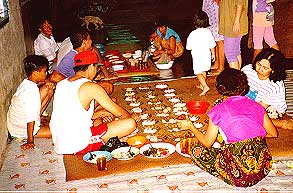 The price escalation in food prices is also triggering inflation in the developing world. In many of the developing countries, two-thirds of the consumer price index is essentially food, energy, and transportation. When these items rise, the social cost is significant.
The commitment to end food insecurity lies with governments who must reexamine their policies related to agriculture, education, labour and economy. These policies have favoured corporate agriculture, businesses, pesticide producers, speculators, and commodity and export markets.
Both colonial powers and the local elite reformed land laws and policies to favour corporate agriculture. This happened in Asia, the Middle East, Africa and Latin America. In the United States, the land reforms and new agricultural policies saw the death of the small farmer and rise of corporate agriculture.
In many of these regions, choice agricultural land was given away for large scale mono-crop plantations for the growing of rubber, oil-palm, cocoa, coffee, tea, cotton and sugar.
Plantation agriculture replaces small farms
The agricultural production patterns based on small farming communities in many countries changed fundamentally when plantation agriculture replaced small farms and communities. Local farming communities were relocated and displaced. Labour and the environment have been exploited with loss of fertile lands, clean natural water, biodiversity as well as local knowledge of traditional farming.
Malaysia offers a good case study of the serious implications on food security as it has turned its back on traditional farming methods and small agricultural communities who can contribute to self-sufficiency in food.
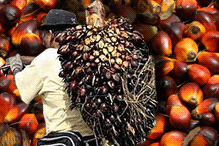 The food situation looks bleak if developing countries like Malaysia continue with large-scale corporate-based agriculture requiring intensive inputs of chemicals, artificial fertilisers, water and energy. Corporate agriculture cannot address chronic hunger and poverty.
Yes, developing countries must produce vastly more food to end hunger, food insecurity and reduce their dependency on food imports. Food deficit countries should look beyond economists for solutions to increase food yields.
Some major policy changes are imperative as soaring food and energy prices can lead to serious social, economic and political risks.
The solution lies in increasing the number of small farmers to produce more food in developing countries. Says GT Wrench in his work - Restoration of the Peasantries , “The original strength of Rome, like that of China, was that of a superior family-agriculture.”
Policy makers have a responsibility to support small farming initiatives. Policy changes are necessary to address issues such as ageing farming populations in emerging markets, land ownership, placing a high premium on agricultural training and education, monetary incentives and a shift to supporting traditional farming and sustainable agriculture.
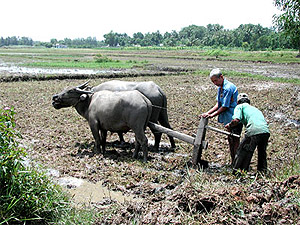 It is true much traditional knowledge on farming methods have been lost. But there are many efforts globally to return to traditional farming knowledge and adopting sustainable modern technologies, too. I do not believe in going back to back-breaking traditional practices, particularly for women who contribute significantly to agriculture.
Through the Internet, information on traditional knowledge about farming systems and modern technologies that can make agricultural work easier, is easily available. Many non-governmental organisations both in developing and developed economies are working with small farmers to eliminate hunger. These efforts must be replicated.
Access to credit the greatest stumbling block
However, the greatest stumbling block in increasing the number of small farmers is access to credit. Small farmers are seen as not bankable by traditional financial institutions. The micro credit financing model may not be the solution as the interest rates are high.
Governments, with political will, can introduce a range of programmes to help small famers with credit facilities, subsidies, improving water systems, access to training in small farming and marketing facilities.
Governments need to create more farmers, not economists if they are to avoid the risks of frightening food prices and inflation. According to the UN, the poorest countries paid as much as 20 percent more for food in 2010 than in 2009.
In Japan and Indonesia, I met young graduates in non-agricultural areas going back to farming and contributing to building farming communities. A young museum curator and a French literature graduate now live and work in the Biwako region in Japan in a rice farming community. There are many such examples elsewhere too.
The solution to the food crisis is building farming communities. History has shown that small family farms are the backbone of a community, a nation, and of society as a whole. A landscape of family farms is usually stable and generally sustainable.
Such communities aggregate into strong and secure nations. Agriculture needs a new direction and impetus to stop growing hunger in many nations and anger against governments.
JOSIE M FERNANDEZ is currently an Asian Public Intellectual Fellow, director of Philanthropy Asia, consultant and researcher. Working on sustainability, philanthropy and anti-corruption actions are some of her current passions besides writing.


