



Not in my name
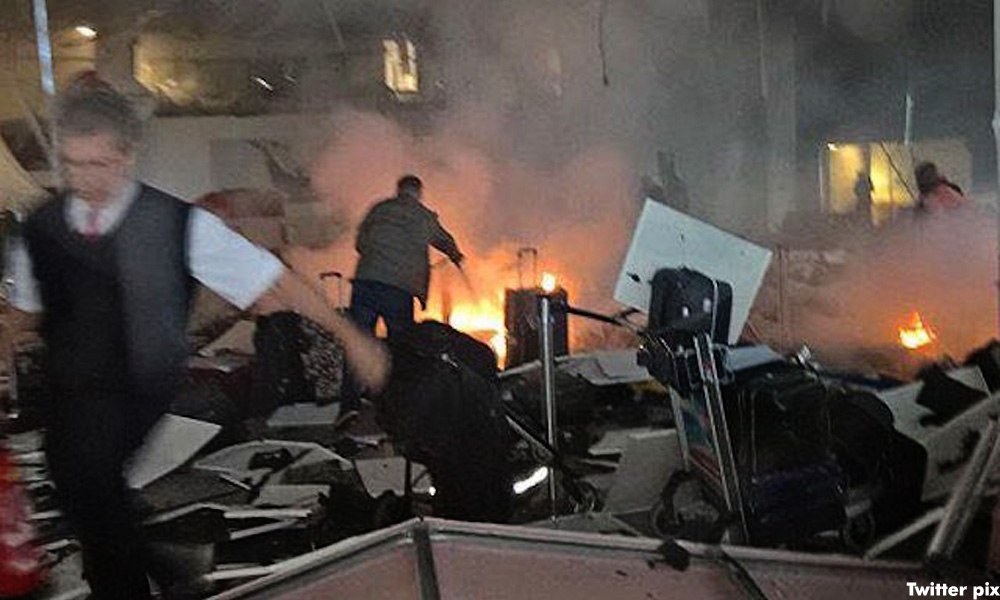
Cold-blooded, murderous acts in Turkey, Bangladesh, Afghanistan, Saudi Arabia - all predominantly Muslim countries - in the month of Ramadan, a month often, rightly or wrongly, described as ‘the holy month’ by many Muslims. Murderous acts planned - many meticulously - by groups who profess to be ‘Muslims’ but have consistently pushed aside the beautiful, peaceful aspects of Islam.
Instead, they dishonour the name of this great religion and give others, friends and foes, cause to question contemporary Islam and Muslims as a whole.
Closer to home, similar forces of division and discord have been at work as well. The most physically violent and damaging has been a grenade attack at the Movida nightspot in Puchong a couple of weeks ago, an attack that has been reported by the police as being the work of the Daesh or the Islamic State (IS).
Cold-blooded, murderous acts in Turkey, Bangladesh, Afghanistan, Saudi Arabia - all predominantly Muslim countries - in the month of Ramadan, a month often, rightly or wrongly, described as ‘the holy month’ by many Muslims. Murderous acts planned - many meticulously - by groups who profess to be ‘Muslims’ but have consistently pushed aside the beautiful, peaceful aspects of Islam.
Instead, they dishonour the name of this great religion and give others, friends and foes, cause to question contemporary Islam and Muslims as a whole.
Closer to home, similar forces of division and discord have been at work as well. The most physically violent and damaging has been a grenade attack at the Movida nightspot in Puchong a couple of weeks ago, an attack that has been reported by the police as being the work of the Daesh or the Islamic State (IS).
Prior to all this, in Malaysia at least, there was this declaration by the mufti of Pahang that the DAP (and, in a follow up statement, anyone opposed to Islam) are ‘kafir harbi’ - non-Muslims who apparently can legitimately be killed by any Muslim.
It is a term that, outside of Malaysia, has been questioned by prominent Islamic scholars who, in turn, allegedly have declared it obsolete, having no value and significance at all in the contemporary world.
Others in Malaysia have also rightly questioned the term’s legitimacy in our context.
More alarmingly and insulting for many Muslim Malaysians is this persistent assertion that these people - groups like Isma, Perkasa, the Pahang and Perak mufti - speak for and represent ALL Muslim (often Malay) Malaysians.
They DO NOT.
The most they can legitimately do is speak for themselves. They certainly do not speak for me and many others. And by saying the things they do, they insult and denigrate friends - and even relatives - we have known since childhood.
And that is unacceptable.
Many Muslim Malaysians, to be sure, may not wish to say so for fear of being branded as ‘liberal’, ‘deviant’, even ‘unIslamic’, by those they assume to be more knowledgeable about the religion.
This would be a bad mistake, allowing, as it does, others to lead us by the nose, without questions being raised.
The fact is, the mufti et al. are human beings, with all the flaws and frailties we associate with human beings.
If we can query the validity of what is said and written by politicians and ‘learned’ professors in our universities, as we rightly should, we must surely do the same for others, including alleged religious ‘leaders’.
They may be able to speak and read flawless Arabic. But that doesn’t mean they are impeccable in their interpretation of the language, the history, the context, the different cultures, the religion even.
If they throw accusations and slur other citizens of this country, they must justify - and stand accountable for - their actions. They cannot be allowed to hide behind their positions.
And, in any case, many of these positions they hold and the departments they head in the name of religion were put in place by politicians, some with good intentions and others clearly with self-serving motives.
The recent questionable use of the zakat funds for ‘training’ trips overseas is just one example of how ‘religious’ individuals and departments may go astray for reasons best known to themselves.
Fear and unease
In short, religion, as it is currently practised, cannot be separated from power relations and the desire of those in power to maintain such power.
This is true - and continues to be - here in Malaysia as it has been worldwide, irrespective of the religion(s) we speak of.
And herein, perhaps not often and widely enough articulated, lies the fear and unease among an increasing number of Malaysians - Muslims and those of other faiths - about the imposition of purported (and still contentious) religious laws and even a totally Islamic state.
First - this being a multi-religious country - is the question of whose Islamic state? And the implications for those who are not of that religion and do not wish to be.
Second, of course, is the related question of whose interpretation of the religion will be imposed?
In this regard, it is wrong for anyone to conclude that those querying hudud, for example are querying Islam. More accurately, they - we - are concerned about WHO will do the implementation and for what purpose. While we may trust the religion, we tend to be wary of the human beings interpreting it.
The contemporary world is replete with factual accounts of religion being abused and the laws being applied disproportionately by religious leaders who, after all, are flawed, discriminatory human beings.
Let us not be naïve and sanguine. In contentious matters of religious ideology and sectarian differences and violence that have led to murder, massacres and mayhem, many of those who profess to be religious have been no less inhuman in their pursuit of power.
And these very same people, apart from abusing the name of God and religion to justify their actions, also often enough assert they are speaking for ‘the people’ or even ‘their people’.
They attempt to shut out others by asserting the ‘sensitivities’ of their religion and that of ‘their people’, implying, wrongly, that they are privileged, that they are entitled. And that others are not.
This, of course, is utter rot in the context of Malaysia, as it is elsewhere.
And, in response, it is time that those of us - especially Muslim Malaysians - who care about Malaysia and Malaysians start saying in the fora still available, ‘Not in my name; never in my name’.
ROM NAIN is a media analyst and academic who is weary of incompetent, unethical leaders and their apologists and spin doctors in the media who try to get away with murder while professing to rub shoulders with God’s angels.


Are you sure you want to delete this comment?
This action cannot be undone.