



UndiRosak - the limits of a black and white democracy
COMMENT | So, should you spoil your vote?
It’s not my place to tell you “yes” or “no” but let’s see if we can unpack some of the issues surrounding this controversial question.
Today we’ll look at the pros and cons of spoiling your vote and how it’s come to the fore as an option for the 14th general election. I’m hoping soon after, we’ll discuss some of the specific circumstances that likely inform the UndiRosak movement in Malaysia today.
Perhaps, later on, we’ll also examine some do’s and don’ts that the opposition could conceivably practice in responding to UndiRosak.
COMMENT | So, should you spoil your vote?
It’s not my place to tell you “yes” or “no” but let’s see if we can unpack some of the issues surrounding this controversial question.
Today we’ll look at the pros and cons of spoiling your vote and how it’s come to the fore as an option for the 14th general election. I’m hoping soon after, we’ll discuss some of the specific circumstances that likely inform the UndiRosak movement in Malaysia today.
Perhaps, later on, we’ll also examine some do’s and don’ts that the opposition could conceivably practice in responding to UndiRosak.
I put forward that a chunk of the momentum for UndiRosak has to do with the extremely limited nature of our democracy. Let’s look at a time period covering say independence to the present day.
We are talking about a time when televisions were probably a rare thing. Today, we live in a world where smartphones are ubiquitous. In that time, how much has our concept and system of democracy changed? Precious little.
In essence, we still follow a Westminster parliamentary system, where the nation is divided geographically into electoral constituencies, which practice a first-past-the-post system where a candidate who wins the highest number of votes in their district is elected to Parliament.
Said candidate then elects the prime minister and the government who rule over us.
The word ‘democracy’ brings to mind the idea of self-determination - the notion that, in essence, we have the power to rule over ourselves.
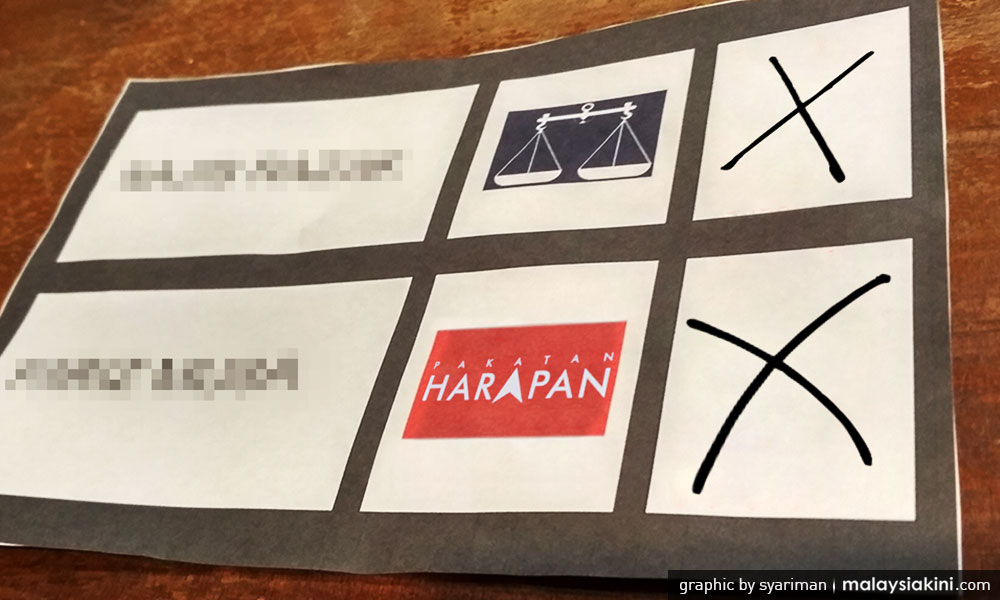
In practice, however, that power technically translates to little more than one ‘X’ (out of millions) in five years.
Are politicians incentivised to listen to us?
When it comes right down to it, the people in government have no binding obligation whatsoever to listen to anything else we have to say regarding the manner in which our country is run.
If we are dissatisfied, we can only hope that someone (if not ourselves) decides to organise enough people to run against the ruling party, win the next elections (a ‘simple’ task of course), and do things the way we would like them to be done instead.
Should such a group of people exist, and appear on our ballot paper, then we have an easy and obvious responsibility come election time - though not one that delivers any guaranteed results.
Two issues arise. Firstly, we should note with concern our extreme lack of political power and influence in-between elections. Yes, we can complain about politicians, make our voices heard, and kick up a ruckus now and again.
It is important to remember, however, that said politicians often only care (as a result of how the system is structured) about whether or not those complaints - and/or any other factors - will make people vote against them in the next elections.
As long as they feel the answer is ‘no’, they are usually quite happy to do whatever they please, however they please. Politicians also understand the concept of short memories and the value of the last minute.
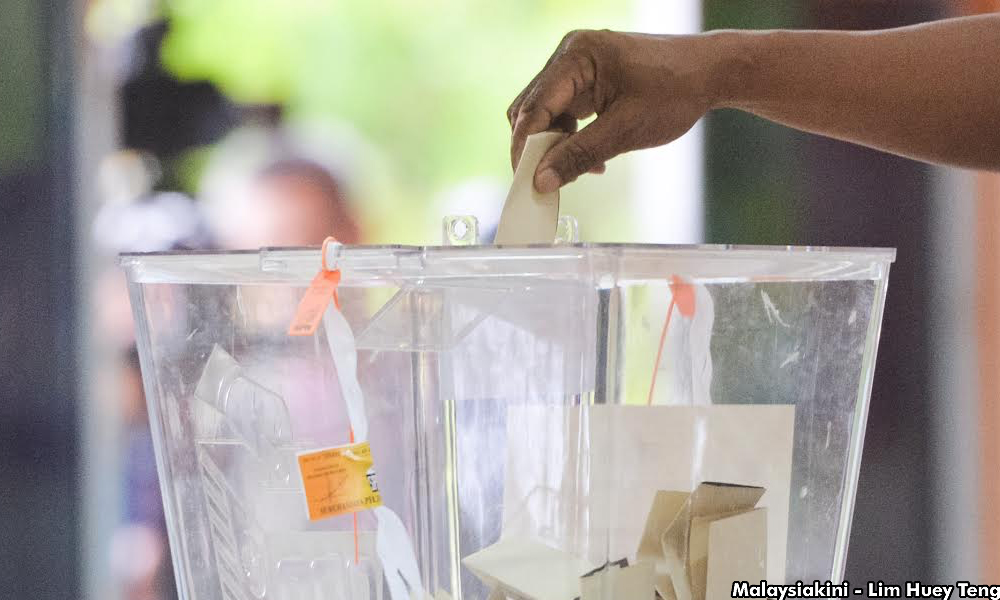
Much like how some people believe that repenting and/or converting to the ‘right’ religion in your final moments on earth can get you into heaven, politicians often believe that they can do whatever they like, as long as they look good for the voters in those precious few days (or even hours) before votes are to be cast.
All this is because, once again, citizens generally do not have any political power or influence at any time that is not an election.
They cannot arrest politicians, they cannot force them to act in one way or another, they cannot file a lawsuit because a politician does not behave the way they want them to.
All you can do is cast a vote, and hope for the best for the next five years or so.
The ambiguous ‘X’
So you have one shot in five years.
The second issue that arises is: what if there aren’t any people or parties on the ballot paper that you really like in any given election?
It’s frustrating enough that you have no political power besides this one ‘X’; how much more frustrating is it when there isn’t someone on the ballot paper that you’re really passionate about giving that ‘X’ to?
What happens if you’re frustrated with everyone on that ballot paper, or believe that they really aren’t that different from one another? What happens if you feel that both have acted badly?
If you give your vote to any such party, does it constitute an endorsement of their behaviour? From the perspective of a candidate or political party, will they really read your ‘X’ as anything more than an endorsement?
There is no way to mark your ballot paper to communicate “Ok, I’ll vote for you because you’re marginally better than the other party, but I’d really like you to know that I’m very disappointed with your actions regarding (insert whatever examples are applicable).”
My word counter tells me that that’s about 205 characters, but the character limit of your ballot paper is literally one (1) character, and only one character is in fact accepted - the letter ‘X’.
Thus, one can hardly be blamed for not wanting a party to misread one’s vote as a blanket endorsement - given the fact that an ‘X’ of blind loyalty and adoring endorsement is absolutely indistinguishable from a begrudging, frustrated, and disappointed ‘X’.
Pros and cons
I believe that this is the backdrop to what is drawing some people to the UndiRosak movement. Let’s briefly break down some pros and cons.
By spoiling your vote, an individual who is disappointed with all current major political parties registers that disappointment in a manner that is visible and recorded (as spoilt votes are included in the final tally statistics).
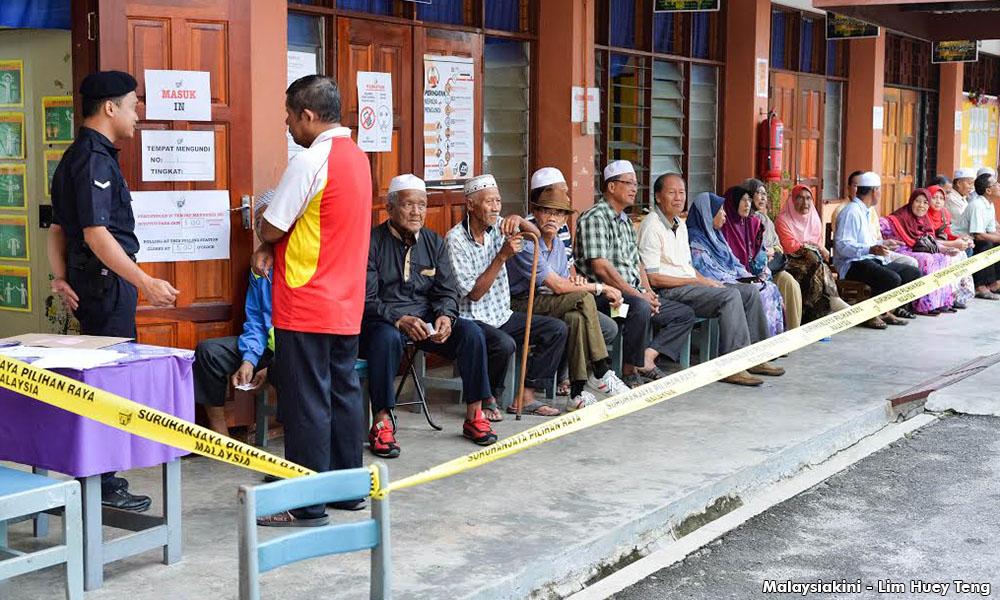
Not voting achieves this to a somewhat lesser extent, as voter turnout is also recorded. However, by not voting, an individual who is passionate about politics but also passionately disappointed is statistically indistinguishable from someone who cares absolutely nothing about politics.
If enough votes are spoilt, political parties may sit up and take some notice, and there is a chance - albeit a small one - that they will adjust their behaviour accordingly.
Coming to the cons, we must admit that the odds of this are very low.
Firstly, a certain critical mass of spoilt votes is necessary. I would never say that it is impossible to reach that critical mass, but my personal opinion is that it would be challenging to do so.
Secondly, in this particular context, I feel it is indeed more likely that spoiling your vote will benefit BN slightly. Simply put, it does not seem likely that people who voted BN previously are going to be the ones now inspired to spoil their votes.
Of course, this reasoning does not apply if you do not care whether BN runs the country or not, or believe that the alternative will not run the country in a way that is sufficiently different.
If you do care, then note that your spoilt vote may be a deciding factor in some closely contested seats. That said, the unpredictable nature of politics often blurs the line between which seats are safe, and which are marginal.
Semi-spoil?
Again, no one should be lecturing to you about whether or not you should spoil your vote, least of all me. I can empathise that deciding how to vote can be quite a difficult task this year.
(Those wanting to try something even more unconventional can even try semi-spoiling their vote - marking your ballot paper such that it may be counted, or may be spoilt, leaving it to fate.
That said, I think semi-spoiling your votes for the opposition will, of course, more likely be counted as spoilt than valid. This is Malaysia after all.)
Sometimes, the curse of relatively small political power has some very small marginal benefits - among them being the fact that determining the next government does not rest solely on your shoulders.
In that regard, don’t stress yourself out too much one way or another, especially for these coming elections.
That energy could perhaps be expended in thinking of how normal citizens like us won’t have to face the same dilemma in GE15 onwards. There’s probably a lot more we can do towards that end than we think.
NATHANIEL TAN hopes Penangites will attend a public forum on the island organised by Edict (Eliminating Deaths & Abuse In Custody Together) on March 24. Further details online.
The views expressed here are those of the author/contributor and do not necessarily represent the views of Malaysiakini.


