
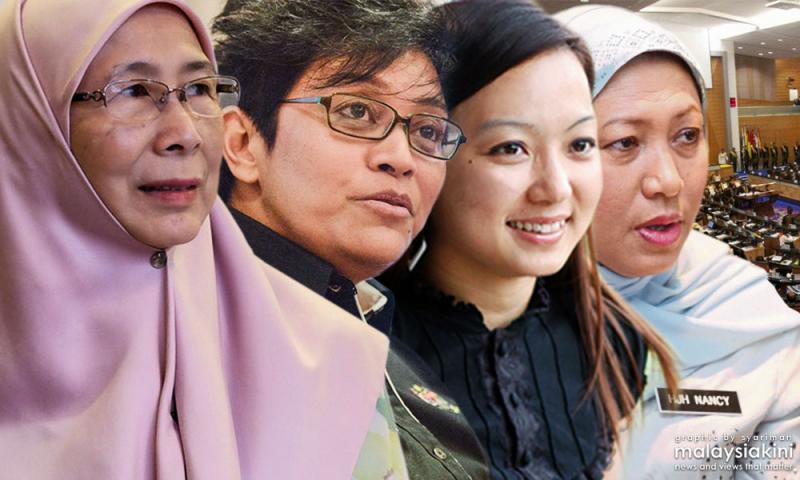
The invisible work of women in politics
COMMENT | “Labour of love”, that is the phrase that is often used to jusify making women work for next to nothing, providing all kinds of crucial support to the people around them.
The way we are currently telling stories of women and their role in politics is that of they making sacrifices, providing support, being a backbone - instead of they being a leader, a nation-builder, a stateswoman.
She sacrifices in the name of love, she backs down from the limelight in the name love, she stays in an unloving relationship in the name of love, she stuck to his side - all in the name of love. Hours of labour a woman puts in this blatant ...
COMMENT | “Labour of love”, that is the phrase that is often used to justify making women work for next to nothing, providing all kinds of crucial support to the people around them.
The way we are currently telling stories of women and their role in politics is that of they making sacrifices, providing support, being a backbone - instead of they being a leader, a nation-builder, a stateswoman.
She sacrifices in the name of love, she backs down from the limelight in the name love, she stays in an unloving relationship in the name of love, she stuck to his side - all in the name of love. Hours of labour a woman puts in this blatant exploitation of her time, being and energy, often go unrecognised and unpaid.
Imagine if all those hours she put in were billed, any country would see a significant increase in income tax revenue.
Reward for women’s work must go beyond recognition, and it is not just about ‘billable’ hours. Auditing of women in decision-making places found that more of them calling the shots means fairer policies in preventing other forms of exploitations of labour to other women.
While the politicking population of a country may be small, their influence, however, is big. A small group of people making decisions for the rest of us in the majority is an unfortunate circumstance of the world we currently live in, so the least we could do is to help minimise the harm.
Feminists are not just studying and writing about development, feminists are doing development, constantly shaping and reshaping the development content as we work every day.
The creativity to come up with different solutions lies in a person having an eye for diversity and the experience women have to look out problems from a gender perspective could literally save lives.

I would like to share a story told to me by a friend I stayed with when I travelled to Indonesia. She told me how her anger at a poorly-designed staircase by the architect who designed her house, resulted in an entire revamp the staircase from scratch although it was already almost finished construction at the time.
It was a staircase to the drying area, which was situated one floor above the laundry room, where there is an open-air balcony. The architect had originally designed a spiral staircase but because that friend of mine never saw the design when it was still a drawing, she never had the opportunity to protest the design before they started construction work.
From the way she had told me the story, I could see how reasonably upset she was. “You do realise that the maids that come here to help with housework are usually women?” she asked the architect, to which he said yes.
She stopped saying much, filled two laundry-pails until they were fully loaded with laundry, and asked the architect to carry them up the stairs he just built. Seeing how visibly upset she was, the architect did as he was asked.
He tried to take the laundry up the stairs but stopped half-way because it became too strenuous on his spine. It then dawned on him how carrying heavy loads of laundry up a spiral staircase may cause serious harm in the long run, especially to the women who are often hired to do the work.
The stairs were beautiful but impractical and were certainly not harmless.
Make men look good
Anecdotes like these remind me how much women’s voices and input in the policy-design stage are always forgotten, or voiced but dismissed. Women are rarely consulted before anything starts happening, they are expected to just be the passive receiver of whatever men had planned out for them.
In the case of my friend with her staircase, it almost felt like an analogy for the way women are treated in politics - our opinions matter little in the making of policies designed to make men look good until they have to literally walk in our shoes. And when women do step in, just in time to prevent more people from suffering a poorly designed “staircase”, these stories do not make it to the public for appreciation.
They are often stowed away, told from one woman to another becoming something of little interest to the public at large.
There is another layer of analysis to this story, however, that might have been missed were it not for a class consciousness.
My friend was the wife of the man who hired the architect who worked on the house, so her power as the wife of the “man-in-charge” gave her a lot of influence which led to the eventual collapse of the spiral staircase, and her demand to build a new, more practical staircase.
This, to me, is another analogy to the amount of power wives of politicians often have in influencing public opinion of the husband, and by extension, the politics or political party that he is representing.
But as always, the wives will only be known as ‘The Wife’, instead of the strategist, the campaigner, the influencer, the negotiator. These women, however powerful, are still the women ‘behind every successful man’.
MARYAM LEE is a writer with a chronic tendency to get into trouble. What she lacks in spelling when writing in English is made up for with her many writings in Bahasa Malaysia. She believes in conversations as the most valuable yet underrated cause of social change. She wants people to recognise silences and give them a voice as she tries to bring people together through words.
The views expressed here are those of the author/contributor and do not necessarily represent the views of Malaysiakini.


Are you sure you want to delete this comment?
This action cannot be undone.