




10 ways to increase incomes, raise living standards
QUESTION TIME | After over eight months in power, the Pakatan Harapan government regretfully does not have a solid plan for the economy and the country, reneging on a number of key promises that it made pre-elections and allowing the creeping in of patronage and other bad practices within the coalition.
It has also been inordinately preoccupied with blaming the previous government for all the ills facing the country and is guilty of painting an economic picture worse than what it really is, thereby eroding confidence in business and the economy.
By now, they should have at least come up with a comprehensive plan to put the country firmly back on the path to higher growth and to ensure that the increased wealth is shared more equitably among all peoples and all races.
If the income gap between the rich and poor is narrowed irrespective of who is poor or rich, then inevitably the gap between the races will narrow too. Instead, Prime Minister Dr Mahathir Mohamad still talks about distribution of wealth instead of growing incomes and giving everyone a fair share of incomes, the only way wealth inequality can be narrowed.
The other leaders of Harapan are culpable as well as they have demonstrated no way or will to change these outmoded policies of the past and put in place measures that will help all in the nation and actualise the promises they made in their campaign manifesto.
If Harapan leaders need reminding of what should be done - some do and some don’t - below are 10 basics which will apply equally well to any country anywhere in the world, rich or poor, which wants to improve the livelihood of all its citizens...
QUESTION TIME | After over eight months in power, the Pakatan Harapan government regretfully does not have a solid plan for the economy and the country, reneging on a number of key promises that it made pre-elections and allowing the creeping in of patronage and other bad practices within the coalition.
It has also been inordinately preoccupied with blaming the previous government for all the ills facing the country and is guilty of painting an economic picture worse than what it really is, thereby eroding confidence in business and the economy.
By now, they should have at least come up with a comprehensive plan to put the country firmly back on the path to higher growth and to ensure that the increased wealth is shared more equitably among all peoples and all races.
If the income gap between the rich and poor is narrowed irrespective of who is poor or rich, then inevitably the gap between the races will narrow too. Instead, Prime Minister Dr Mahathir Mohamad still talks about distribution of wealth instead of growing incomes and giving everyone a fair share of incomes, the only way wealth inequality can be narrowed.
The other leaders of Harapan are culpable as well as they have demonstrated no way or will to change these outmoded policies of the past and put in place measures that will help all in the nation and actualise the promises they made in their campaign manifesto.
If Harapan leaders need reminding of what should be done - some do and some don’t - below are 10 basics which will apply equally well to any country anywhere in the world, rich or poor, which wants to improve the livelihood of all its citizens.
Instead of politicking and jockeying for power by trying to attract the corrupt and incompetent into their fold, Harapan members should just accept the power-sharing concept the people voted for and get down to the task of managing the country. We Malaysians are easy to manage, but we have been let down by a series of lousy leaders.
Here are the ten:
1. Cut corruption and patronage right to the bone
Let’s be clear about this - corruption and patronage are just as much theft as if you put your hand into the till and took the money like what members of the last government did.
If a Bersatu leader says give contracts to party members, he is encouraging theft, no less. There is considerable leakage of government wealth, but to the well-connected and the already wealthy. All you have to do is to ask the very wealthy to explain how they got their wealth.
If they can’t, they are guilty. One can think of many who can be caught this way - former ministers, former chief ministers. Strangely, there is no action against some. One inheritance case involves RM2 billion!
As long as our leaders condone corruption and patronage, we can’t narrow income gaps even if we can increase them because the increased income is largely stolen government wealth.

2. Pick people based on competency
With patronage comes the lack of competency. People are chosen because of past affiliations and loyalty to the leader.
There are many Malays/bumiputera who are competent and professional, but they are denied a chance to serve. Non-bumiputera who can serve are needlessly sidelined because of race-based policies.
Thus we end up being run by the corrupt, the connected and the incompetent. It's still happening - take a look at the many questionable appointments to key positions.
3. Fix education
This is so important - the great leveller in terms of equalising opportunities. Instead of improving, government education, over the the decades, has descended into the pits as it became politicised, and religious and racial elements were permitted to come to the fore.
Islamic education was given preference, history became distorted, English was sidelined and polarisation increased. Now, whoever can afford it sends their children to private schools.
Paradoxically that seems the place where children of various races interact. Our education minister, a political appointee from Bersatu, remains clueless as to how to revive the national education system.

The answer lies in improving the quality of teachers, changing the curriculum to suit current circumstances and making it a place where children of all races can mingle without fear or misunderstanding, and confident they won’t be singled out because of race.
4. Prioritise good governance, transparency and accountability
The days when we thought the government knew better are long since gone. These days, citizens demand transparency of government - we want to know what they are doing. We want good governance meaning competence and honesty, and we want accountability.
If something goes wrong, we want to know who is responsible and we want the person to be removed and someone else who can better do the job to be put in place. If there has been corruption, theft, abuse of power, we want those responsible to be prosecuted. This is what will curb corruption - not moral lessons in schools.
5. Remove all oppressive laws
This is an important corollary to Number 4 above. By now, all Malaysians are aware that successive governments in Malaysia have used an array of oppressive laws to keep themselves in power by injecting fear into those who speak up against bad practices and corrupt leaders. Many of them paid for it through incarceration and deprivation of opportunities subsequently.

There are enough laws under the penal code and defamation provisions to take care of these cases, instead of giving the police extra bite to abuse their positions.
An important result of such removals will be the restitution of debates and differences of opinion within society which are so necessary for a society to progress. The only people who want repressive, oppressive laws are politicians in power.
6. Recognise the price of labour to get productivity increases
As long as labour is kept cheap, there is no incentive for owners of capital to make the necessary investments to increase productivity. The provision of productive labour is also, of course, related to the education system which is in major trouble at the moment.
The government needs to recognise that cheap labour and a weak currency are a direct subsidy to producers of goods and services at the expense of labour. This process of impoverishing a huge segment of the population is one that needs to be turned around as soon as possible. But for that, Number 7 is absolutely necessary.
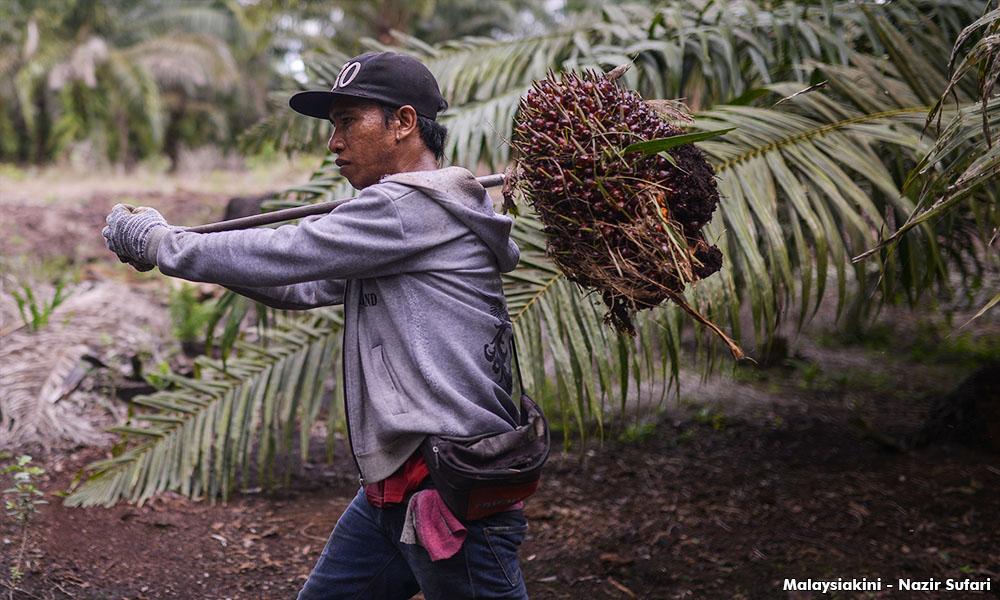
7. Control imported labour and immigration
For too long, industries, services and well-off households have benefited substantially from cheap labour imported from neighbouring countries, much of it illegal and all of it resulting in exploitation of foreign nationals to the hilt.
Middlemen make tonnes of profits from these unfortunate people and so far nothing concrete has been done to reduce the exorbitant fees charged to get the labour.
It is high time labour imports are systematically controlled, not just to value our labour fairly, but to cut exploitation of foreign workers. Ditto for immigration.
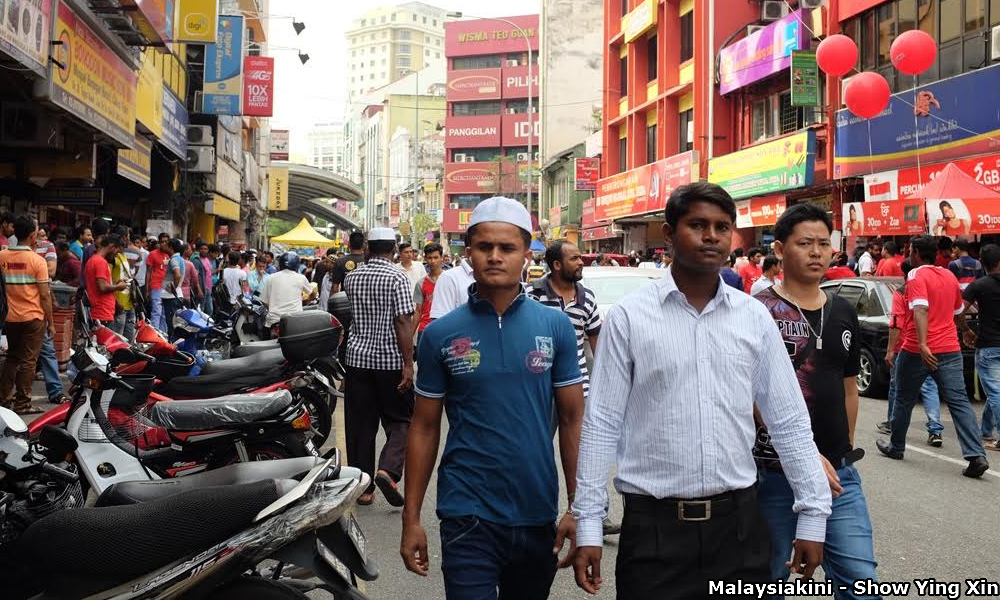
8. Cut red tape and unfair duties
There is still so much red tape at every level, which becomes a real cost to business in reducing efficiencies.
Why, for instance, do we still have approved permits for things like cars and a wide variety of other goods? Why can’t Malaysians import the cheapest goods from anywhere in the world? Why can’t the process for this be made as simple as possible?
9. Encourage local businesses, especially small ones
Eventually, increasing numbers of people are going to be setting up small businesses. Many of these could just involve a handful of people or less getting together to provide services. Eventually, the number of people directly employed may grow much slower or even decline.
To allow such dynamic changes in the workplace to take place, the processes for setting up businesses need to be considerably simplified and their costs lowered substantially.
10. Get expert and logical advice
Considering that many ministers are not experts in their fields and that there may be a lack of expertise within the civil service, the government should not shy away from using experts who can make proposals after appropriate investigation and consultation.
This is especially the case given the rapid digitalisation of the entire economy. However, we need to be careful that we do not overpay them.
There are other measures, of course, but a concentration on the above can produce results very rapidly.
This will require effort by all ministries, and one quick way to get things moving will be to instruct the ministries to come up with yearly, five-year, 10-year and yes, even 20-year plans, make them public, obtain feedback, revise and implement.
For that, we need quality leadership. Dare we hope that Harapan will provide real leaders instead of has-beens?
P GUNASEGARAM says that leadership is about empowering others, not controlling them. E-mail: t.p.guna@gmail.com.
The views expressed here are those of the author/contributor and do not necessarily represent the views of Malaysiakini.



yeah..easier said than done..u think its so easy to correct 60 years of corruption and mess in just 9 months?? pls get real
Guna' s ten recommendations are not new. Politicians role are to create and facilitate the conducive environment for everyone to contribute and thrive in an open economy. But it's easier said then done. The over reliance on government is obvious as every single thing one does is regulated right down to the toilet paper. The new government seems reluctant to decentralise and deregulate rather they just continue what was left behind. Business is addicted to cheap labour while the government is clueless and lacking the courage to change the existing rules. In the final analysis it's about fixing the rules, empowering people, accept risk and impose meritocracy. Until we see tangible results we can then talk about improving everyone's reward.
Spot on Guna. The issue really is the Malay leaders in Harapan are jostling for power and everything else becomes tradeable in the process. Admittedly, there are difficulties for example finding the right people, needing to manage racial/religious bigots and their agitations, not having enough money to spend - but what we really want is for them to stop their internal fisticuffs, and show a united front and just proceed with the reforms. We also want honesty and transparency. It is fine if they stumble upon a financial or Parliamentary roadblock (amendments requiring 2/3 majority) but at least show that they are ready to go once they are able to overcome such road blocks. I don't think the ministers don't have the right ideas. It's the internecine war that is paralyzing Harapan. It may be a good thing for DAP to lose Highlands, and more importantly for Bersatu to lose Semenyih, so that they finally wake up and instead of pursuing the 2/3 Malay votes that they don't have, they work harder at keeping the 1/3 that they have together with vast majority of other minority groups.
Report this comment
Are you sure you want to delete this comment?
This action cannot be undone.