


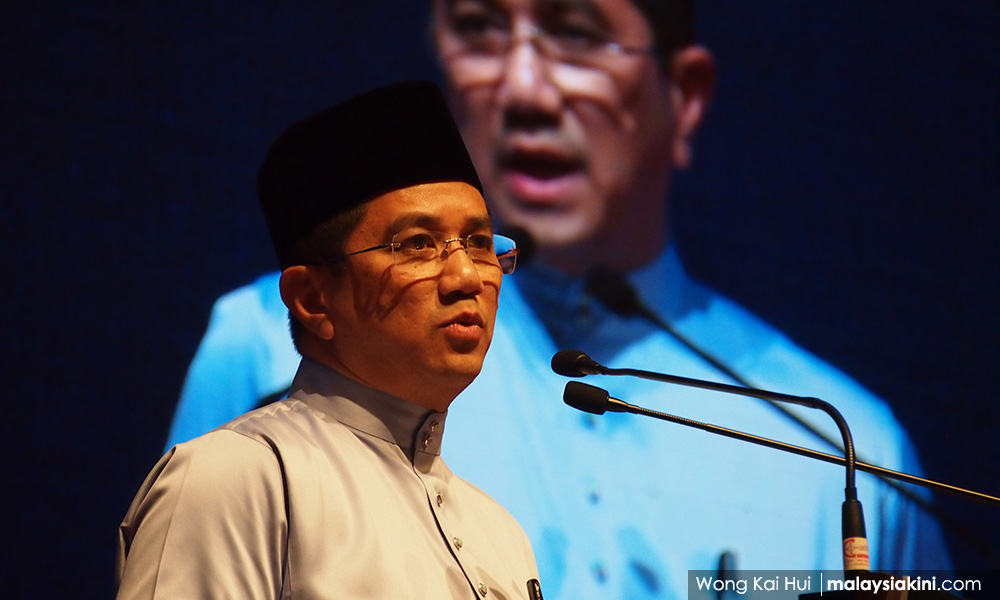

How effective is the Economic Affairs Ministry?
COMMENT | Universiti Malaya Professor Terence Gomez recently wrote an article entitled ‘Patronage is king in new Malaysia?’
This article elicited a rather rare response from the usually reclusive and enigmatic former finance minister, Daim Zainuddin, who registered his umbrage about having his photo printed (“reporting by innuendo”, allegedly) alongside Gomez’s article in The Star.
One of Gomez’s key questions involved the moving of key federal agencies from one ministry to another under Pakatan Harapan.
Prime Minister Dr Mahathir Mohamad created the new Economic Affairs Ministry under PKR deputy president Mohamed Azmin Ali just a few weeks after forming the government last year.
Gomez did not appear to directly question the formation of this ministry and the rationale for doing so, but Daim seemed quick to jump to its defence, writing:
“The cabinet is appointed by the prime minister; who he appoints and what portfolio they hold is entirely his prerogative. He can even have a minister in charge of durians if he so wishes, if he considers that a portfolio of durians is good for his administration and the country.”
Trying to play amateur psychologist should perhaps be frowned upon, but the defensiveness and sarcasm of these words might perhaps be interpreted as Gomez having hit a little close to home...
COMMENT | Universiti Malaya Professor Terence Gomez recently wrote an article entitled ‘Patronage is king in new Malaysia?’
This article elicited a rather rare response from the usually reclusive and enigmatic former finance minister, Daim Zainuddin, who registered his umbrage about having his photo printed (“reporting by innuendo”, allegedly) alongside Gomez’s article in The Star.
One of Gomez’s key questions involved the moving of key federal agencies from one ministry to another under Pakatan Harapan.
Prime Minister Dr Mahathir Mohamad created the new Economic Affairs Ministry under PKR deputy president Mohamed Azmin Ali just a few weeks after forming the government last year.
Gomez did not appear to directly question the formation of this ministry and the rationale for doing so, but Daim seemed quick to jump to its defence, writing:
“The cabinet is appointed by the prime minister; who he appoints and what portfolio they hold is entirely his prerogative. He can even have a minister in charge of durians if he so wishes, if he considers that a portfolio of durians is good for his administration and the country.”

Trying to play amateur psychologist should perhaps be frowned upon, but the defensiveness and sarcasm of these words might perhaps be interpreted as Gomez having hit a little close to home.
In his short piece, Daim was also quick to defend the ‘bumiputera agenda’: “The bumiputra agenda is mutually inclusive with a national agenda. For as long as we do not solve the bumiputra issue, we can never go forward as a nation.”
We must, of course, be fair. Nothing that Daim is saying in the above quotes is technically wrong, or even particularly bad.
The prime minister does indeed have every power to create or dissolve ministries as he sees fit, and bumiputera prosperity is not mutually exclusive with Malaysian prosperity.
All that said, it may be worthwhile for us to read a little between the lines to understand what undercurrents are at play here.
Why an Economic Affairs Ministry?
To my shame, I must admit that I was for a long time a little bit confused about the rationale of creating the Economic Affairs Ministry in the first place.
As time went by, I realised that said rationale should have been obvious to anyone deigning to consider themselves a seasoned political observer.
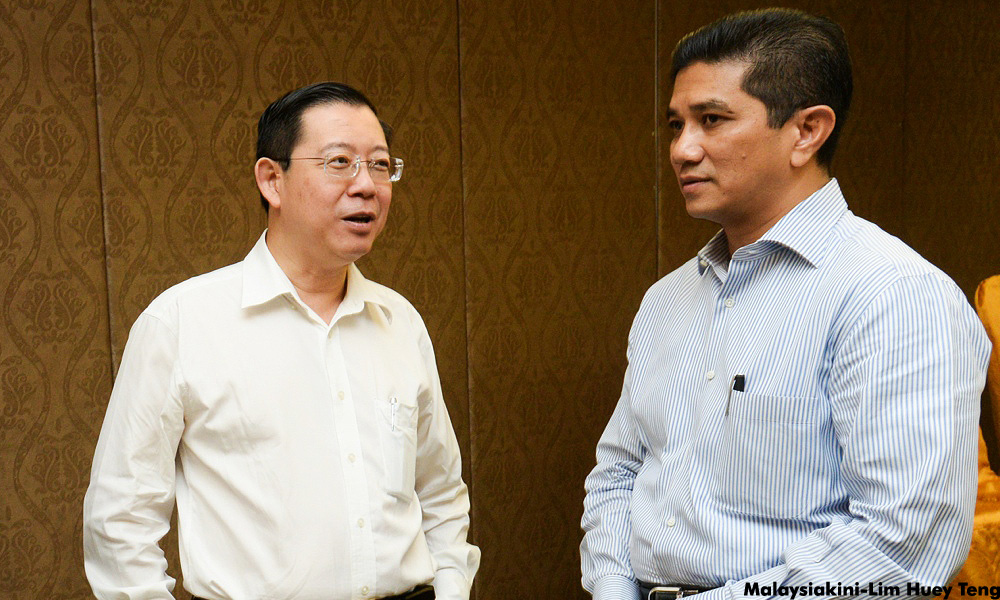
The answer becomes clear when we look at a sampling of which federal agencies were transferred from Finance Minister Lim Guan Eng’s ministry to Azmin’s portfolio: Felda, Felcra, Unit Peneraju Agenda Bumiputera, Yayasan Amanah Hartanah Bumiputera, and Yayasan Peneraju Pendidikan Bumiputera, just to name a few.
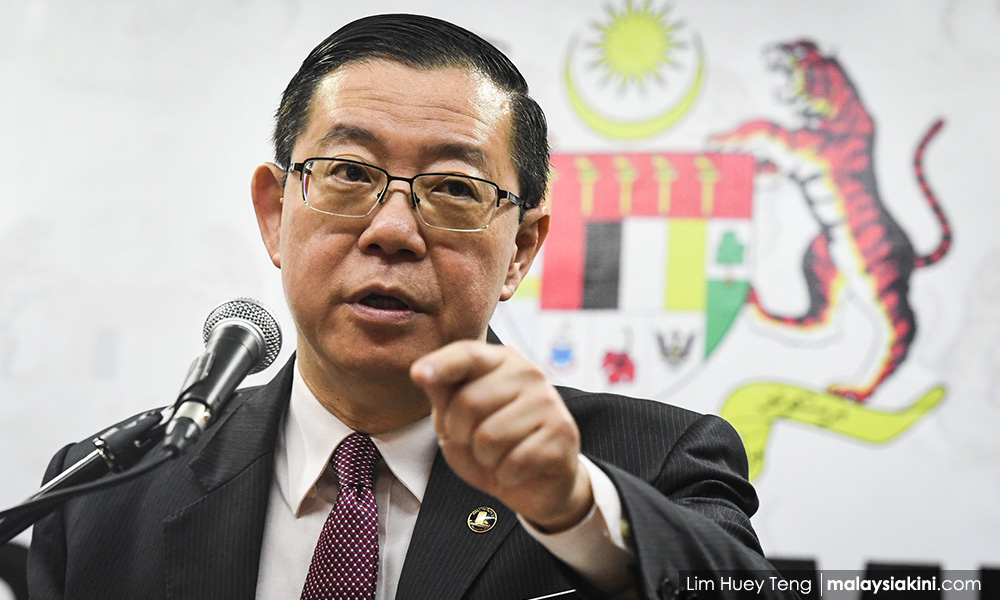
Azmin’s ministry also convened the Congress on the Future of Bumiputeras and the Nation in September last year.
The facts suggest that there were elements who felt uncomfortable with placing the agencies mentioned and all the power that came with them above under the aegis of someone with a surname like “Lim.”
Political ambitions as a distraction
There is one more element here at play. It may not have been a coincidence that Azmin was handpicked to lead this carved-out ministry.
The enduring focus of political speculation and gossip in Malaysia is whether or not PKR president Anwar Ibrahim will succeed Mahathir as prime minister.
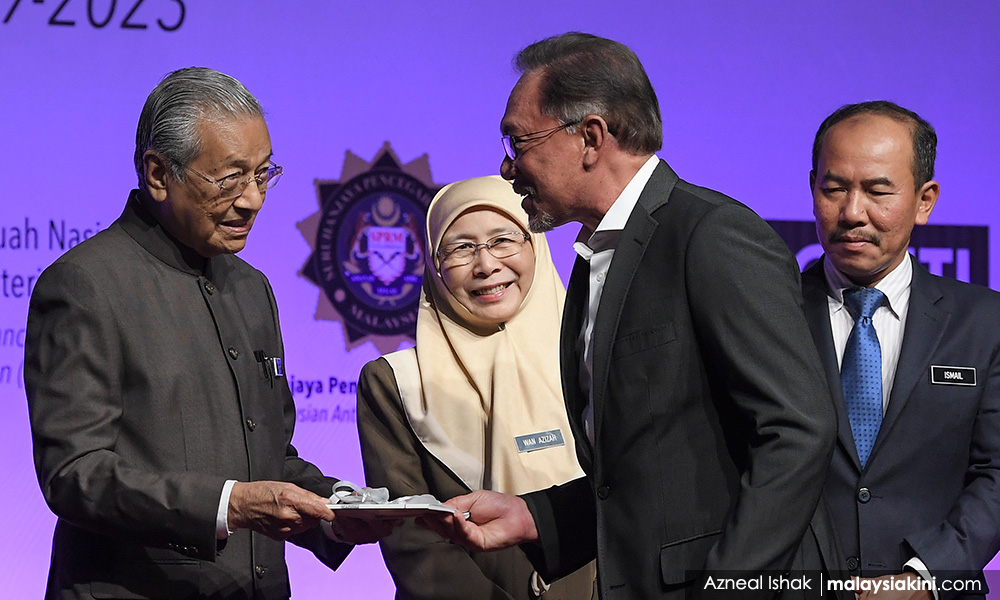
Meanwhile, some might say that the enduring focus of Daim’s vision for a future Malaysia is one in which Anwar is not prime minister.
The mutual dislike between these men is not much of a secret. In the early days after GE14, both made thinly veiled attacks against one another.
Anyone looking to prevent Anwar from becoming prime minister would naturally look to alternatives. Azmin of course is an obvious option, given the increasing animosity playing out between Azmin and Anwar.
The available facts and public positions taken by each respective party does make it look like there is some Azmin-Daim partnership manoeuvering to try and put forward Azmin as a successor to Mahathir instead of Anwar.
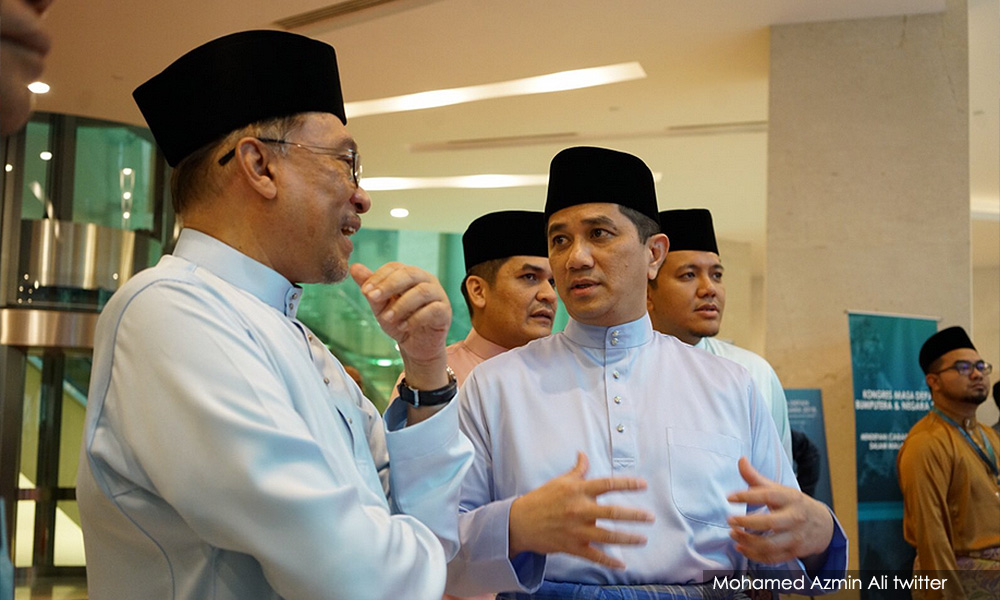
The disproportionate amount of Mahathir-friendly content on Azmin’s Twitter timeline and Daim’s reputation as someone inclined to project considerable influence (‘meddle’ is the less kind word some might use) in various spheres of governance all add to this perception.
The stakes in this game are high of course - literally the highest, where Malaysian politics is concerned. So it should come as no surprise that a lot of energy and resources go into the political manouvering at play.
Getting back on track
A few days ago, a piece of tragic, shocking news emerged, where two elderly ladies in Pudu died in a mini-stampede at the wet market over a rush to get coupons for free food.
Amidst all our politicking, this was a sobering reminder of the (literal) life and death realities Malaysians are facing on the ground.
Whatever his political ambitions, and whether or not his entire ministry was created amidst racial concerns, people like Azmin and others are all capable of playing a big role in facilitating much-needed growth in our economy.
Doing so, however, will require him and the rest of those in power to hunker down and really focus on finding solutions.
If we fail to do so, we put the welfare of those like the two ladies in Pudu, and millions of other Malaysians with them, at severe risk.
NATHANIEL TAN is Director of Media and Communications at EMIR Research, a think tank focused on data-driven policy research, centered around principles of Engagement, Moderation, Innovation and Rigour.
The views expressed here are those of the author/contributor and do not necessarily represent the views of Malaysiakini.





The headline of this opinion piece is a good and right one but alas, the article makes NO ATTEMPT to answer this question let alone evaluate the work of this particular ministry. Alas, this is the standard of journalism we have now. What kind of analysis is found in this so-called opinion piece?
The Economics Ministry is a political move by Tun M to keep all component parties in PH happy with respect to sharing the spoils of victory in GE-14. It is also a strategy for him to address concerns by the Malays about a non-Malay helming the Finance Ministry as well as to act as a balance and check against LGE. In a nutshell, the Economic Ministry is superfluous and all money matters pertaining to the Ministry should be under the Finance Ministry while other economic matters should be handled by other appropriate ministries.
There are more issues being thrown into this brewing pot of an article – politic ala Game of Throne, intrigues to camouflage the Bumiputra agenda and the shrewd showcasing of Lim to appease the Chinese, of course for their votes in GE 14. Then there were the two persons albeit old ladies who died while clamouring for free food coupons. How sad that they should die this way – for free food! What happened actually? Only knew that from the news. Was free food worth dying for? Or were they really starving and must have those food? Sometimes we have become a nation of suckers who crave for anything that is free, especially food. Thus politicians would have field days in organizing open houses during festival. And we are not short of takers, of course. It is also not uncommon, the ‘tapau’ mentality - as if it is not enough just to eat during those gatherings but also to wrap the food in plastic bags to be brought home. You’d see lots and lots of half-full plates with food, not eaten, because they had taken too much what their stomach could take. One does not see this regularly in first world countries. Perhaps Harapan has to be cognizant too that affluence should come with the right mentality as well.
Report this comment
Are you sure you want to delete this comment?
This action cannot be undone.