


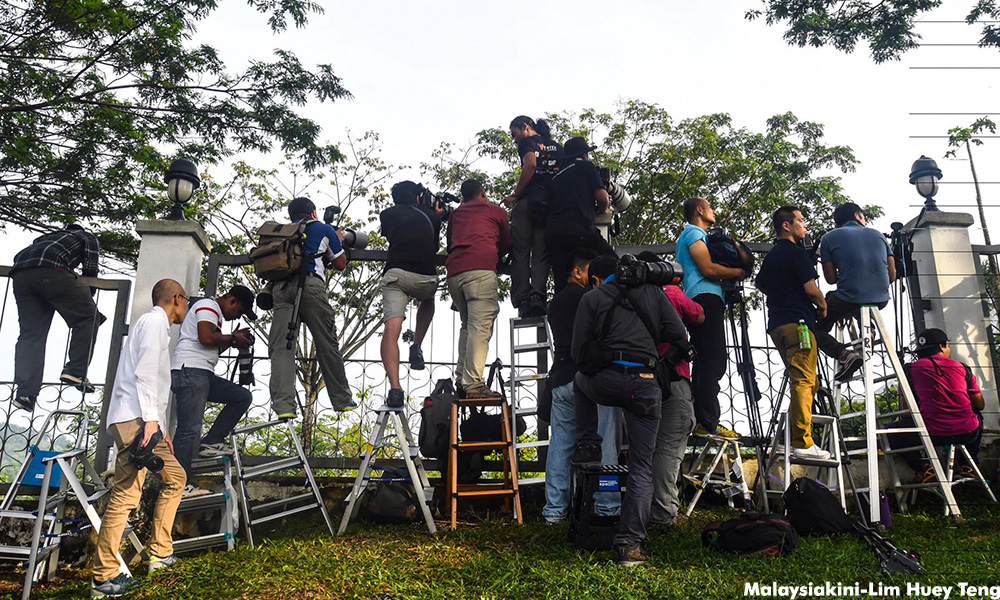

COMMENT | The state and the press - never-ending story of love and hate
COMMENT | The press and the state have always been co-existing in an uneasy relationship since they do not see eye-to-eye on many issues. While journalists want to inform the public about certain controversial policies and laws in greater detail, the government would prefer to keep mum.
It is when the government goes into "silent mode" that the press becomes more restless, agitated, and curious. Something is not right when the powers that be refused to divulge more facts on matters of great public interest.
Ties between the state and the press become more strained as elected politicians take a hostile stand, and each side digs in for a long confrontation. When "war" eventually breaks out, the state whips out its iron fist to suppress the press in typical draconian fashion.
The fact that the press can influence the tide of public opinion is not good news for the state. In most cases...
COMMENT | The press and the state have always been co-existing in an uneasy relationship since they do not see eye-to-eye on many issues. While journalists want to inform the public about certain controversial policies and laws in greater detail, the government would prefer to keep mum.
It is when the government goes into "silent mode" that the press becomes more restless, agitated, and curious. Something is not right when the powers that be refused to divulge more facts on matters of great public interest.
Ties between the state and the press become more strained as elected politicians take a hostile stand, and each side digs in for a long confrontation. When "war" eventually breaks out, the state whips out its iron fist to suppress the press in typical draconian fashion.
The fact that the press can influence the tide of public opinion is not good news for the state. In most cases, the political establishment would rather see journalists kept behind barbed wire than cross the border in their quest for the truth.
The state does not like to read stories, print or electronic, that it feels are threatening to its political dominion. Its tolerance level reaches near zero when it reads a news item that exposes the ugly side of the government.
The state only loves stories that are sugar-coated or stories that gloss over misgovernance. It hates reporters' guts when the articles are not flattering.
But most governments tend to behave irrationally when they react to damning reports about political or financial shenanigans, or sexual escapades, or on any scandals that implicate the highest level of the government hierarchy.
The establishment - all those elected politicians who broke their contract with the people - will hit the roof and start smearing and demonising the press for daring to write bad, but truthful, things about the government.
In a burst of bad temper, those holding the levers of power and those in pressure groups will scream for revenge.
Some governments will use the courts to seek redress, while most will unleash their "boots on the ground" - the police - to drill and intimidate the journalists.
This is always a one-sided contest where the state uses its force to whittle down the power of the press in the hope that journalists will be so cowed into submission that they will sing along with the official version of events.
Imagine a world without the press. Unchecked, the government will have a field day to do as it pleases. The political class, "left to its natural tendencies", will implement policies and pass laws that serve its self-interest.
Greed and abuse of power will run rampant because the hound dogs are not around to sniff out the stench of corruption.
With no one to call public officials to account, the coffers of the government will be open to plunder. The iron-clad political establishment will have no one to stop its excesses.
The public will be kept completely in the dark as all official activities will be carried out clandestinely. In the absence of the press, the power of the executive will know no bounds.
Fortunately, the press is still alive and kicking around the world. A vigilant press is what all countries need to check the political masters and to bring them to their knees if they abuse the public's trust.
The executive and the press may have a love-hate relationship but it is one thrilling story that will have no end. This is because politicians and journalists will continue to cross swords as long as freedom of expression is under threat.
PHLIP RODRIGUES is a retired journalist.
The views expressed here are those of the author/contributor and do not necessarily represent the views of Malaysiakini.


Report this comment
Are you sure you want to delete this comment?
This action cannot be undone.