


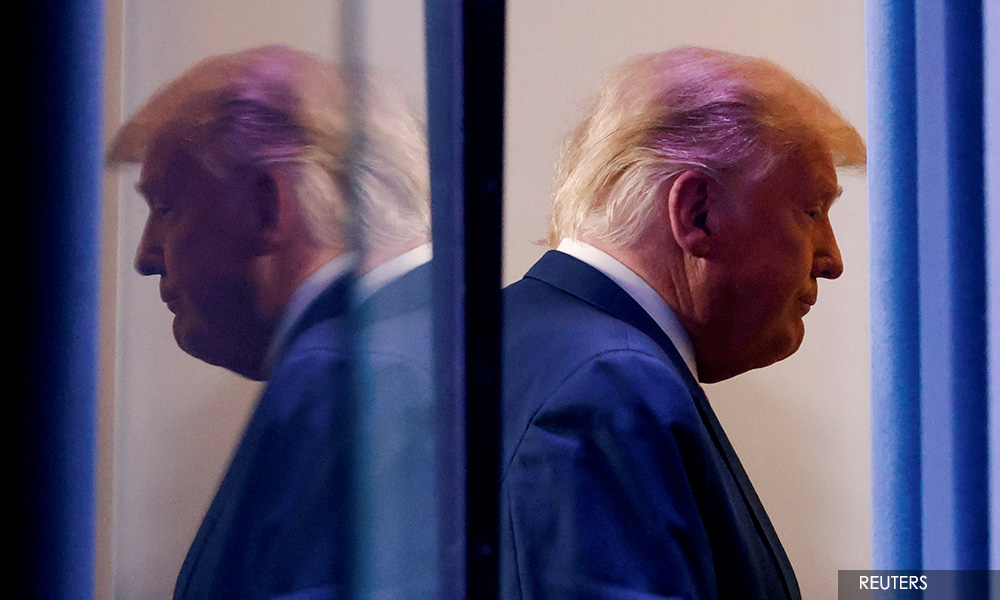

COMMENT | Trump, Hitler and Malaysian politics
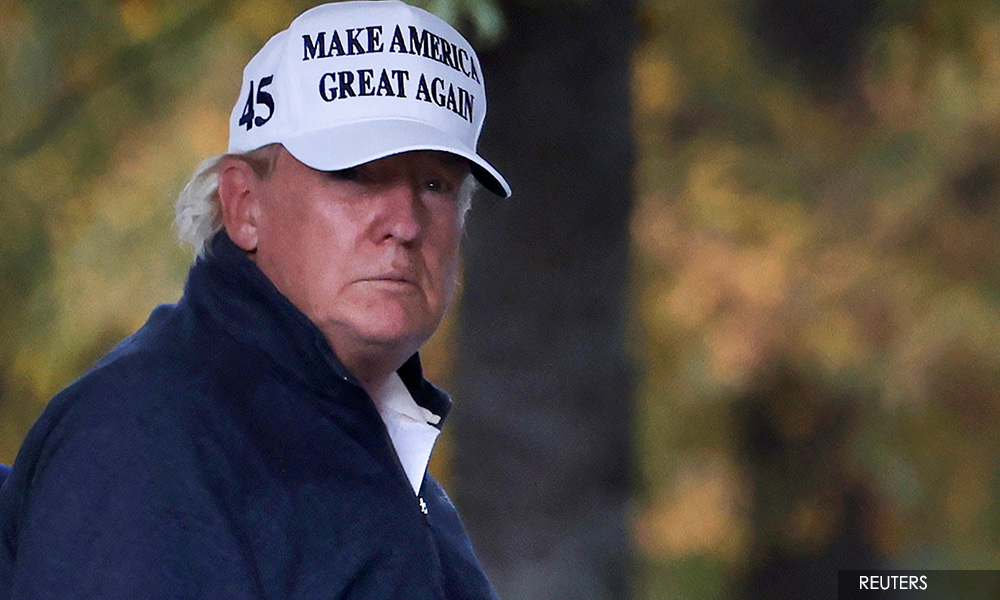
COMMENT | Do you like fairy tales? Here’s one -- the evil wizard Donald Trump has been defeated and America lives “happily ever after”. The End.
But hold on. We know that life and politics don’t work out that way. Trump may have lost but Trumpism is still very alive -- in fact, half of America voted for it. Can we in Malaysia learn some lessons from this?
The Conman-in-Chief was just the symptom of a deeper disease - mainly of inequality - that has plagued the country for decades. Real wages for ordinary Americans (after adjusting for inflation) in 2018 had not gone up in 40 years (yes, forty!) even though GDP and corporate profits have soared many times over.
Hilary Clinton lost the Democrats’ “blue wall” (of industrial states such as Michigan) in 2016 because her husband had promised back in the 1990s that free trade deals like Nafta would bring many high-paying jobs. Instead, factories closed down and jobs went overseas.
Small towns were devastated - the only work available was to flip burgers - and in the despair, many turned to drugs (the opioid epidemic). While it’s easy to dismiss all Trump voters as irredeemable racists, we easily forget that they were also driven by bread and butter issues.
What about us? History does not repeat itself directly, but it does rhyme. In 2018, half of Malaysians earned below RM2,000 per month -- thanks to the national policy to bring in cheap foreign labour.
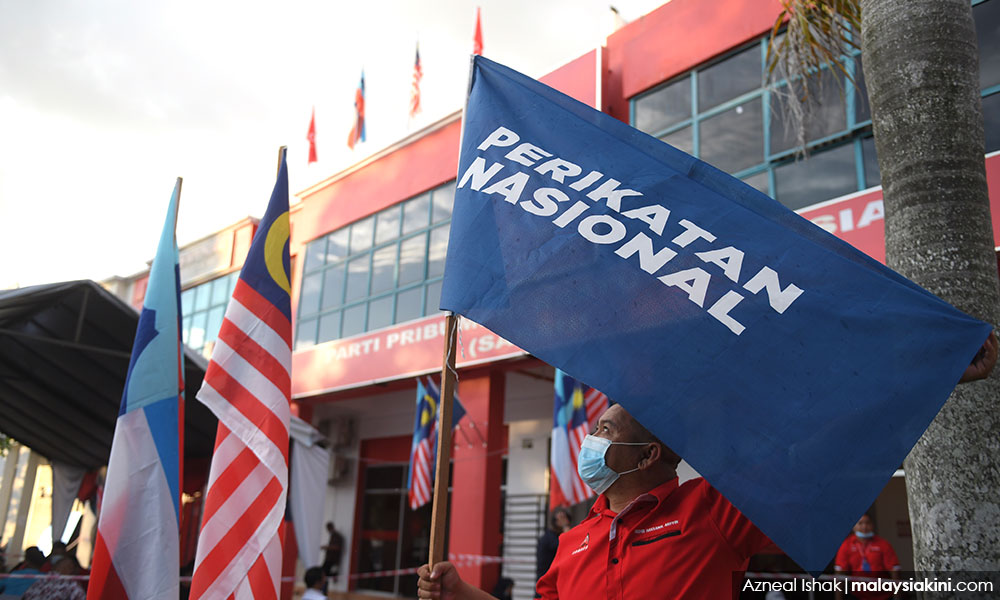
Given that situation, was it politically wise for the Pakatan Harapan government to cut certain subsidies to the poor, who were mainly Malays? Especially, when Harapan got only about 20 percent of the rural Malay vote in the 2018 general elections?
While the reason for cutbacks was supposedly the high national debt, money was still found to pay RM4.7 billion in GST arrears to companies. (In fact, Lim Guan Eng now says the ...
COMMENT | Do you like fairy tales? Here’s one -- the evil wizard Donald Trump has been defeated and America lives “happily ever after”. The End.
But hold on. We know that life and politics don’t work out that way. Trump may have lost but Trumpism is still very alive -- in fact, half of America voted for it. Can we in Malaysia learn some lessons from this?
The Conman-in-Chief was just the symptom of a deeper disease - mainly of inequality - that has plagued the country for decades. Real wages for ordinary Americans (after adjusting for inflation) in 2018 had not gone up in 40 years (yes, forty!) even though GDP and corporate profits have soared many times over.
Hilary Clinton lost the Democrats’ “blue wall” (of industrial states such as Michigan) in 2016 because her husband had promised back in the 1990s that free trade deals like Nafta would bring many high-paying jobs. Instead, factories closed down and jobs went overseas.
Small towns were devastated - the only work available was to flip burgers - and in the despair, many turned to drugs (the opioid epidemic). While it’s easy to dismiss all Trump voters as irredeemable racists, we easily forget that they were also driven by bread and butter issues.
What about us? History does not repeat itself directly, but it does rhyme. In 2018, half of Malaysians earned below RM2,000 per month -- thanks to the national policy to bring in cheap foreign labour.
Given that situation, was it politically wise for the Pakatan Harapan government to cut certain subsidies to the poor, who were mainly Malays? Especially, when Harapan got only about 20 percent of the rural Malay vote in the 2018 general elections?
While the reason for cutbacks was supposedly the high national debt, money was still found to pay RM4.7 billion in GST arrears to companies. (In fact, Lim Guan Eng now says the government should drop the “obsession with controlling the country's deficit” and borrow even more money to help companies save jobs and deal with the economic impact of Covid-19.)
Could that RM4.7 billion have been repaid in instalments instead, to allow more subsidies for the B40 poor? And to fulfil the Harapan manifesto promise to defer PTPTN student loan repayments? Whose interests were more important? That of big companies? Or poorer folks?
Was it wise for Harapan to try and run Malaysia as an efficient company, rather than consolidating Malay support? While we may criticise the current backdoor government for many things, at least they know how to use goodies to bolster their voter base, as can be seen in the latest national budget.
And why is the Harapan Selangor menteri besar still hell-bent in 2020 on chopping down forests in Kuala Langat and Bukit Cherakah? How much influence do rich donors have over our politicians - from both sides? Why didn’t the Harapan Federal government reform political funding as they had promised in their manifesto?
Let’s return to Trump. How could Americans support a leader who lies non-stop, who had molested women and cheated a long list of people?
It was his evil genius to recognise (and then exploit) all the pain and despair of the American working class, while Democrat politicians, including former President Obama, seemed “out of touch” as they spoke of bright futures.
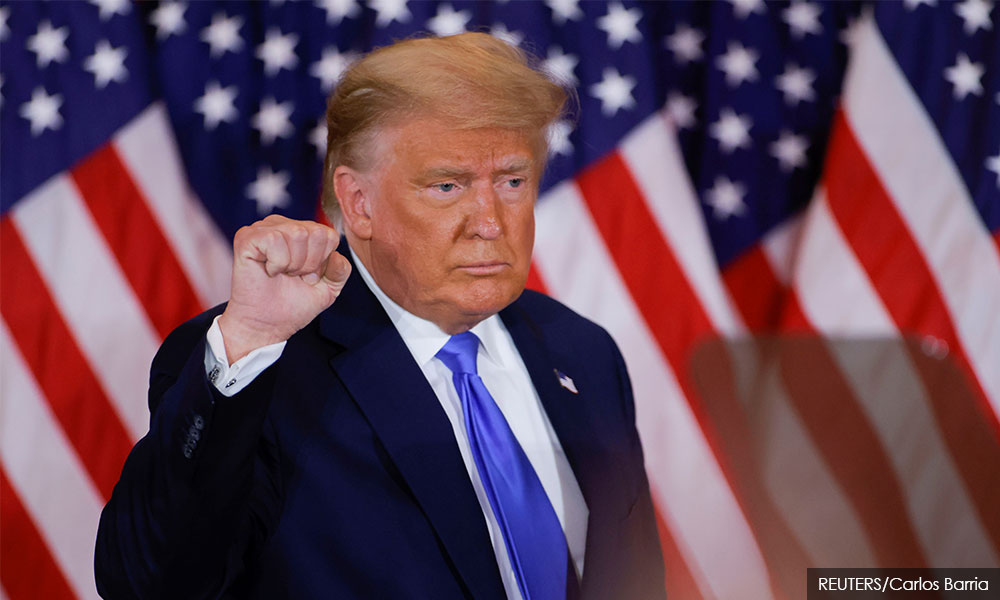
Politicians (of both parties) had been legally bought over by rich campaign donors which is why no Wall Street boss was ever punished by Obama even though their greedy market manipulation had led to the 2008 global financial crash.
Desperate people
Ordinary Americans lost hope in the promises of pro-corporate “normal politicians” and The Establishment. So when Trump demonised “the system” -- including the mainstream media as “fake news” -- many believed him.
The man himself had been a multiple bankrupt and business failure but desperate Americans wanted to believe Trump had magical businessman “superpowers” as portrayed in reality TV show "The Apprentice". Angry voters trusted his promise to be The Saviour from “the swamp” of Washington politics that favoured the rich.
No other politician - Republican or Democrat - talked like he did. Trump successfully tapped into a deep seam of resentment and cynicism with the status quo, nevermind that he himself was a billionaire who was part of that same swamp. He rebranded himself as the “blue-collar billionaire” who drove trucks and wore miners’ hats.
The D in Donald also symbolises his mastery of The Art of Diversion and Distraction, especially to make most poor whites think that their “real enemies” are Muslims, blacks and Mexicans, rather than the big corporate bosses who had sent their jobs overseas.
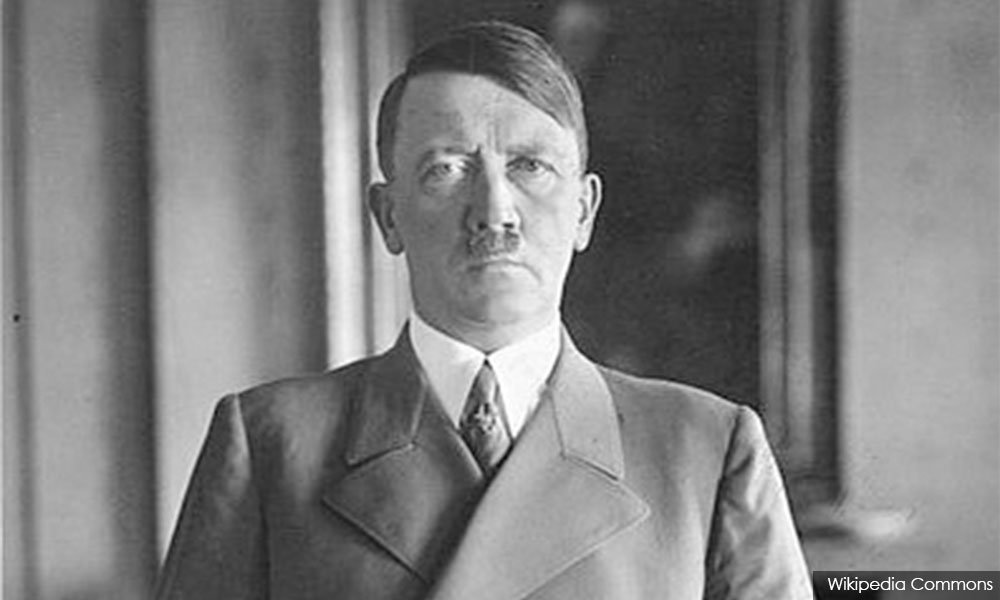
Trump has some chilling parallels to Adolf Hitler, a man who also capitalised on economic devastation (of early-1930s Germany). Here was someone who promised to “Make Germany Great Again” and who blamed the country’s problems on the Jews.
As traditional politicians seemed helpless, people were willing to overlook Hitler jailing his opponents (just as many Americans were willing to overlook Trump advocating violence). Desperate people who see no other solution tend to flock to strongmen fascists who promise to “rescue” and “restore” the nation.
In Hitler’s case, he skillfully exploited fears of chaos (including a huge fire at the German Parliament suspected to have been set up by the Nazis themselves) to win 90 percent of a plebiscite vote in 1934 to become the ultimate leader - The Fuhrer.
So what lessons can be learnt for Malaysia?
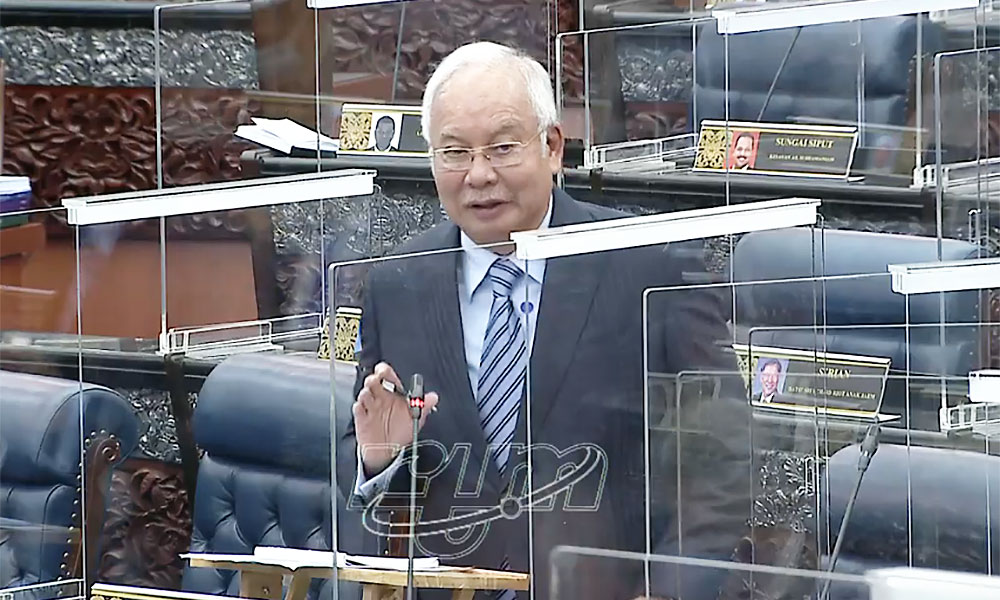
Just as Democrats are bewildered that so many Americans “still support” Trump, many Harapan supporters are exasperated that “they” (certain voters) still support a former prime minister who has been convicted, and sentenced to 12 years jail, for corruption.
And how could PAS, which claims to be “Islamic”, support such people? Maybe there are similarities with how Trump captured 75 percent of the votes of white (though not black) “born again” evangelical Christians.
Were these evangelicals more interested in white identity politics than the genuine Christian values of love thy neighbour, welcoming refugees, helping the poor and caring for the sick? Similarly, is PAS under Abdul Hadi Awang more into “Malay nationalism” than Islamic teachings of assabiyah that prohibit racism (which were highlighted by Tok Guru Nik Aziz)?
Many of the problems and poverty of Malaysians can be traced back to decades of corruption and money politics. But it is the evil genius of certain politicians to divert voters’ anger and frustration onto a certain non-halal race which their cyber troopers call “DAPig”.
Don’t look here! Look there! Yeah, sure we’ve been busy siphoning the system but it’s “them” who are your “real enemies”. We are your “saviours” and “protectors” -- even though we take a huge chunk for ourselves. Hey, maybe it’s “protection money” eh?
The failure to fulfil crucial parts of the Harapan manifesto, slippery political frogs making governments fall, the more recent backroom deals by Anwar Ibrahim with Umno and the attempt to declare an emergency - all these make us distrust “the system” more and more.
The long-term danger is that people will become totally disillusioned with politicians from both sides. And then, when a major economic crisis hits us, people will run to a strongman fascist to “rescue” them - someone like Trump.
ANDREW SIA is a veteran journalist who likes teh tarik khau kurang manis. You are welcome to give him ideas to brew at tehtarik@gmail.com.
The views expressed here are those of the author/contributor and do not necessarily represent the views of Malaysiakini.


Are you sure you want to delete this comment?
This action cannot be undone.