


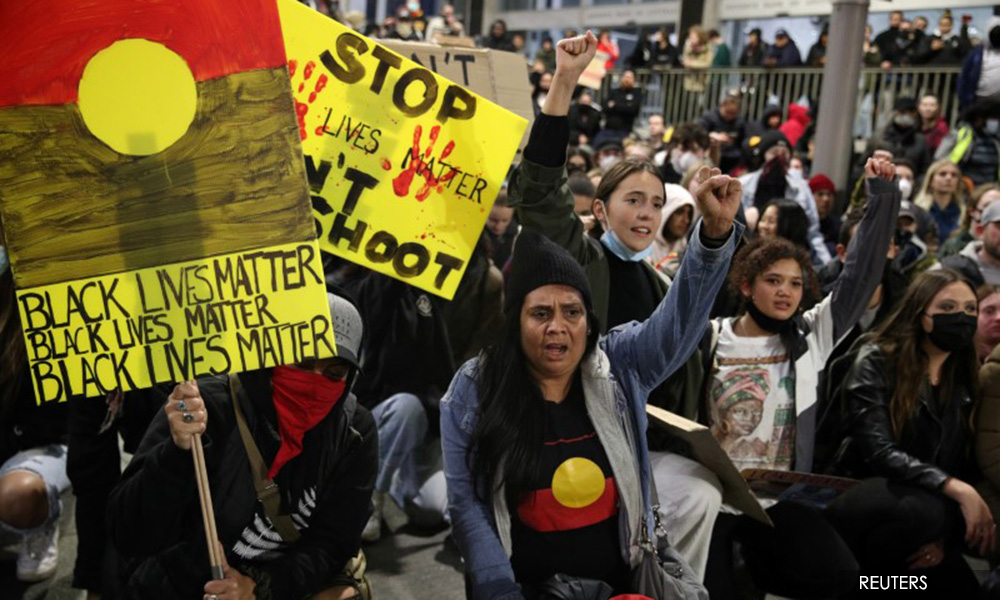

COMMENT | Buying into the fallacy of racial hierarchy
“Where are you from?”
“Bathurst” (a country town in New South Wales).
“What do you do?”
“I teach at the university.”
“IT? Accounting?”
“No, journalism.”
“Oh.”
COMMENT | That’s a common exchange at social gatherings. Genuine curiosity, maybe. Stereotyping? Definitely. How else could the locals see an Asian ‘migrant’ but to unthinkingly place me on the cultural fringe?
The media have consistently framed Asians as outliers since the first wave of “boat people” arrived in Darwin in 1976 after the Vietnam War. Media differentiation of the mainstream and “ethnic migrants” was as common as stories of Asian migrant success were as rare.
Reports of verbal abuse and physical attacks on Asian students during the coronavirus pandemic and enduring negative media depictions of Asian peoples are unsurprising, but racist nonetheless.
Which brings me to this book...
“Where are you from?”
“Bathurst” (a country town in New South Wales).
“What do you do?”
“I teach at the university.”
“IT? Accounting?”
“No, journalism.”
“Oh.”
COMMENT | That’s a common exchange at social gatherings. Genuine curiosity, maybe. Stereotyping? Definitely. How else could the locals see an Asian ‘migrant’ but to unthinkingly place me on the cultural fringe?
The media have consistently framed Asians as outliers since the first wave of “boat people” arrived in Darwin in 1976 after the Vietnam War. Media differentiation of the mainstream and “ethnic migrants” was as common as stories of Asian migrant success were as rare.
Reports of verbal abuse and physical attacks on Asian students during the coronavirus pandemic and enduring negative media depictions of Asian peoples are unsurprising, but racist nonetheless.
Which brings me to this book, Caste – The Lies That Divide Us, by New York Times journalist, Isabel Wilkerson.
Through riveting personal stories, she relates how the ‘Negroes’ for centuries until the end days of Rosa Parks and Martin Luther King Jr were relegated to the lowest rung of American society, assigned to servitude, who played out the script they were handed by the dominant white caste – till this day.
Wilkerson differentiates racism from casteism this way: “Any action or institution that mocks, harms, assumes or attaches inferiority or stereotype on the basis of the social construct of race can be considered racism.
“Any action or structure that seeks to limit, hold back, or put someone in a defined ranking, seeks to keep someone in their place by elevating or denigrating that person on the basis of their perceived category, can be seen as casteism.”
Reading the book reminds me of how Barack Obama, then a little known state senator from Illinois, was mistaken by a white guest for a waiter at a garden party in New York in 2003.
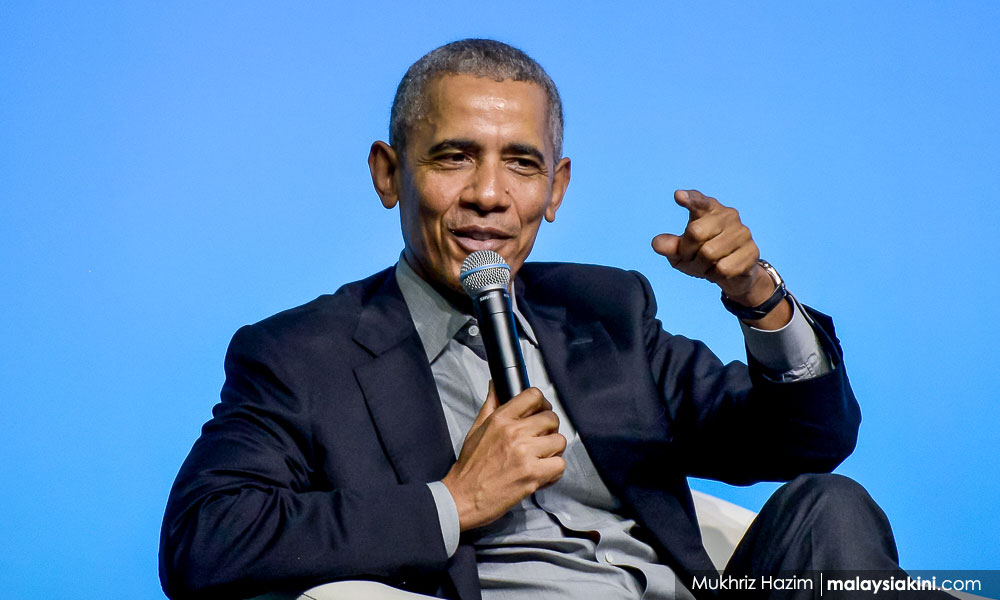
Or Forest Whitaker, an Academy Award actor, who was frisked by an employee at a Manhattan gourmet delicatessen frequented by predominantly white socialites. And, that was just seven years ago.
The history of racism and casteism in the US Deep South lingers today as Montgomery commemorates the 65th anniversary of the bus boycott that Rosa Parks initiated on Dec 1.
I taught for a term at Auburn University, Montgomery in 2009. Waiting at the same stop where Rosa Parks boarded the bus 65 years ago, I noticed that the public buses had predominantly black passengers. Only this time they could sit anywhere they liked.
The caste system, Wilkerson said, had historically “shape-shifted to keep the upper (dominant white) caste pure by its own terms”. It was only after 1967 that inter-racial marriage was legalised. Public approval of such union has, however, improved significantly since the 2000s.
Disregarding the disenfranchisement of the “untouchable Negroes”, Wilkerson quoted a Japanese novelist who said, “it was a single apostrophe that stood between rejection and citizenship for a Japanese Ohara versus an Irish O’Hara”. White prevails. That’s the ‘natural’ order.
The book reminds me of the Western myths I grew up with - the myth of the four essential human freedoms “everywhere in the world” that president Franklin D Roosevelt delivered to the US Congress on Jan 6, 1941, even as Jim Crow laws were subjecting the cruellest form of human indignity on the Negroes, denied the right as basic as drinking from the same water cooler or walking on the same pavement as a white.
President John F Kennedy's address to the nation on civil rights, on June 11, 1963, following protests against the first admission of two black students to University of Alabama said this: “We preach freedom around the world … and we cherish our freedom here at home, but are we to say to the world, and … to each other that this is the land of the free except for the Negroes; that we have no second-class citizens except Negroes; that we have no class or caste system, no ghettoes, no master race except with respect to Negroes?”

In spite of the declaration in 1776 that “all men are created equal, that they are endowed by their Creator with certain unalienable Rights, that among these are Life, Liberty and the pursuit of Happiness”; in spite of what was inscribed on the Statue of Liberty in 1886, the majority of blacks still languish in the lowest rung of American society.
Wilkerson’s take on the American reality shows how people are often judged on the very things they cannot change – their ancestry. Such is the tyranny of caste. And it persists because we have bought into the “lie of natural hierarchy” and flawed assumption of genetic superiority of one racial group over the other.
‘Casteism’ takes on a familiar trajectory in the architecture of Malaysian politics. This enduring variable is evident in the Islamic housing projects in Selangor.
Perak and Penang will reportedly over the next few years develop similar projects, hence casting the racial and religious dye to minimise social interaction between Muslims and non-Muslims.
That is sad.
ERIC LOO is the founding editor of the academic journal Asia Pacific Media Educator.
The views expressed here are those of the author/contributor and do not necessarily represent the views of Malaysiakini.




Report this comment
Are you sure you want to delete this comment?
This action cannot be undone.