



BOOK REVIEW | Charting an invisible world
BOOK REVIEW | Trapped in a stifling automobile as it winds its way to the Malayan coast, Johnny Lim, the protagonist of Tash Aw’s The Harmony Silk Factory, retorts at a remark made by a callous British colonial official. China, the official says haughtily, is being ruined by the Communists.
Johnny’s response is simple: the Communists aren’t the ones responsible. To his wife beside him, it feels like an accusation directed at all of them: the official, an English bohemian, a Japanese professor, and herself, the daughter of a rich Straits Chinese family.
Johnny is alone among them. He may be a rich man now, but his wealth does not disguise the fact that he was born a peasant. Johnny is still an outsider.
In all of Tash Aw’s Malaysian books, notions of race and class come to the fore, but it is only in his most recent works do these notions truly come into their own. In his memoir, The Face: Stranger on the Pier, Aw remarks on ...
BOOK REVIEW | Trapped in a stifling automobile as it winds its way to the Malayan coast, Johnny Lim, the protagonist of Tash Aw’s The Harmony Silk Factory, retorts at a remark made by a callous British colonial official. China, the official says haughtily, is being ruined by the Communists.
Johnny’s response is simple: the Communists aren’t the ones responsible. To his wife beside him, it feels like an accusation directed at all of them: the official, an English bohemian, a Japanese professor, and herself, the daughter of a rich Straits Chinese family.
Johnny is alone among them. He may be a rich man now, but his wealth does not disguise the fact that he was born a peasant. Johnny is still an outsider.
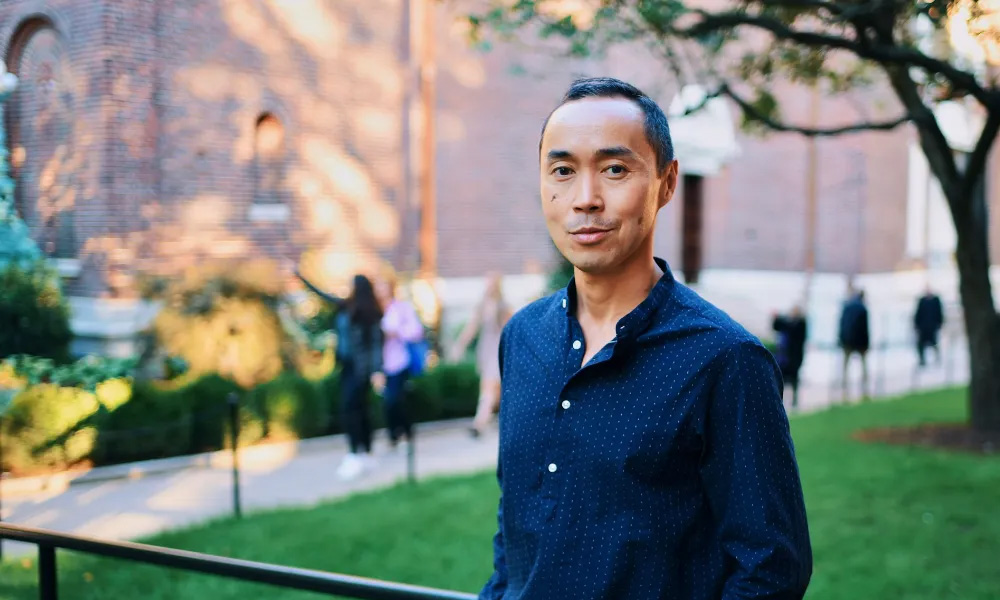
In all of Tash Aw’s Malaysian books, notions of race and class come to the fore, but it is only in his most recent works do these notions truly come into their own. In his memoir, The Face: Stranger on the Pier, Aw (above) remarks on boyhood visits to his cousins in backwater towns far removed from the city.
His urban environment is changing rapidly as Dr Mahathir Mohamad comes to power, but beyond the fantastic developments in the capital, there is much less opportunity for those on the margins to share in this new prosperity. Even his vocabulary outs him as one of the new middle classes.
He is one of those with money and the attendant class privileges. In this sense, he is a "reverse Johnny Lim", trapped among strangers. The one thing that they have in common is that they are all ultimately the children of immigrants.
By accident or design, most of Tash’s characters are ethnic Chinese. Race itself compounds literary production, and the resulting lines are drawn clearly. Class and education manifest themselves strongly in the writings of the urban elite of the country.
Historically, the state focused on the production of Malay-language literature at the expense of the country’s linguistic diversity. The net result is the production of a skewed national canon, stratified along lines that resulted from colonial policy, the National Culture Policy of 1971 and beyond.
Despite this, Malaysians writing outside of these narrow boundaries have thrived. Most of them write in English. This group includes not just Aw, but also writers like Tan Twan Eng, Zen Cho and Preeta Samarasan, to name a few. There is also the interesting fact that many of the internationally known writers are ethnic Chinese, but that opens up a different discussion altogether, albeit one that is also tied to the notions of class.
Questions of race are subtly explored in Aw's Five Star Billionaire. Set in bustling Shanghai during its economic boom, we follow five Malaysians living in the city. Their features, complexions and language allow them to blend in, despite having divergent histories.
Yet China can never be home, as seen through the lens of two of its characters. The titular billionaire Walter Chao understands that the reason he is who he is because, in his true home, he was a victim of class and racial prejudice. Phoebe, whom Walter meets online, may have a new name and identity based on a stolen identity card but she is a former migrant worker who has reinvented herself.
In the end, she desperately wants to tell Walter the truth, that she, like him, is an outsider from the south. Aw’s characters may operate almost entirely within a Chinese world but they know that the truth is more complicated. They have a relationship with a home that is both familiar and disconcerting.
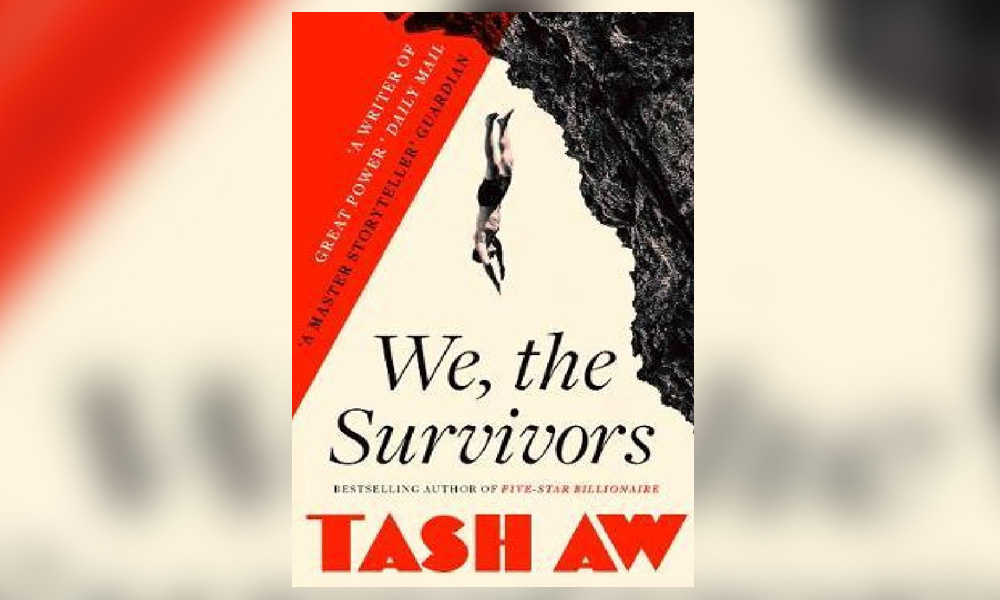
However, it is only in his latest novel, We, the Survivors, that Aw finally tackles this problem squarely. His protagonist, Ah Hock, is once again Chinese and from the lowest rungs of society. In a sharp break from Tash’s other works, Ah Hock is unable to transcend the layers of systemic prejudice that his other characters escaped from.
The furthest Ah Hock gets is being able to leave his polluted village by the sea for Kuala Lumpur, bringing him into contact with the rest of Malaysia’s urban underclass. In poverty, at least the people are united - poor Malays, Chinese and Indians scrape by on brutally thin margins while the middle classes power ahead, investing in education, foreign residencies and imported cars.
Ah Hock, as hard as he tries to catch up, can only make do with crumbling suburbs and work on a mismanaged fish farm. The lights of the city’s rising skyline stare mockingly through the haze. He remains part of a nebulous underclass that simply struggles to survive.
Even the familiar elegance of Aw's prose has been replaced by Ah Hock’s functional and unsentimental narration. But below Ah Hock, another brutal layer is revealed. Despite his struggles, the migrants and refugees live lives that are even worse, absolutely hazardous.
Instead of focusing on those who have made it, Tash now focuses on the ones who have been left behind. Ah Hock’s story is remarkably subtle. Through his interactions with a cosmopolitan, American-trained researcher working on her dissertation, he exposes how different they are.
His interviewer has a liberal education and attitudes and rails against discrimination while he can only shrug and accept the inevitable discrimination that infects every aspect of life in Malaysia.
The last scene of the book contains an element of self-parody. Ah Hock is invited to the highlands for the launch of his interviewer’s book, and the party is filled with the rich and cosmopolitan. Even though he is the subject of her book, he simply cannot fit into the crowd. They may have been born in the same country but their lives are worlds apart.
He simply cannot relate to their attitudes and even their manner of speech. It is a humorous yet tragic situation. In the end, Ah Hock knows that there is truly no escape from his station.
Aw’s characters eventually carry an instinctive understanding of their place in society. In some sense, their fates may already have been laid out for them.
If a truly representative Malaysian canon is to be compiled, We, the Survivors deserves a place - one that cuts across the polite lines of tolerance to expose the ugly and systemic brutality of the Malaysian system.
WILLIAM THAM WAI LIANG is an editor at Gerakbudaya and the author of two novels. His new novel, The Last Days, is set in 1981 and covers the continuing legacy of the Emergency. His first book, Kings of Petaling Street, was shortlisted for the Penang Monthly Book Prize in 2017.
The views expressed here are those of the author/contributor and do not necessarily represent the views of Malaysiakini.
/file/publisher-c1a3f893382d2b2f8a9aa22a654d9c97/2020/09/385dae77e0e965640ed378718637bab3.jpg)


Report this comment
Are you sure you want to delete this comment?
This action cannot be undone.