



ADUN SPEAKS | Can Indians make a difference in electoral politics?
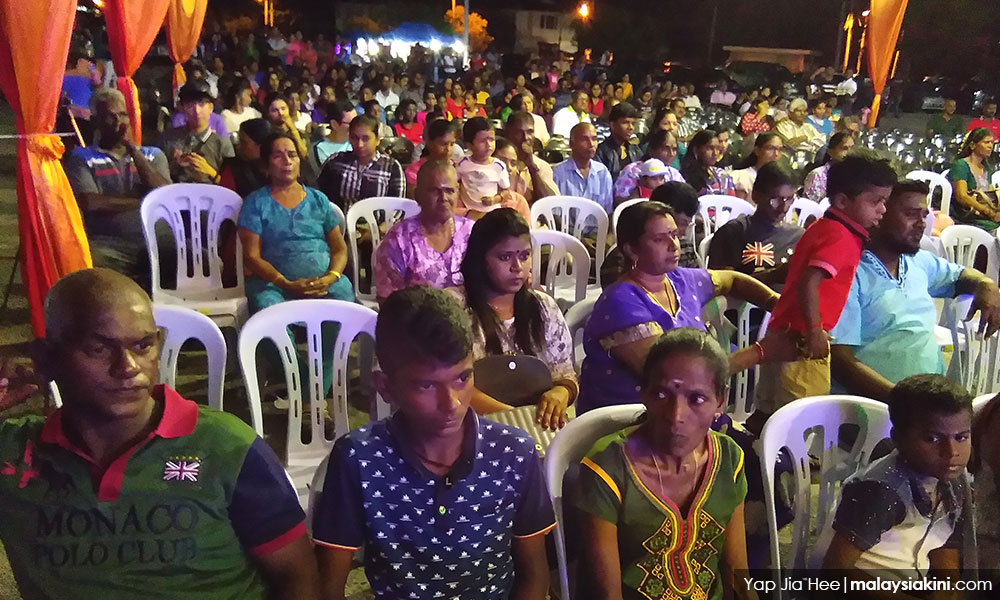
ADUN SPEAKS | According to the official figures, Indians might be around seven percent of the total population of the country.
There has been a gradual decrease in the population of Indians relative to the other ethnic groups.
Urbanisation, low birth rates and others could explain the decrease in the numbers of Indians.
Such factors are not unique to Indians but are generally applicable to other ethnic groups.
The majority of the Indians comprise the working class experiencing problems of low wages, lack of access to education and healthcare, and generally being sidelined by the aggressive majoritarian agenda of race and religion.
Is it possible to write off the Indians as politically insignificant?
Even if Indians are not numerically significant, can they make a difference in determining the outcome of elections in the country?
An examination of the Indian voter registration in parliamentary constituencies gives some indications that...
ADUN SPEAKS | According to the official figures, Indians might be around seven percent of the total population of the country.
There has been a gradual decrease in the population of Indians relative to the other ethnic groups.
Urbanisation, low birth rates and others could explain the decrease in the numbers of Indians.
Such factors are not unique to Indians but are generally applicable to other ethnic groups.
The majority of the Indians comprise the working class experiencing problems of low wages, lack of access to education and healthcare, and generally being sidelined by the aggressive majoritarian agenda of race and religion.
Is it possible to write off the Indians as politically insignificant?
Even if Indians are not numerically significant, can they make a difference in determining the outcome of elections in the country?
An examination of the Indian voter registration in parliamentary constituencies gives some indications that they might have an impact on the outcome of electoral competition.
In other words, even if Indians do not have a majority in electoral constituencies, their sizeable number can make a difference in determining the ultimate winners or losers in general elections.
Indians and Chinese, and to a limited extent the Malays, can make a difference to Pakatan Harapan in the next general election.
In this regard, coalition formation or strengthening before the next general election will be deemed crucial, and most importantly, to ensure that Harapan has the right mix of Indian, Chinese and Malay support.
It is my thinking that Indians will make a difference in the 62 parliamentary constituencies in the states of Kedah, Penang, Selangor, Wilayah Persekutuan (KL), Negeri Sembilan and Johor.
In constituencies of stiff competition and rivalry...
However, the actual impact will be determined by the actual strength of Indian voters, how they combine with other races in influencing the eventual outcome.
In constituencies of stiff competition and rivalry, Indian votes might make the actual difference or become the kingmakers in the next general election.
It is in the interest of candidates, whether from Harapan or Perikatan Nasional (PN) to take Indian votes seriously.
Although there are 62 parliamentary constituencies in the country with sizeable Indian voters, they have varying strengths related to the percentage of Indian voters in them.
Without ignoring the details, there are four categories of Indian voters.
The first category consists of constituencies that have percentages of Indian voters between 21 percent to 26 percent.
In this category, we have constituencies of Padang Serai (21 percent Indian voters) in Kedah; Batu Kawan (22.76 percent) in Penang; Ipoh Barat (24.2 percent), Bagan Datuk (21 percent) and Sungai Siput (21 percent) in Perak; Rasah (21 percent) and Port Dickson (22 percent) in Negeri Sembilan; and Kuala Selangor (21 percent) and Kota Rajah (27 percent) in Selangor.
The second category consists of 15 to 20 percent of Indian voters in the constituencies.
These constituencies numbering a total of 20 are Merbok (15 percent) in Kedah; Bagan (15 percent) in Penang; Batu Gajah (17 percent) and Teluk Intan (18 percent) in Perak; Cameron Highlands(15 percent) in Pahang; Klang (17 percent),Hulu Selangor (16 percent), Selayang (17 percent), Subang (15 percent), Petaling Jaya (19 percent) and Kuala Langat (16 percent) in Selangor.
In the Federal Territory of Kuala Lumpur, Batu (17 percent) and Lembah Pantai (16 percent) fit this second category.
In Negeri Sembilan, Rembau (15 percent) can be included in this category.
There are no constituencies with Indian voters of this size in Pahang.
The third category of distribution of Indian voters is around 10 to 14 percent.
In total, there are 26 of them.
Sungei Patani (12 percent) and Kulim (13 percent) in Kedah, Bukit Mertajam (10 percent) and Bayan Baru (11 percent) in Penang. In Perak, the constituencies are Taiping (13 percent), Tambun(11 percent), Beruas (14 percent), Tapah(14 percent), Lumut (11 percent) and Tanjung Malim (13 percent).
In Selangor, the constituencies are Gombak (10 percent), Hulu Langat (10 percent), Bangi (11 percent), Sungai Buloh (11 percent), Shah Alam (12 percent) and Sepang (14 percent).
In Negeri Sembilan, they are Seremban (13 percent), Jempol (12 percent), Tampin (12 percent) and Alor Gajah (12 percent).
In Johor, these are Segamat (10 percent), Pagoh (11 percent), Tebrau (11.5 percent), Kulai (10 percent), Iskander Puteri (12.5 percent), Pulai (10 percent) and Pasir Gudang (10 percent).
The fourth category of Indian voters are those who constitute nine percent and less.
In the constituencies of Indera Mahkota, Temerloh and Bentong in Pahang, the numbers of Indian voters hover around five to nine percent.
In Selangor, Ampang and Pandan have registered Indian voters on the average of six to seven percent.
In Negeri Sembilan, Jasin has nine percent ndian voters.
And finally, Johor, Kluang and Sembrong have an Indian voter presence of less than nine percent.
The four categories of Indian voters presence suggest how they are distributed in the 62 parliamentary constituencies.
The voting impact of Indians will, of course, be determined by the nature of the electoral competition, alliances formed, the opportunities offered and others.
Any political coalition intending to take power at the federal or state levels must not only pay attention to Malay and Chinese voters but also to Indians.
In the coming general election, Indians can make difference in the constituencies where they have a sizeable presence.
P RAMASAMY is Perai assemblyperson and Penang deputy chief minister II.
The views expressed here are those of the author/contributor and do not necessarily represent the views of Malaysiakini.






Are you sure you want to delete this comment?
This action cannot be undone.