



BOOK REVIEW | Imaginative retelling of a tale from Kedah's rich folklore
BOOK REVIEW | Kedah, one of the northernmost states of Malaysia, has a rich and deep history, one that is much older than even Malacca itself.
Besides its history, the state of Kedah is also rich in folk tales and legends. From the widely known story of Mahsuri and the Tasik Dayang Bunting from Langkawi, there are also the tales of Puteri Lindungan Bulan and the myth of Gunung Keriang.
Of course, the most intriguing of all the stories to come out of the state has got to be that of Raja Bersiong (the Fanged King). This intriguing tale, which is recorded in the Kedah Annals (or known as Hikayat Merong Mahawangsa) does contain historical facts, though it is largely to be taken as a work of literary fiction with many incredible assertions.
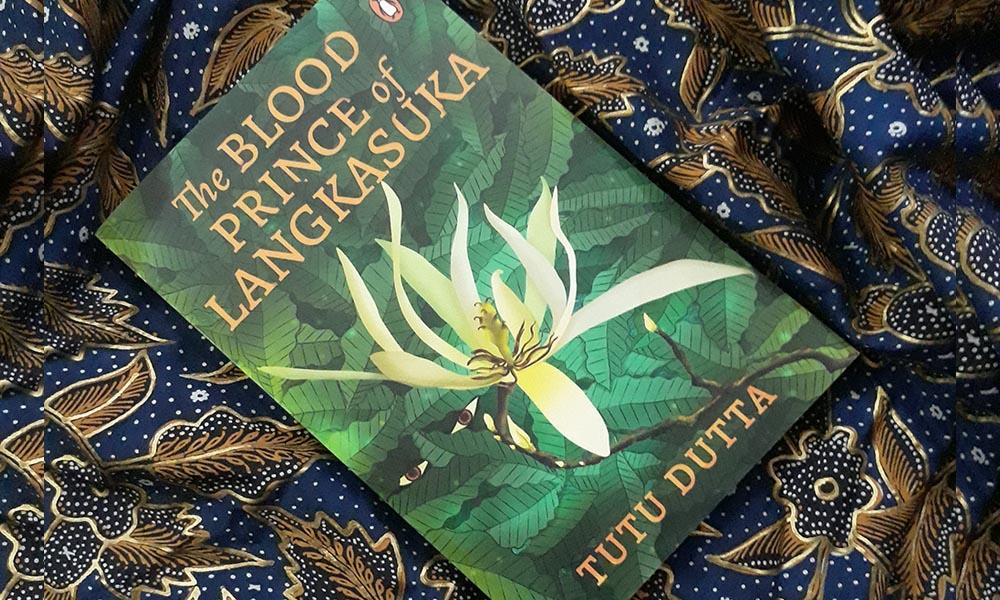
Tutu Dutta’s "The Blood Prince of Langkasuka" deftly reimagines the tale of Raja Bersiong into a thrilling account of love, betrayal, and mystique set in the backdrop of an old Kedah.
Incidentally, the author is a writer of children's and young adult books, with 10 books published to date. Many of these books were written overseas, as she is also the wife of retired Malaysian diplomat Yean Yoke Heng. She has also worked as a Research Fellow at Universiti Malaya.
The book, at 172 pages, is an easy and quick read but crafting it would have been anything but and it shows every time the author steps back and describes the world in which the events unfold...
BOOK REVIEW | Kedah, one of the northernmost states of Malaysia, has a rich and deep history, one that is much older than even Malacca itself.
Besides its history, the state of Kedah is also rich in folk tales and legends. From the widely known story of Mahsuri and the Tasik Dayang Bunting from Langkawi, there are also the tales of Puteri Lindungan Bulan and the myth of Gunung Keriang.
Of course, the most intriguing of all the stories to come out of the state has got to be that of Raja Bersiong (the Fanged King). This intriguing tale, which is recorded in the Kedah Annals (or known as Hikayat Merong Mahawangsa) does contain historical facts, though it is largely to be taken as a work of literary fiction with many incredible assertions.
Tutu Dutta’s "The Blood Prince of Langkasuka" deftly reimagines the tale of Raja Bersiong into a thrilling account of love, betrayal, and mystique set in the backdrop of an old Kedah.
Incidentally, the author is a writer of children's and young adult books, with 10 books published to date. Many of these books were written overseas, as she is also the wife of retired Malaysian diplomat Yean Yoke Heng. She has also worked as a research fellow at Universiti Malaya.
The book, at 172 pages, is an easy and quick read but crafting it would have been anything but and it shows every time the author steps back and describes the world in which the events unfold.
The story is told in a linear fashion, even though it is peppered with some flashbacks and transports the reader into a world filled with superstition and magic.
This is a bygone era in which aspects of daily life were governed by the whims of nature, which in turn were believed to have been influenced by spirits (or, rather the semangat).
It is customary to tempt these mystical beings with offerings and prayers in exchange for promises of bountiful harvest.
Such glimpses into the past that the author provides throughout the story indicates research of that period in time which would have taken some effort in itself but coupled with potent imagination and skilful storytelling abilities helped in elevating this retelling of the legend into an unforgettable journey.
Origins of Raja Bersiong
For those who are not aware of the legend of Raja Bersiong, the story goes that the king (named as Raja Ong Maha Perita Deria in the aforementioned Kedah Annals) develops a liking to human blood after consuming food prepared by the royal cook who was accidentally injured and spilt his own blood into the dish.
Noticing the different but improved taste of the dish, the king compels the cook to divulge the secret ingredient. This then sets in motion a series of events in which the king soon becomes addicted to the taste of blood, develops fangs, and starts killing people for blood.
The king was then chased off into the jungles in the vicinity of the Bujang Valley where he vanished, or at least that is one version of the tale that’s familiar to the people in the area.
The version that is presented in The Blood Prince of Langkasuka is much more nuanced. It reaches deep into the mythology of the land at the time and throws in political intrigue, romance, and a murder mystery to boot.
The most enjoyable aspect of the book though, has got to be the exploration of the relationship between the main character (here named Raja Perita Deria) and his mother, as well as his three friends.
The character of the mother is very well developed but more background of his friends (Chula, Satra, and Yala) would have been good especially as each of them plays a significant role in the plot. One can imagine the antics and trouble these boys from affluent families would have gotten into, and these were hinted at and explored albeit briefly.
Quick pace into the thick of the action
For someone hailing from the Nusantara (or the Malay language-speaking world), it is also entertaining to discover local concepts and words that are familiar and woven into the tale. The book does not lose much time in getting the reader into the thick of the action. Within the first 15 pages or so, the stage is set for the exciting story to unfold.
While the pace is quick, the style and language deployed is poetic enough to beautifully convey the actions of the characters, their struggles, and thought processes.
The Blood Prince of Langkasuka is a fun exploration of an old Kedah that was rich in tradition influenced by traders and scholars from India, Persia, China, and Arabia which can be seen in descriptions of its customs and politics.
It is also the kind of tale grandmothers would weave as wide-eyed children gather around her with rapt attention, eager to find out what happens next. In short, it is an engaging book that is quite the page-turner.
With so much going on for the book, one can’t help but feel there are more details that want to slip through what’s being presented here as a tightly woven narrative. That may not necessarily be a bad thing, but it does feel like lots of minutiae which could have enriched the story were held back.
Could the author have traded those details off for a faster-paced storyline?
The ending, while extremely satisfying does leave the readers wanting more. One aspect that the book could have truly benefited from is further world-building because there is more to be explored, something that perhaps could be addressed in a sequel. Dare we hope?
The Blood Prince of Langkasuka is published by Penguin and is available at all major bookstores.
MARAN SUBRAMANIAM was born in Alor Setar, Kedah and raised on a steady diet of literature, folklore, and arts. He believes inculcating the love of reading in future generations is the greatest contribution one can make.
The views expressed here are those of the author/contributor and do not necessarily represent the views of Malaysiakini.

/file/publisher-c1a3f893382d2b2f8a9aa22a654d9c97/2020/09/385dae77e0e965640ed378718637bab3.jpg)


Report this comment
Are you sure you want to delete this comment?
This action cannot be undone.