




Adventures of Australias first mufti
Last June, I visited Malaysia for the first time. I was on a Muslim exchange programme run by the Australia-Malaysia Institute and funded by the Australian Department of Foreign Affairs and Trade.
The tour lasted about six days. I was part of a delegation of five Australian Muslims, and we met representatives of government, academic, professional organisations.
It struck me that Malaysian Islam has become Malay Islam, a form of ethnic or tribal religious identity heavily regulated by governments. It seemed strange that governments would bother regulating religion to this extent.
Last June, I visited Malaysia for the first time. I was on a Muslim exchange programme run by the Australia-Malaysia Institute and funded by the Australian Department of Foreign Affairs and Trade.
The tour lasted about six days. I was part of a delegation of five Australian Muslims, and we met representatives of government, academic, professional organisations.
It struck me that Malaysian Islam has become Malay Islam, a form of ethnic or tribal religious identity heavily regulated by governments. It seemed strange that governments would bother regulating religion to this extent.
The management of Islamic affairs in Australia is completely different to that in Malaysia Australia has no state religion and Australian Muslims, like other ethno-religious minority groups, are relatively free to practise religion and establish institutions within the bounds of laws that enable religion to remain relatively unregulated in the sphere of civil society. In other words, Muslims and followers of other faiths tend to regulate themselves.
To understand the nature of Australia's 'mufti crisis', one needs background on how Australian Muslims organise themselves. To understand why the words of an imam (religious leader) make national headlines in Australia, one needs to understand the way many Australians perceive the relationship between culture and national security.
That basically means I will be lucky to provide any meaningful analysis of this particular religious drama in just one episode. Sorry about that!
Post-London environment
No single terrorist act has changed the landscape for Muslim minorities in Australia more than the terrorist attacks in London on July 7, 2005. Until 7/7, terrorism was seen as a foreign matter. The 9/11 terrorists were flown in from the Middle East, care of Germany. The two Australians detained at Guantanamo Bay were arrested in Afghanistan and Pakistan.
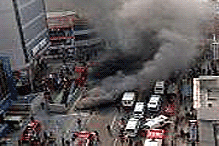 But in the case of 7/7, all evidence points to these attacks being the work of disenchanted alienated home-grown British Muslim youth. The home-grown factor meant that well-integrated second- and third-generation Muslim youth (many of whom had little or no link with their ancestral faith apart from their distinctive names) were suddenly terror suspects.
Given the almost automatic link made between Islamic religion and terrorism, the Australian government looked to Muslim religious bodies for reassurance that Australian Muslim youth were not being radicalised. Muslim religious bodies and structures suddenly came under the microscope.
Australian Muslims hail from over 60 different countries. Many ethnic Muslim groups are now into their second and third generations. Among these established groups are Muslims from Cyprus, Turkey, Bosnia and Albania.
It is impossible to talk meaningfully of a singular uniform Australian Muslim community. Australian Islam is largely a migrant phenomenon consisting of mosques divided along ethnic and linguistic lines. Mosque leadership is almost exclusively in the hands elderly male first generation migrants. Women and young people are generally locked out.
Mosque governing bodies are divided along ethnic lines as well. These bodies come together to form state Islamic councils. These councils then form the Australian Federation of Islamic Councils (AFIC), the primary umbrella organisation.
Mosque management bodies are mainly concerned with mosque management issues. Public relations, welfare and education are generally left to specialist welfare bodies managed or funded by governments.
The mufti
During the late 1980 s, AFIC decided to appoint a controversial imam to the position of mufti. Egyptian-born Sheik Tajeddine Hilaly served as imam for a large congregation in the Sydney suburb of Lakemba. The organisation that manages his mosque calls itself the Lebanese Moslems Association (LMA), and the body only allows males eligible for Lebanese citizenship to be full voting members.
So when this ethnically and gender exclusive organisation pressured a national body to appoint its imam to represent Muslims from over 60 different ethnic groups, one can imagine the outcry. It was a controversial decision, made even worse by the fact that the mufti is unable to speak English and was already in trouble for making remarks deemed offensive to women, Jewish groups and others.
And what role was the mufti to play? During my recent Malaysian tour, I was told that pronouncements of Malaysian muftis attract certain legal status under state law. Yet the precise role Australia's mufti was to play wasn't clear. Sheik Hilaly was provided with no duty statement, no resources and no personnel.
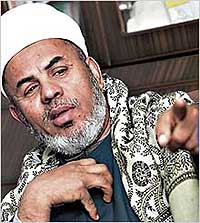 Sheik Hilaly speaks fluent Arabic, both classical and in modern Egyptian dialects. Having lived in Lebanon for many years, Hilaly also understands the Lebanese dialect spoken by many in his congregation (even if they frequently found his Arabic beyond them).
But most Australians (Muslim or otherwise) don't speak Arabic as their mother tongue. If Hilaly was to act as some kind of religious spokesman, he needed an interpreter to assist him. Enter Keysar Trad.
Trad had served for many years on the LMA executive. He was one of the few executive members who can speak English. Unlike the situation in other Western countries, the bulk of Lebanese Muslim migrants to Australia were from the less educated sectors of Lebanese society.
During the late 1990s, Trad set up one of Australia's first Muslim websites. He also translated the speeches and books of a number of Arab Muslim religious figures living in Australia, including Hilaly.
Trad's ability to translate adequately and properly was questioned from time to time, but Trad was perhaps the only (non-accredited) interpreter to make time for Hilaly when other (accredited and qualified) Arab Muslim interpreters and translators were too busy working on other projects.
Controversial remarks
Almost as soon as Sheik Hilaly entered Australia to commence duties as imam of what was then Australia's largest mosque, he became embroiled in controversy. Much of this was likely invented by persons with various forms of vested interest.
Sheik Hilaly's predecessor was the late Sheik Khaled Zeidan, a close ally of former Iraqi dictator Saddam Hussein. Zeidan was also close to sections of the Lebanese Christian community, especially those linked to Lebanese Christian militias being bankrolled by the Iraqi regime. Zeidan set up his own centre in a neighbouring suburb, calling it al-Markaz Saddam Hussein al-Islami (the Saddam Hussein Islamic Office).
Hilaly has a long history of involvement with the Libyan Islamic Da'wah organisation. This naturally upset many from the Saudi religious establishment, whose representatives actively lobbied against him. Hilaly only had a temporary visa, and the Saudi embassy was busy lobbying the Australian government to have him deported.
Hilaly angered his opponents even more by openly courting Sydney's Shia communities, especially those from South Lebanon. He openly gave speeches praising Iranian spiritual leader Ayatollah Khomeini, and advocated Sunni-Shia unity. His rhetoric upset both the Iraqi and Saudi lobbies within the Arab Muslim community.
 (Remember that this was the early 1980s, when the West and Saudi Arabia were supporting Saddam's use of chemical and biological weapons against Iranian border towns. No wonder they were in such a hurry for Saddam to be hung quickly!)
Hilaly's enemies thought they had gotten the better of him. According to a story by the Australian Broadcasting Corporation'snvestigative programme 'Four Corners', the Saudi embassy sent one of its agents, an Egyptian-born academic, to secretly film a seminar at which Sheik Hilaly spoke. The seminar was in 1987, and was devoted to the uprising in the Palestinian territories that became known as the Intifadeh.
Hilaly gave a rousing speech in Arabic, with a simultaneous translation being placed on an overheard projector (PowerPoint didn t exist in those days). The seminar was not being recorded, something that angered myself and others who attended.
But unknown to us, Sheik Hilaly didn't just say what appeared on the overhead projector. He went further, claiming Jews were responsible for a host of evils. He said Jews ruled by proxy, using sex and corruption to control the world. Whilst this sort of nonsensical rhetoric was sprouted by Arab (and even some senile Malaysian) politicians, it did not stop Saudi forces from enabling the tape to reach the hands of certain peak Jewish organisations.
Now Hilaly was in real trouble. He was eventually saved when then-Acting Prime Minister Paul Keating (whose seat took in a large number of Lebanese Muslims) intervened and awarded Hilaly permanent residency. However, Keating needed Muslims to provide him with an excuse. His office asked the LMA to have AFIC (the national Muslim body) create a special role for Hilaly. Hence he became known as the Mufti of Australia.
Hilaly, the national hero
Sheik Hilaly's appointment as Mufti should have seen him move to the capital Canberra, be provided with an office, staff (including a proper interpreter) and resources to perform this important national role. He should have also been provided with a position description. After all, the role played by a mufti of a religious minority from over 60 different countries is somewhat different to that played in a Muslim-majority state where most people speak the same language and have the same culture.
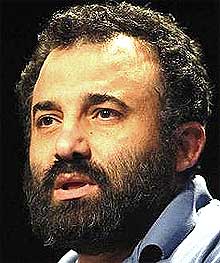 Instead, the Sheik continued with his role at his local mosque. His only assistant was his trusty and loyal translator (and now adviser) Trad (
photo
). Each time the Sheik made the headlines with some embarrassing verbal gaffe, brave Trad would have to pick up the pieces and explain the words or deeds of the Sheik in their proper context . And with the Sheik making the headlines almost every six months, it wasn't long before the two of them became household names across the country.
Instead, the Sheik continued with his role at his local mosque. His only assistant was his trusty and loyal translator (and now adviser) Trad (
photo
). Each time the Sheik made the headlines with some embarrassing verbal gaffe, brave Trad would have to pick up the pieces and explain the words or deeds of the Sheik in their proper context . And with the Sheik making the headlines almost every six months, it wasn't long before the two of them became household names across the country.
But the Sheik's finest hour would come in 2005 when he received a visit from the family of an Australian contractor kidnapped by Iraqi insurgents. Douglas Wood s family sought Hilaly's assistance and influence to secure Wood's release. Behind the scenes, senior Australian government minister Phillip Ruddock made the same request.
To his credit, Sheik Hilaly dropped everything and risked his health (he had a serious heart condition) and his life to travel to one of the world's most dangerous war zones. Thanks to his efforts, Wood received some much-needed medication. It isn't known whether Hilaly's intervention secured Wood's release, though this did not stop the Prime Minister John Howard and Foreign Minister Alexander Downer from praising Sheik Hilaly in Federal Parliament.
One would have expected the ageing Sheik to take care of his health and perhaps start writing his memoirs. With all the controversy surrounding him, one would expect publishers to be lining up at his door with lucrative contracts.
Instead, Hilaly continued with his active (if disorganised) work. His inability to speak English and his loose tongue was again his undoing when a newspaper translated one of his sermons and published its contents last October.
This was the first of a string of embarrassing statements that do little more than reinforce the stereotypes so many Australians have of Islam and its followers. Now prominent Muslims, including peak Islamic bodies, were calling for him to resign from the position of Mufti.
Hilaly's comments included claims that women who dressed in a certain way were likened to uncovered meat, and that men who sexually assaulted them were not to blame and were merely behaving like cats. He subsequently described Europeans (particularly Anglo-Saxons) as being deceptive and dishonest. Hardly the sorts of words appropriate for a religious leader, let alone someone apparently representing a religious community under increased scrutiny.
Hilaly's future
In the past few days, Hilaly has indicated he may well resign from the position of Mufti. He has also hinted that he may create a special political party for Muslims, or at least endorse Muslim candidates for elections.
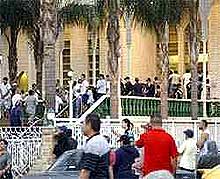 Such a move will do even more to marginalise Australian Muslims from mainstream Australia. Hilaly's political rhetoric may make it much harder for Muslims to be taken seriously should they seek political careers in the mainstream parties.
As sociologist Shakira Hussein writes in The Australian newspaper on Jan 22: Australians are suspicious of religious politics in general and much more fearful of Muslim political agendas than of Christian ones. They will wonder what special interests a Hilaly-endorsed candidate might pursue and why these interests could not be tackled through the usual political channels.
By talking of running Muslim candidates, as though being Muslim defines a particular political agenda that is somehow different to that of non-Muslims, Hilaly and...Trad are not furthering the interests of Australian Muslims. Rather, they are consigning them to the wilderness.
Muslim Australians want to maintain their faith and develop a distinctly Islamic Australian identity. This can only be done when they integrate fully into Australian society, thereby ironing out their ethnic and linguistic differences. This will take time.
It will also take religious figures like Sheik Hilaly to remove themselves from the public arena and to allow English-speaking educated Muslims who understand the Australian mainstream to take control. Time will tell if this ever happens.
IRFAN YUSUF is a Sydney-based lawyer, writer and blogger whose articles and reviews have appeared in various newspapers including the Sydney Morning Herald, Melbourne Age, Canberra Times, Australian Financial Review and New Zealand Herald .


