




COMMENT | Fitting people into boxes, is stereotyping to blame?
My gender as a girl did not matter as I was seen only as a child hungry for adventure.
When I started schooling, things began to change. As a female student, I was placed inside a pink box labelled ‘girls.’ I had to wear a pinafore, sit with my legs closed, join the netball team, and embrace my femininity.
Soon, I was placed into another box – this time according to my intelligence. While my brother who was a year older got into Kelas Biru which was meant for the smart kids, the not-so-bright me got into Kelas Merah.
Due to my religion, I then was placed into a new box labelled ‘Muslim.’
During my Agama classes, my Ustazah would tell me I should not mix with...
COMMENT | When I was a little girl, my parents told me I could be anything I wanted to be. I was raised to indulge in rough activities such as tree climbing, cycling in the mud, sneaking into the jungle, and catching fish in the stream.
My gender as a girl did not matter as I was seen only as a child hungry for adventure.
When I started schooling, things began to change. As a female student, I was placed inside a pink box labelled ‘girls.’ I had to wear a pinafore, sit with my legs closed, join the netball team, and embrace my femininity.
Soon, I was placed into another box – this time according to my intelligence. While my brother who was a year older got into Kelas Biru which was meant for the smart kids, the not-so-bright me got into Kelas Merah.
Due to my religion, I then was placed into a new box labelled ‘Muslim.’
During my Agama classes, my Ustazah would tell me I should not mix with other races too much. According to her, the Chinese are dirty because they do not shower and Indians are troublemakers because... well, according to her, they just are.
As an Indian myself, I was often confused because most Indians I knew at the time were never troublemakers. And my Chinese friends, well, let me just say that they never smelled bad standing next to me at the school assembly.
I was assured at every school I attended, that as long as I am a Muslim, although I am Indian by birth, I can safely be labelled ‘Malay.’ So, throughout my entire school years, I was a ‘Malay’ while my friends and classmates fell into their respective boxes.
In my teenage years, I was shocked to be called “KK” by my Malay seniors. “KK” is an abbreviation for “Keturunan Keling” and a well-known derogatory term in Malaysia. I learned that day I had an additional label to my name - ‘Keling.’
Growing up being labelled and placed in boxes, it was only normal that, as a child, I learnt to do the same.
Putting the Chinese in a box
Most of my Chinese classmates had new and fancy things I always wished I had, like school bags and stationeries. And at the end of the year, before school holidays begin, they’d boast about going on trips to places I could only imagine about.
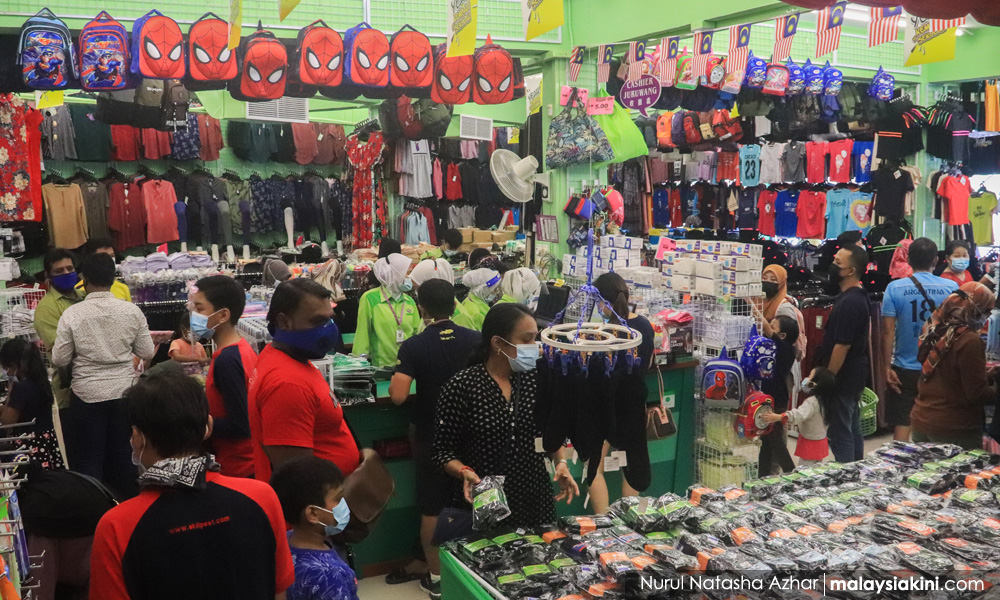
They were also among the smartest and most active students in school. However, most of my Chinese friends weren’t very helpful when it came to sharing knowledge. They often preferred to help their own kind.
My Chinese teachers, on the other hand, were my favourite teachers because they were always patient with me and would really put effort into their lessons.
They were the only teachers who would leave the staffroom early and wait outside our classroom even before the bell rang marking the end of the previous period.
I made a mental note back then in my schooling years, that most Chinese are rich, smart, and hardworking, but sometimes selfish.
Putting the Indians in a box
Most of my Indian friends at school liked very much to hang out with their own kind. They enjoyed chatting about Tamil films, Tamil songs, and Tamil celebrities.
They also liked very much to be under the radar when it came to studies and activities, meaning they are not necessarily at the bottom of the class, but surely not at the top either – except maybe only a handful of them.
I found this very similar to my own Indian family. Growing up, most of my aunts, uncles, and cousins were also infatuated with Tamil stars Rajinikanth, Kamal Haasan, and SP Balasubrahmanyam.

They were also very simple people with simple lifestyles who preferred to stay loyal to their own pack.
Obviously, I made a mental note that most Indians love everything about themselves and just want to be left alone to do their own thing.
Putting the Malays in a box
I had a few Malay friends when I was in secondary school. Whenever I visited their homes to do school projects or just to hang out, I would always be welcomed and treated with kindness.
Sometimes, I would be asked to join the family for a fancy bowl of homemade laksa and sometimes it's just a humble plate of white rice, fried egg, ulam, and belacan.
Although I had a sweet spot for my Malay friends and their family, I often had trouble with my Malay teachers. Apart from a couple of teachers, I found most of them simply unfit to be educators.
Most of the time, my Malay teachers missed their chances to carry out lessons because they were occupied with other things in the staffroom – gossiping and selling MLM products were some of the reasons.
When they got caught missing classes, it was the students who end up being scolded for not ‘inviting’ them to attend classes.
I had a Malay teacher who would enter my class only to sleep through the whole lesson for two years in a row. I had a couple more Malay teachers who told us we were already too smart and need not learn anything more.
And I also had teachers who enjoyed letting us do anything we pleased during their lessons.
My experiences with them led me to make a mental note that most Malays are kind but lazy.
Carrying stereotypes to adulthood
As I grew older, I met more people in different scenarios – work, social, and public settings – and surprisingly most of their actions and behaviour reinforced the mental notes I made earlier in my teens.
I agree I may be stereotypical in simplifying and generalising people. And yes, I do agree that it could become a serious issue when people begin to believe these mental constructs reflect realities.
However, let us not forget that I was not born this way. I was moulded this way by the same society that now prosecutes those who stereotype.
I also have observed some of the stereotypes are wrong to some degree. I mean of course not all Malays are lazy. Likewise, there are also lazy Chinese and Indians. We know this.
While I tend to stereotype people in groups, I am also quick to drop the stereotypes when I meet an actual individual who does not fit into the group. I then conclude that most Malays are lazy, except so-and-so. I believe we all do so.
Stereotypes not the real problem
Putting people in boxes and generalising them has been the basis of many things in our civilised world. We often speed through our fast-paced, complex world by using limited information to make decisions and we would be paralysed without them.
We make generalisations when we support 17-year-olds driving cars, 18-year-olds voting, and 21-year-olds consuming alcohol.

In fact, there are many who are older but not competent to do those things, and possibly some younger ones who are capable. Isn’t this stereotyping too?
If we are so eager to do away with stereotypes, are we then going to test voters, drivers, and drinkers individually for their competence in doing those things? Of course not!
We form stereotypes because they make sense in our minds. It is the long-term exposure that has dominated our perception.
Prosecuting those who stereotype will never be completely successful, there will always be more people who hold on to those stereotypes.
Attacking the people who are stereotyping won’t cure the social problems that are causing the stereotypes. After all, to cure a disease, you cannot merely treat its symptoms.
People who want to fight social problems like racism should think more about the underlying reasons why stereotypes exist. Until people fighting stereotypes realise this, they will be trapped in a battle they cannot win.
FA ABDUL is a multi-award-winning playwright and director in the local performing arts scene, a published author, television scriptwriter, media trainer, and mother. Her ultimate mission in life is to live out of a small suitcase.
The views expressed here are those of the author/contributor and do not necessarily represent the views of Malaysiakini.





Are you sure you want to delete this comment?
This action cannot be undone.