


/file/publisher-c1a3f893382d2b2f8a9aa22a654d9c97/2022/10/526e1839b942fe8bc9aa9d909486237e.jpg)

HISTORY | Forgotten past of Malaysian Sinhalese
HISTORY | To date, very little has been written on the Malaysian Sinhalese who originated from Ceylon (now Sri Lanka). This is rather unfortunate. Despite numbering only 3,660 in Peninsular Malaysia in 1957, the Sinhalese, to quote SN Arseculeratne in his book, ‘Sinhalese Immigrants in Malaysia and Singapore 1860-1990’, “had left a clear imprint in the story of Malaya.”
Not many Malaysians are aware of this community’s significant contributions towards nation-building and trailblazing efforts in numerous fields. Hence, this article aims to restore the Sinhalese community to its rightful place in the history of our multi-ethnic nation.
Historically, available records indicate that Sinhalese convicts from Ceylon were banished to the Straits Settlements beginning in the 1840s. For example, Tikiri Banda Dunuwille from Kandy, who was found guilty on a charge of forgery, was banished to Malacca on June 5, 1849, together with 17 others. As stated by Major JFA McNair in his book ‘Prisoners Their Own Warders’, there was a sprinkling of Sinhalese convicts in the Straits Settlements in the 1850s.
Subsequently, in 1871 there were 37 Sinhalese in the Straits Settlements: 24 in Malacca, seven in Singapore and six in Penang. By 1891, there were...
HISTORY | To date, very little has been written on the Malaysian Sinhalese who originated from Ceylon (now Sri Lanka). This is rather unfortunate. Despite numbering only 3,660 in Peninsular Malaysia in 1957, the Sinhalese, to quote SN Arseculeratne in his book, ‘Sinhalese Immigrants in Malaysia and Singapore 1860-1990’, “had left a clear imprint in the story of Malaya.”
Not many Malaysians are aware of this community’s significant contributions towards nation-building and trailblazing efforts in numerous fields. Hence, this article aims to restore the Sinhalese community to its rightful place in the history of our multi-ethnic nation.
Historically, available records indicate that Sinhalese convicts from Ceylon were banished to the Straits Settlements beginning in the 1840s. For example, Tikiri Banda Dunuwille from Kandy, who was found guilty on a charge of forgery, was banished to Malacca on June 5, 1849, together with 17 others. As stated by Major JFA McNair in his book ‘Prisoners Their Own Warders’, there was a sprinkling of Sinhalese convicts in the Straits Settlements in the 1850s.
Subsequently, in 1871 there were 37 Sinhalese in the Straits Settlements: 24 in Malacca, seven in Singapore and six in Penang. By 1891, there were 117 Sinhalese in Perak whilst in Selangor, the Sinhalese numbered about 200 in 1894. The number of Sinhalese in the Federated Malay States (FMS) increased from 584 in 1901 to 949 in 1911, with a vast majority concentrated in Selangor and Perak.
Southern coast
It is noteworthy that most of the Sinhalese immigrants in British Malaya originated from Galle and Matara, both situated on the southern coast of Ceylon. They were lured to British Malaya primarily due to abundant business opportunities, bright prospects for gainful employment, attractive salaries, and cheap passage to the Malayan ports.
Additionally, the Sinhalese were adventurous and enterprising people who were willing to take calculated risks to make a fortune.
Educated Sinhalese held subordinate administrative and technical jobs in the British administration of Malaya as they were generally viewed as being diligent, reliable and honest. They found employment in various government departments, particularly the FMS Railways, Public Works Department, Survey Department, and Printing Department.
By 1903, the FMS Railways had 84 Sinhalese employees working as station masters, fitters, clerks, charge persons, engine drivers, ticket inspectors, guards and cleaners.
Among the Sinhalese station masters were Fonseka at Kluang, Gunawardena at Kuala Lumpur in the late 1890s, and AW Fernando who was the Head Station Master in Kuala Lumpur (1933–1945). Andrew Johanas Perera was the first Asian to hold the post of Assistant Loco Foreman.
Whereas, VP Soyza (photo above) was a prominent first-class locomotive engine driver who drove the first diesel locomotive engine in Malaya, besides being a well-known official umpire of the Malayan Cricket Association. His death on May 1, 1961, was reported in the local press.
Among the Sinhalese who made their mark in the Public Works Department were Frederick Samaranayake of Kuala Lumpur and Victor Perera, a technical assistant who played a major role towards ensuring a clean water supply system in Kajang, and was deservedly awarded the Pingat Jasa Kebaktian.
Among the pioneer Sinhalese surveyors who helped to build roads in tiger-infested and malarial jungles of Malaya were D Jayasuriya, Wijayamanne and de Silva in Perak, and AFA Jayawardena in Selangor. Notably, Roland Dissanaike retired as an Assistant Superintendent of Surveys in Malaya in 1931.
William Fernando holds the distinction of being the first non-European to hold a Division 1 post in the Malayan Administrative Service. He served admirably as the Secretary to the Suffian Salaries Commission. Mention must also be made of Donald EK Wijasuriya, a pioneer in the library profession, who retired as the Deputy Director-General of the National Library of Malaya.
Interestingly, the Sinhalese were also expert artisans who helped to build the Sultan Abdul Samad Building, Kuala Lumpur Railway Station, and the railway workshops at Sentul, Kuala Lumpur.
In the plantation sector, most of the Sinhalese worked as conductors, hospital assistants, carpenters, masons and draughtsmen. About 100 Sinhalese worked on the rubber and coconut estates on Carey Island, Selangor as clerks, conductors and carpenters.
Royal jewellers
In the business sector, the Sinhalese dominated the jewellery trade, besides being shopkeepers. It was the Sinhalese who introduced the manufacture of fine, elegant and intricate jewellery to Malaya. It is a little-known fact that Bishop Street in Penang had more than 20 Sinhalese jewellery shops before the Second World War.
Arguably, the most prominent Sinhalese jeweller in British Malaya was PH Hendry who came to Malaya around 1898 and started a jewellery business in 1902 in Kuala Lumpur. By 1920, Hendry had become the leading Sinhalese businessperson who proudly served as the royal jeweller to the Selangor, Kelantan, and Negeri Sembilan royal families. He built the crown of the Sultan of Selangor in the late 1930s.
A remarkable testament to business endurance, PH Hendry continues to operate today at its current office at No 2, Jalan Tun Perak, Kuala Lumpur. The founder’s grandson, Suren Hendry, manages the current business.
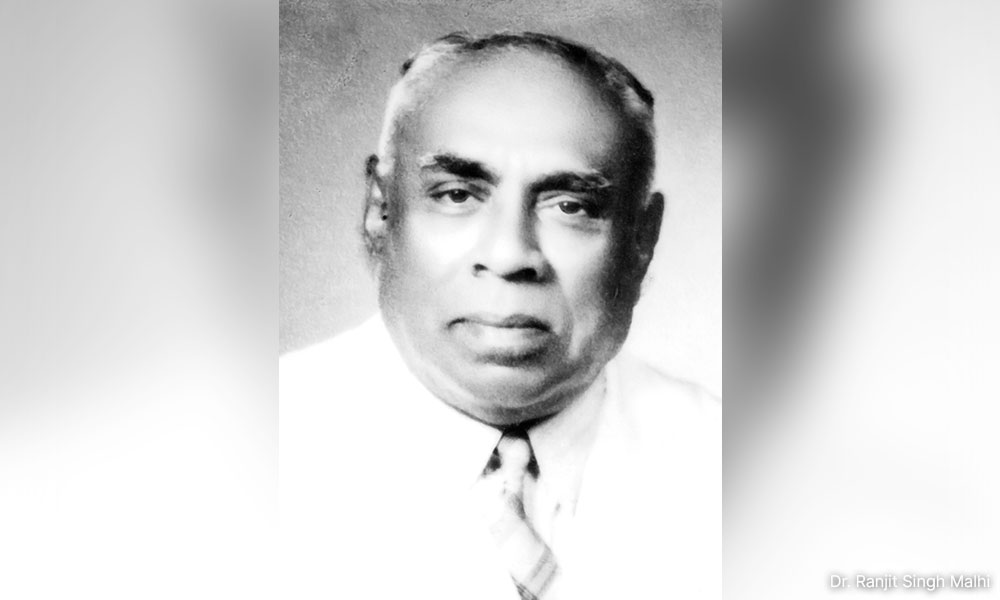
Another prominent Sinhalese jeweller was TA Adris who started his business in 1935 in Taiping, specialising in hand-crafted jewellery. His jewellery store later moved to Ipoh. One of his most outstanding masterpieces is the Kedah state jewellery which was worn by the late Sultanah Bahiyah Tuanku Abdul Rahman.
Today, Adris Jewellers is run by Choola Adris, a fourth-generation descendant who takes pride in serving members of the Perak royal family.
The Sinhalese also hold the distinction of introducing bread to Malaya. PH Dines Hami established Malaya’s first bakery, ‘Ceylon Bakery’, in 1892 on Malay Street, Kuala Lumpur. Subsequently, other Sinhalese established a network of bakeries, including Don Juanis Ranasinghe in Kuala Selangor, Solomon Perera in Johor Bahru and Edward Sembucutty in Seremban.
Other successful Sinhalese businesspersons were HB Talalla who established the Fletcher Trading Company Ltd in Kuala Lumpur that sold sanitary hardware which helped to improve and modernise the sanitary services in Kuala Lumpur. He also served admirably as a member of Kuala Lumpur’s Sanitary Board and later the Town Board.
It is noteworthy that The Straits Times of May 17, 1955, referred to him as one of Kuala Lumpur’s “grand old men” who was responsible for many of its developments, including the deviation of the Klang River to prevent floods in Kuala Lumpur. In recognition of his numerous contributions, a road is named after him in Kuala Lumpur, Jalan Talalla.
Enterprising Sinhalese businessmen also ventured into the hotel, and food and beverage sectors. For instance, the Sinhalese Hotel in Penang was established by Hendrick Appuhamy in the 1920s. The Sinhalese Bar in Ipoh, with its cowboy-style swing doors, was established in 1931 by George Perera. It still exists today! George’s son, Alfred Perera, steadfastly manages the outlet now.
Bukit Ceylon
Among the landowning Sinhalese millionaires were Frederick Soyza and Udenis Appuhamy. Frederick, at one time, owned considerable land in Bukit Ceylon in what is now a prime commercial and residential area in Kuala Lumpur. Udenis owned about three-quarters of Sentul Pasar in Kuala Lumpur so much so that his territory was called “Kampung Udenis”.
In journalism, Francis Cooray was a trailblazer. Francis came to Malaya in 1918 and started work as a sub-editor for the Times of Malaya. He helped to launch two newspapers: the Malayan Leader in 1920 and the Malayan Daily Express in 1926. Subsequently, he worked with the Malay Mail and became its sports editor - the first Asian to hold such a post.
Other prominent Sinhalese journalists were Aster Gunasekara who dedicated his whole life to journalism beginning from about 1921 and was highly respected for his bold and forthright writings; Matthew S Mendis; and Dodwell Cooray. For the record, the Malayan Daily Express was founded by Reginald Fernando and it wound up in 1932.
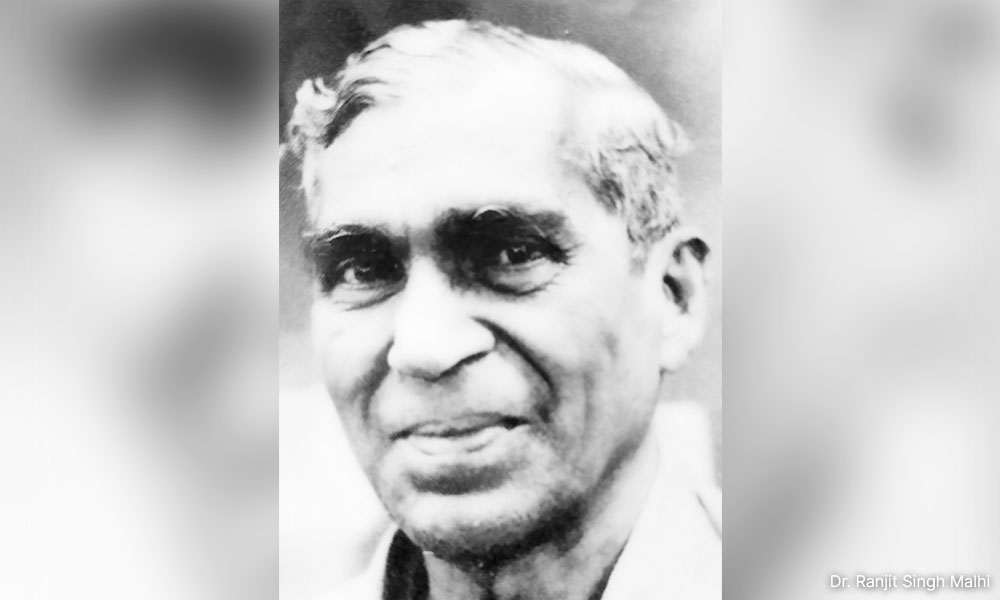
In the teaching profession, the Sinhalese too left their indelible mark as educators. Among the well-known Sinhalese teachers were the “Dasa Brothers” - PG Pamadasa, PG Mahindasa and PG Dharmadasa - who taught at St Francis Institution, Malacca. Pamadasa was a pioneer sports administrator as well (1920s to early 1940s) who initiated the formation of the Malacca Amateur Football Association, Malacca Cricket Association, Malacca Hockey Association, and the Malacca Badminton Association.
Mention must also be made of GK Sediris Appuhamy, a prominent Sinhalese tailor, who designed and tailored the official attire for the prime minister, cabinet ministers and the King of Malaya for the 1957 independence celebration.
Among the eminent Sinhalese academics were Emeritus Professor Dr Alex Delilkan and the late Noel Monerasinghe. Alex, who served as a professor of Anaesthesiology at Universiti Malaya, pioneered the set-up of the Intensive Care Unit at Universiti Hospital. Noel was an Associate Professor with the School of Housing, Building and Planning, Universiti Sains Malaysia.
The Sinhalese also proudly represented the nation in various sports. Among the outstanding national cricketers were Alex Delilkan who was one of the greatest Malaysian cricket all-rounders and the national captain from 1959 to 1972; Felix Perera, an excellent medium-paced bowler who opened the attack; and Noel Monerasinghe who also represented Malaya at hockey.
In athletics, BS Peyadesa represented Malaysia in the 4 x 400 metres relay at the 1972 Olympics in Munich whilst Cyril Perera represented Malaya in the men’s decathlon at the 1962 Asian Games. Andrew Bryan Perera, a past president of the Malaysian Sinhalese Association, represented the nation at rugby.
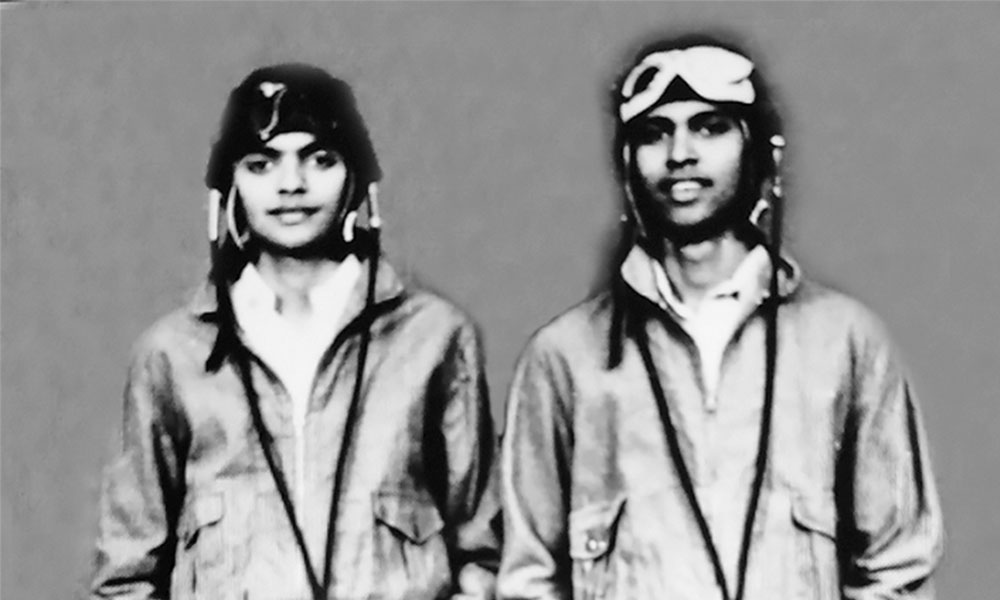
Two other icons of our nation’s Sinhalese community were the brothers, Henry Talalla and Cyril Talalla, who attained fame as fighter pilots in the British Air Force in World War II. Cyril joined the British Royal Air Force (RAF) in 1941 and became the first Asian and non-European to pass the rigid RAF entrance test.
His younger brother, Henry, at the young age of 24, died after his plane was shot down by the Nazis as it flew over France on July 25, 1944. Cyril was awarded the Distinguished Flying Cross for his service and bravery as a fighter pilot.
Legal personalities
Among the prominent Sinhalese legal personalities are Richard Talalla, the late Thomas Jayasuriya, Fiona Bodipalar, Alex De Silva and Mark Talalla. Richard, son of HB Talalla, was appointed Judicial Commissioner in 1989 and retired as a High Court Judge. He was always known for his stoic and serious nature on the bench whilst being the most gentle and friendliest of persons off the bench.
Whereas, Thomas was called to the English Bar in 1955 and attained fame as Sabah’s first post-independence state attorney-general, besides being the Malaysian high commissioner to Canada (1985-1991).
Fiona was admitted to the Bar in England in 1989 and the Malaysian Bar in 1990. She has been in active practice for more than 30 years, focusing on civil litigation. Alex was called to the English Bar in 1991, the Malaysian Bar in 1993, and the Singapore Bar in 2000. Alex is in active practice in civil litigation and is reputed to be a tenacious advocate who never quits. Mark, son of Richard Talalla, is currently practising as a lawyer in Kuala Lumpur.
It should be noted that there are two other renowned Sinhalese diplomats: Dr GK Alfred Kumaraseri and Albert Talalla. Alfred was appointed as the Malaysian High Commissioner to Nigeria in 1984. Albert served as the Malaysian High Commissioner to Canada (1975–1978), Ambassador to China (1980–1983), and Ambassador to the United States (1986–1991), besides serving as the first Director-General of the Institute of Diplomacy and Foreign Affairs.
Sinhalese Buddhist monks, too, have made their presence felt in Malaysia. Among them were the late Ven K Sri Dhammananda Nayake Maha Thera who was a prolific author and a renowned speaker on Buddhism; Ven K Sri Dhammaratana who founded the Ti-Ratana Welfare Society which is one of the largest faith-based NGOs in Malaysia; and the Ven B Sri Saranankara who founded the Maha Karuna Buddhist Society and is currently the Chief High Priest of the Sri Lanka Buddhist Temple in Sentul, Kuala Lumpur.
To safeguard their socio-economic interests and to promote intellectual and physical development among members, the Sinhalese established the Malayan Sinhalese Association (MSA) in Kuala Lumpur on Nov 19, 1939, with HB Talalla as the patron and Francis Cooray as the president. It is now known as the Malaysian Sinhalese Association with Rukshan Munesinghe as the president and Tony Soyza as the secretary.
To conclude, as aptly stated recently by Sultan Nazrin Muizzuddin Shah, the Perak ruler, Malaysians must be proud of their multi-ethnic and multi-cultural heritage. Towards this end, our history books must acknowledge the roles and contributions of all ethnic groups, including the Sinhalese, in nation-building.
RANJIT SINGH MALHI is an independent historian who has written 19 books on Malaysian, Asian and world history. He is highly committed to writing an inclusive and truthful history of Malaysia based upon authoritative sources.
The views expressed here are those of the author/contributor and do not necessarily represent the views of Malaysiakini.
/file/publisher-c1a3f893382d2b2f8a9aa22a654d9c97/2022/10/f4123718aeaac3f14b44ece769feadb9.jpg)
/file/publisher-c1a3f893382d2b2f8a9aa22a654d9c97/2022/10/1b32a9c4016f7510801f9d95c4766f8f.jpg)
/file/publisher-c1a3f893382d2b2f8a9aa22a654d9c97/2021/03/8cb3eb83020e526156a65bdf910bbb7d.jpg)
/file/publisher-c1a3f893382d2b2f8a9aa22a654d9c97/2022/10/b41648763ed774f2865792a10bc90f55.jpg)
/file/publisher-c1a3f893382d2b2f8a9aa22a654d9c97/2022/09/1b760ce7b834f4c861dc0eaa148c3078.jpg)
/file/publisher-c1a3f893382d2b2f8a9aa22a654d9c97/2022/08/7189ab7ed4abfa89f3853b3c1a2ba5e1.jpg)


Are you sure you want to delete this comment?
This action cannot be undone.