


/file/publisher-c1a3f893382d2b2f8a9aa22a654d9c97/2024/05/b05df7e1d6064687a2a62b20e89e61a3.jpg)

COMMENT | Anwar gets what makes China tick
COMMENT | Most historians, of any persuasion, would concur readily that China moves forward based on the rise and fall of the dynasties.
Hence, whether it is Wang Gung Wu in the East Asian Institute of the National University of Singapore, Prof Lee Kam Hing who was once at Universiti Malaya, or the late Joseph Needham of the University of Cambridge, they agree in that China’s concept of progress is cyclical.
There is nothing peculiar to this concept of understanding China in more ways than one. Karl Marx, for example, has long argued that all civilisations are material in nature.
COMMENT | Most historians, of any persuasion, would concur readily that China moves forward based on the rise and fall of the dynasties.
Hence, whether it is Wang Gung Wu in the East Asian Institute of the National University of Singapore, Prof Lee Kam Hing who was once at Universiti Malaya, or the late Joseph Needham of the University of Cambridge, they agree in that China’s concept of progress is cyclical.
There is nothing peculiar to this concept of understanding China in more ways than one. Karl Marx, for example, has long argued that all civilisations are material in nature.
As and when capitalistic ones accumulate and produce more surpluses than is otherwise needed, the whole artifice of society will lose its equity. The rich will become richer. The poor, not for the lack of a better word, will become poorer. In due course, the poorest.
It is when people are deprived of the most minimal access to food and shelter that they rebel, upending the state and any superstructures that make it self-perpetuating. For example, institutions such as schools, places of worship, and even family units will change.
All things decay in time
Marx said, “All that is solid will melt into the air.” However, one does not have to understand the inner dynamics of any social polities from the left.
The likes of Ibnu Khaldun, often deemed by the West as the father of sociology, not Max Weber, postulated in the 14th century, in his book “The Muqadimah” (The Opening), that tribal societies can rise to the peak to form their own fiefdoms.
However, as the ruling elites settle into a sedentary lifestyle, sloth and collective life are shaped by nothing else but luxuries will set in.
That is when any social, political, economic, or even religious entities will collapse, paving the way for another tribe with stronger solidarity, known as “Asayabiyah”, to push the powers that be out.
As the only living civilisation to transition to the modern, even post-modern era, China is not devoid of all the thrust and gestations described by conventional historians or left-leaning historical sociologists of any epoch or period. China is well aware that all things, in time, do decay.
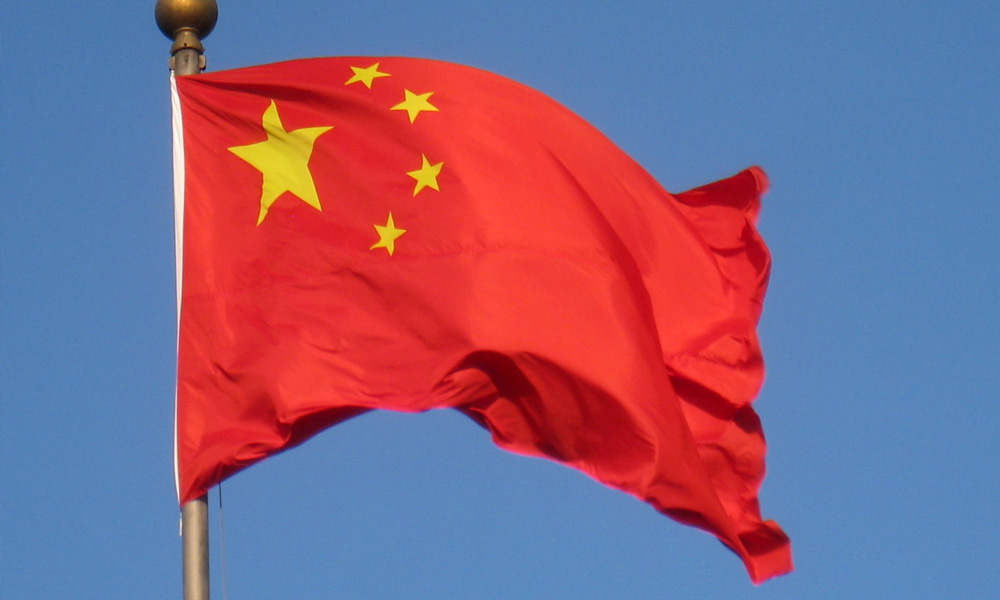
Whether it is Zhang Wei Wei at Fudan University in Shanghai who referred to China as a “civilisational state” or Prof Tu Wei Ming who sees China through the optic of Confucianism, invariably, an “ethico-spiritual” construct at Yenching Institute in Beijing University, each of these thinkers does understand all things material and non-material are fungible. In radiological terms, they have a half-life.
Not all civilisations, much as they are subject to the processes of peaks and valleys, can disintegrate in whole, though.
China, Japan and South Korea, to name but a few in Northeast Asia can and have adapted to the onslaught of colonialism, colossal defeat in great wars, and a clientelist status that refused to budge.
South Korea and Japan, for example, have become the appendages of the US hub-and-spoke security system.
Three critical aspects
To all of the above, aside from the literati and laity in China who understand their own vulnerable nature, Prime Minister Anwar Ibrahim is not necessarily beyond the pale of his abilities: to get China right.
Anwar understands three critical aspects of China, all of which are cultural.
To begin with, in stating to President Xi Jin Ping in April 2023 that Malaysia is empathetic to China’s need to be rebuilt as a society of moderation and “xiao gang sher hui” (common prosperity), Anwar pointed to the concept of Madani.
Where is the relevance between xiao gang sher hui with Malaysia? To begin with, even though Malaysia is registering an economic growth of six percent by the end of 2024, Anwar, too, believes in eliminating all forms of relative and absolute poverty. It is also China’s quest, which Xi hopes to achieve by 2048 before declaring an all-round success by 2049.
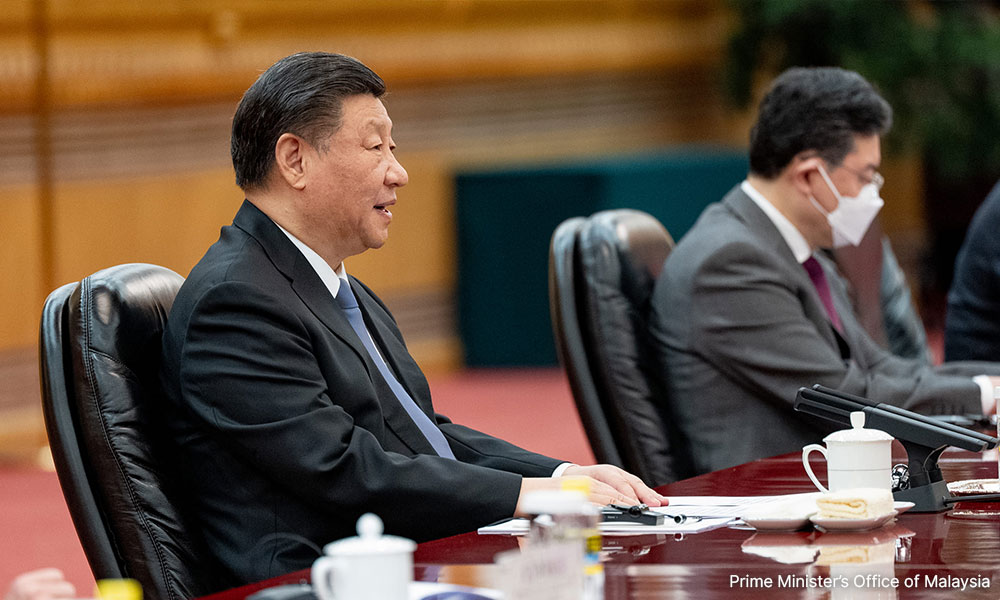
In other words, Anwar does not believe in the sheer arrogance of any idea or policy. Even if there are more imperfections than sundry, society at large has to rein in the “animal spirit” of capitalism; failing which a social collapse is inevitable (again due to material excesses or its citizens’ rapacious nature).
Confucianism thrust
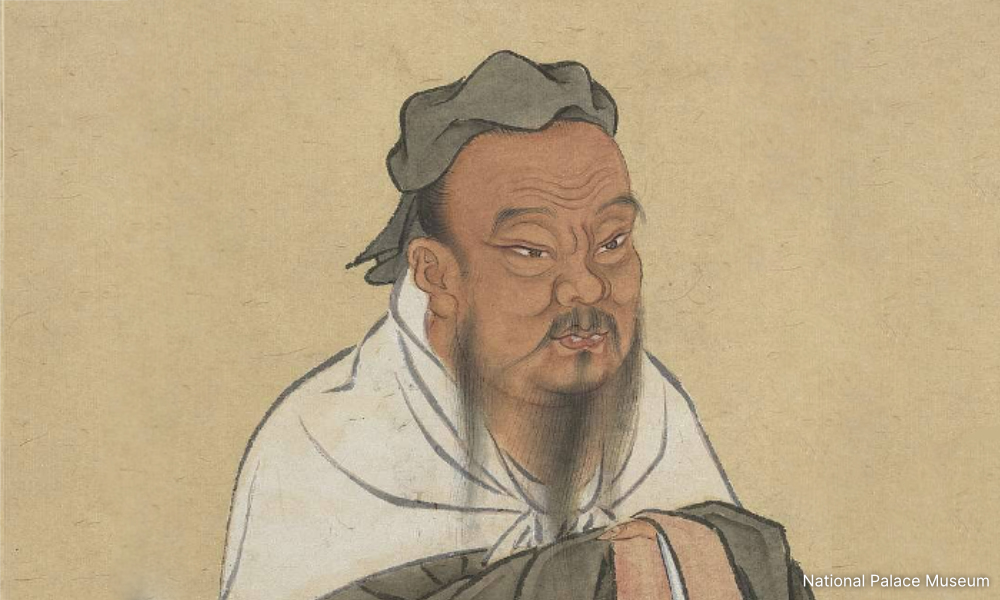
Second, the whole process of Chinese governance, even when the best technology is at their beck and call, paving the way for a totalitarian society, China has chosen Confucianism as a template to secure the social moorings of the society. Thus, the authority in Beijing has not forsaken Confucianism completely.
It would be far too precarious to rule on a single ideology such as the Soviet Union once did between 1907 and 1992. When Leninist ideology fell through the bottom, Russia was left with nothing to absorb its failings, except to long for a return to a mythical concept of “Mir Rusya” or Mother Russia writ large that extends to Ukraine.
This in turn caused Russia to be caught in a strategic midriff of “he said, she said” over what the West or the North Atlantic Treaty Organization (Nato) had seemed to promise. Not an inch more.
Combatants in Ukraine and Russia were caught in a deadly war of who said what and what was said towards the tail end of the Cold War in 1989-1991.
The fact that China embraces Anwar’s overture to look into Islam and Confucianism is remarkable, with the main duty of explaining the Islamic world to Prof Osman Bakar, an esteemed scholar who holds the Al Ghazali chair in civilisational studies and epistemology at the International Islamic University of Malaysia (IIUM).
Interestingly, Osman has also been anointed by Anwar to be the seventh IIUM rector. Unlike other universities in the country, IIUM embodies the vision of the Organisation of Islamic Cooperation (OIC), which is composed of 57 member states. Twenty-two of which are from the Arab League.
As long as a member state has a Muslim population that is a third of its total, such a country can be a part of OIC. As is the case of Gabon.
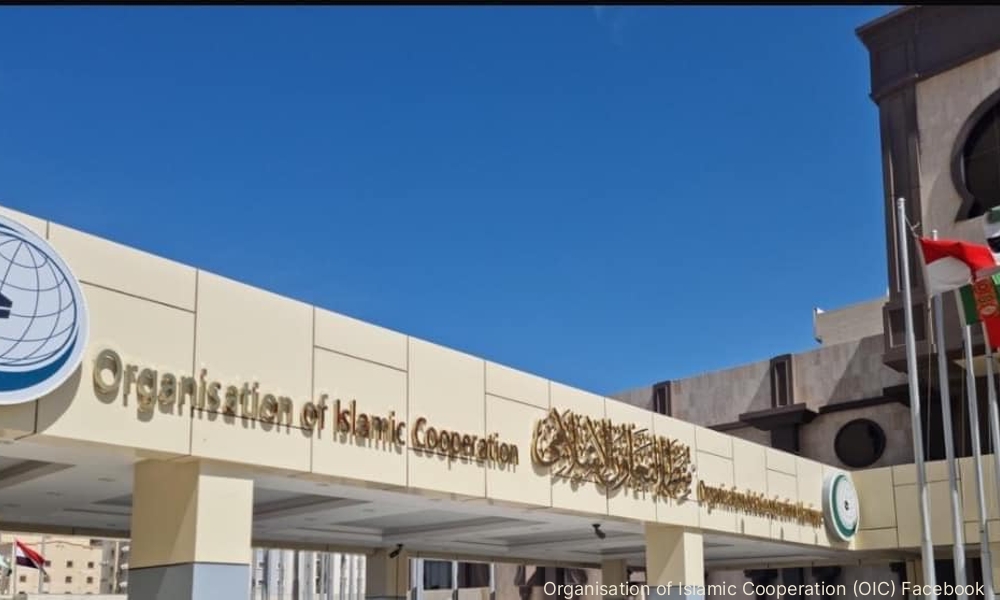
As things are, all signs point to China trying to engage OIC as part of its cultural, economic, political and strategic diplomacy towards the Global South.
China just celebrated its 75th anniversary, liberation from its century-long humiliation of unequal treaties.
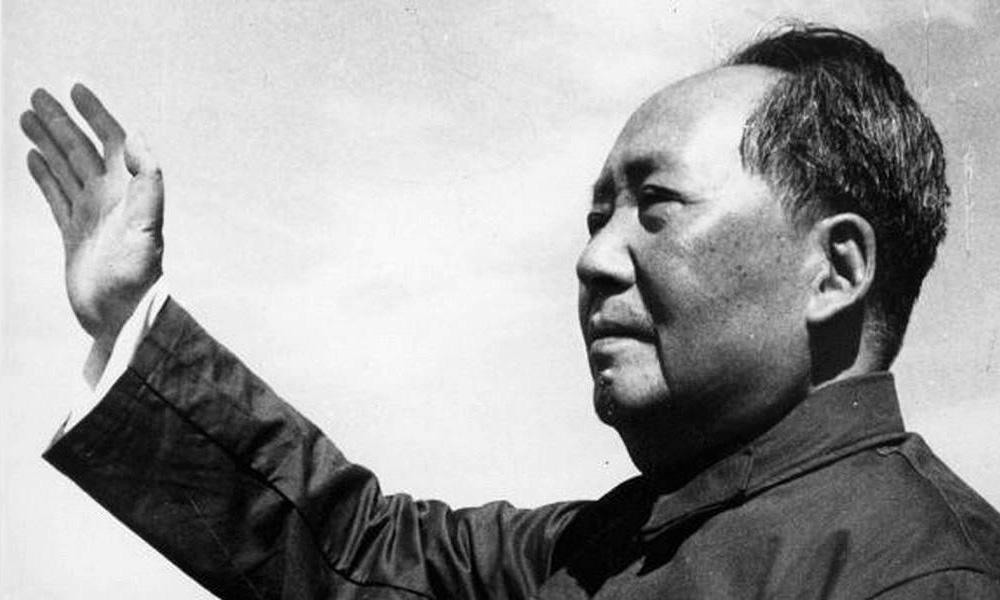
While Chairman Mao (Zedong) believed that when all foreign colonial powers were ejected from China, the state was left to be reconstructed without Confucianism at the height of the Cultural Revolution (1962-1973), Xi recognised the spirit of revolutionary reform without resorting to a “revolution”.
Through these three optics or levels of analysis, Anwar is well equipped to handle China, short of being enmeshed in any Sinophobia.
Dynamic and quiescent diplomacy
This is why Malaysia’s approach to the South China Sea tussle is based on dynamic and quiescent diplomacy. Let’s have diplomats carefully go through the claims and counterclaims to understand how best to reach a modus vivendi of a win-win-win outcome as China and Malaysia both agreed.
With China being Malaysia’s largest trading partner since 2009, the cultural mosaic that forms the trade matrix of contemporary China will keep increasing. Whether it is a cyber economic platform such as Temu or Shein, both of which are commercial rivals in China, their business discord can be exported to Malaysia too.
Anwar cannot solve all issues immediately at all times. Even to restore the ringgit to the best currency in the world, exceeding the appreciation in the value of gold, Anwar needed 20 months starting from the date he became prime minister on Nov 24, 2022.
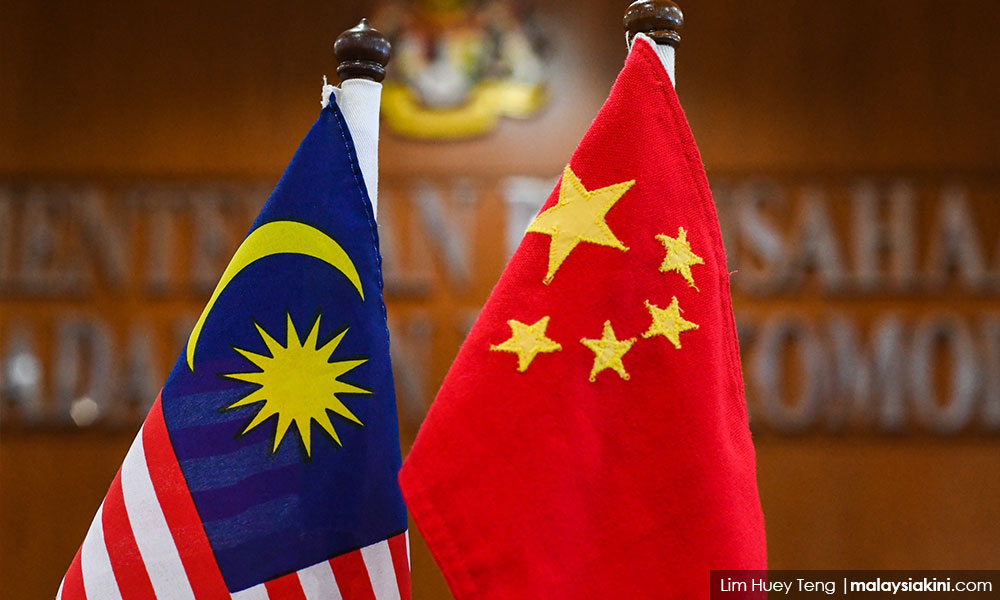
But to say that Anwar cannot understand China completely would be a tall stretch. China can be understood with humility, a value Anwar has in abundance, ironically, by the unfortunate destiny of having first been imprisoned on trumped-up political charges.
In an interview with Mehdi Hassan, one of the world’s strongest debaters and moderators, Anwar was asked how he feels, now that he is finally prime minister. Anwar replied: “Certainly it feels good to be able to execute and enforce various policies.”
Granted that Malaysia’s economic growth is expected to rise higher in 2025, barring a geopolitical meltdown in the Middle East, one would say that Anwar has earned China’s respect.
Little wonder Xi did not need much coaxing from Yang di-Pertuan Agong Sultan Ibrahim Sultan Iskandar to visit Malaysia next year.
PHAR KIM BENG is an expert committee member of the Centre of Regional Strategic Studies (Cross).
The views expressed here are those of the author/contributor and do not necessarily represent the views of Malaysiakini.
/file/publisher-c1a3f893382d2b2f8a9aa22a654d9c97/2024/10/6825014c7a5be1a9efecc2ac4ca28251.jpg)
/file/publisher-c1a3f893382d2b2f8a9aa22a654d9c97/2024/09/a2d2b93810958543f807b799e6540e57.jpg)
/file/publisher-c1a3f893382d2b2f8a9aa22a654d9c97/2024/10/dcfe742e6e5e549603727a22b2a0c3ac.jpg)
/file/publisher-c1a3f893382d2b2f8a9aa22a654d9c97/2023/08/c48f236e3fe47f36bc95fd4c92c91cd8.jpg)
/file/publisher-c1a3f893382d2b2f8a9aa22a654d9c97/2024/10/0d6fedd48fa83ef7082a95550238226f.jpg)
/file/publisher-c1a3f893382d2b2f8a9aa22a654d9c97/2024/10/72085e5867a0aaae71ab95cf4cae01f5.jpg)
/file/publisher-c1a3f893382d2b2f8a9aa22a654d9c97/2024/10/9e37b97ed9a1641113c0739afadefb9b.jpg)


Are you sure you want to delete this comment?
This action cannot be undone.