


/file/publisher-c1a3f893382d2b2f8a9aa22a654d9c97/2024/11/97f04d89e610fa79e613b13c157c2ffe.jpg)

COMMENT | How Democrats became face of racialised politics
COMMENT | Americans have made their stance clear: they reject racism, and this rejection is why Kamala Harris lost resoundingly.
Once viewed as a party championing unity and equality, the Democrats, through their increasingly racialised rhetoric, have become the largest driver of racial division in US politics.
This transformation to focusing on identity politics alienated the American voters. Just look at how all Donald Trump supporters...
COMMENT | Americans have made their stance clear: they reject racism, and this rejection is why Kamala Harris lost resoundingly.
Once viewed as a party championing unity and equality, the Democrats, through their increasingly racialised rhetoric, have become the largest driver of racial division in US politics.
This transformation to focusing on identity politics alienated the American voters. Just look at how all Donald Trump supporters were repeatedly labelled as racists and bigots by Democrats.
Ultimately, voters turned away from this race-centred rhetoric and toward leaders who prioritised common ground over divisive labels.
Collective national identity
In recent years, the Democratic Party’s messaging has shifted, centring more and more on race, frequently dividing Americans into categories like “black voters,” “Latino voters,” and “Asian voters” rather than simply addressing them as “Americans.”
This segmentation, amplified by mainstream media, created an atmosphere where unity was often overshadowed by identity labels.
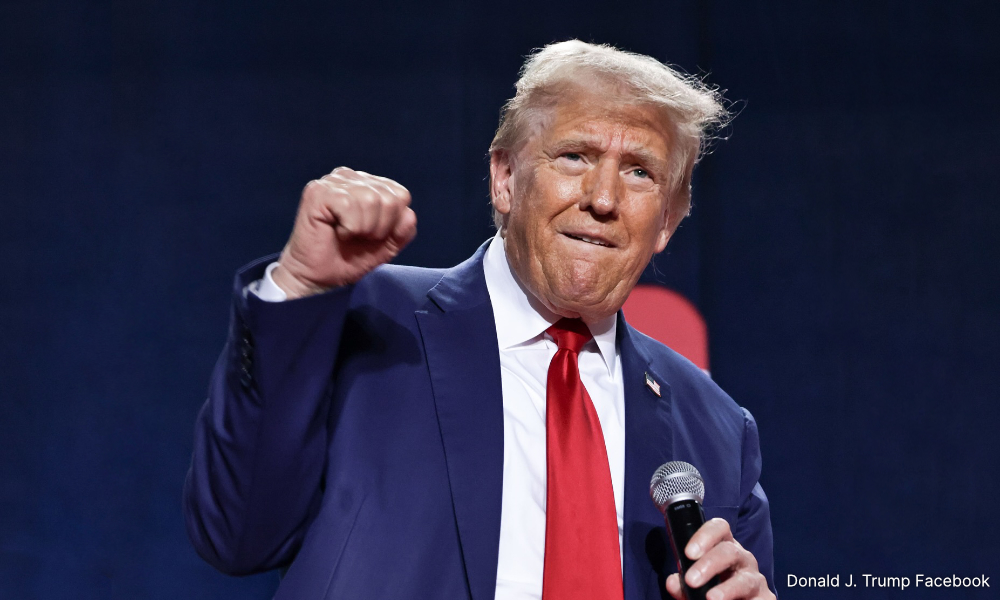
While the intent may have been to elevate marginalised voices, the approach backfired, outing that Democrats cared more about labelling groups than addressing universal concerns that affect all Americans.
Many Americans feel a stronger connection to a collective national identity rather than racial categories. By speaking to specific racial blocs, Democrats sidelined those who sought a broader, more inclusive approach to governance.
Harris’ campaign, rooted in this divisive strategy, turned off voters who prioritised issues like economic stability, healthcare, and education over an agenda perceived as narrowly focused on race.
Mainstream media’s role
Mainstream media played a significant part in reinforcing this racialised narrative by frequently breaking down the electorate into racial voting blocs. Constant references to “black voters” or “Latino voters” implied that these groups were monolithic in their views, sidelining the reality that all Americans, regardless of race, share diverse and multifaceted concerns.
For many, this repetitive labelling by the media only served to deepen a divide that, in reality, was not as pronounced among the general population.
Many non-white Americans identify first and foremost as “Americans,” and the media’s approach further isolated them from a party that seemed to see them only through the lens of race.
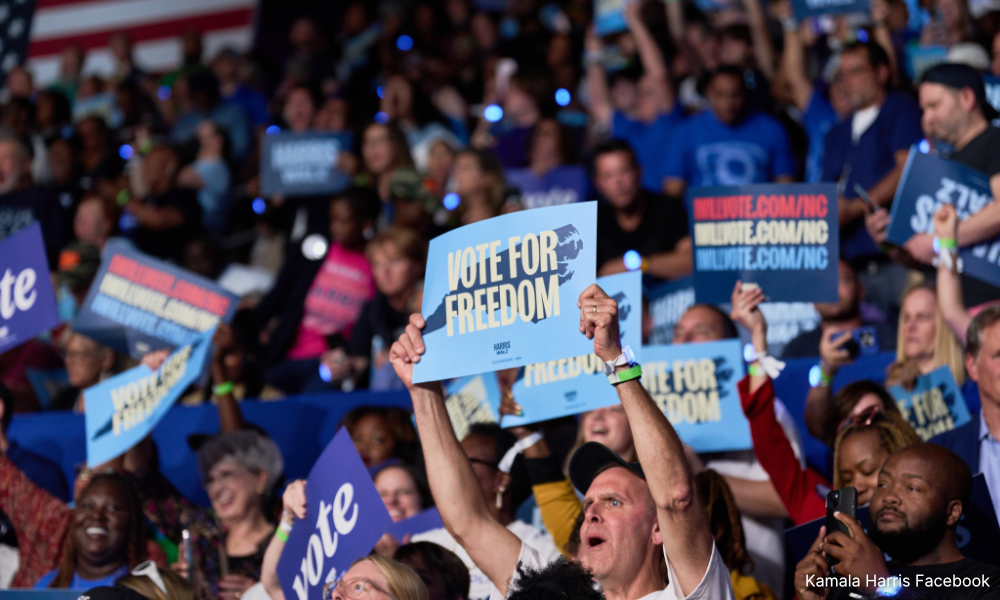
The Democrats lost sight of the broader economic and social issues that resonate universally. Topics like healthcare, job security, and education are concerns shared by all Americans, yet the Democrats frequently framed these policies through a racial lens, suggesting that only certain groups were impacted.
This overlooked the fact that voters across demographic lines face similar challenges and seek solutions that are inclusive, not segmented. Voters saw Harris’ campaign as focusing on identity rather than on policies that affected everyone equally, further driving them away.
Ironically, the Democratic Party’s intent to promote progress ended up fostering division. The Dems and Harris’ racialised approach, which emphasised differences rather than unity, drove many Americans to reject her candidacy.
Trump supporters, in particular, who had been repeatedly labelled as racists and bigots, felt alienated and pushed to defend their values against what they saw as a party that no longer stood for unity but rather for division based on identity.
The campaign, intended to inspire and uplift, ultimately fractured the base, alienating Americans who viewed her rhetoric as divisive and disconnected from their real concerns.
In the end, Americans rejected Harris not for her intent to fight racism but because her campaign symbolised a party that had become more focused on identity than on common values.
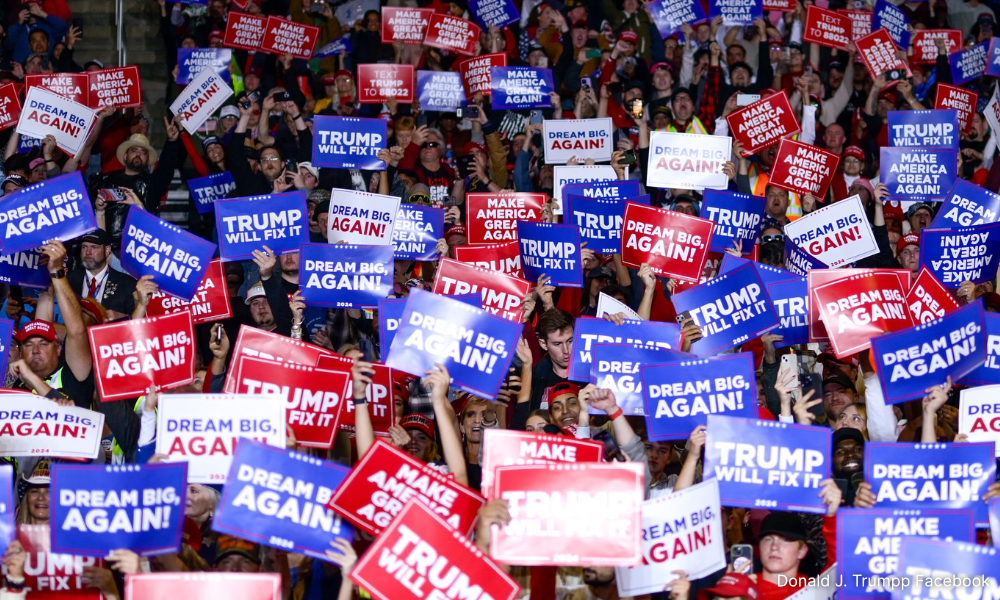
The Democratic Party’s shift to racialised messaging, amplified by media labels and divisive language, left many voters feeling alienated.
Instead of uniting Americans, the race-focused agenda drove them toward Trump who spoke to a shared American identity and focused on issues relevant to everyone, regardless of race.
In their quest to address inequality, the Democrats inadvertently transformed into a race-based party.
TUAN MUDA is the pseudonym of Mudasir Khan, an American corporate transplant who grew up in Penang and brings a unique blend of global insight and local expertise to the logistics industry.
The views expressed here are those of the author/contributor and do not necessarily represent the views of Malaysiakini.
/file/publisher-c1a3f893382d2b2f8a9aa22a654d9c97/2024/10/045c6e2d43afdc674ca2723299cf3087.jpg)
/file/publisher-c1a3f893382d2b2f8a9aa22a654d9c97/2024/11/74476254650c0012d4e4dffb076e0d8d.jpg)
/file/publisher-c1a3f893382d2b2f8a9aa22a654d9c97/2024/11/f56c831db65a1bfe6e27925d0b8bf55f.jpg)
/file/publisher-c1a3f893382d2b2f8a9aa22a654d9c97/2024/07/e96d58cd5da6864564c4496e717271d4.jpg)
/file/publisher-c1a3f893382d2b2f8a9aa22a654d9c97/2024/11/5e32ab9f250bafe7cc0e616821fca5d2.jpg)
/file/publisher-c1a3f893382d2b2f8a9aa22a654d9c97/2024/08/d84c7410b563179233e77707cce29382.jpg)
/file/publisher-c1a3f893382d2b2f8a9aa22a654d9c97/2024/11/af785dc103b5915a1bd2ecfc6152b78b.jpg)


Report this comment
Are you sure you want to delete this comment?
This action cannot be undone.