


/file/1144/317f9a3f2ca0a0a43f78241ea5522ff5.jpeg)

COMMENT | Forget about race, beware of AI instead
COMMENT | It’s strange that over the past 50 years, we’ve had ever more “time-saving” devices yet people feel ever more burdened with work.
We went from snail mail to fax and then email. From typewriters and desktops to computers in our pockets called smartphones.
But people keep feeling that 24 hours a day is not enough to...
COMMENT | It’s strange that over the past 50 years, we’ve had ever more “time-saving” devices yet people feel ever more burdened with work.
We went from snail mail to fax and then email. From typewriters and desktops to computers in our pockets called smartphones.
But people keep feeling that 24 hours a day is not enough to finish their work!
Why? The answer is that business owners (capitalists) keep wanting to squeeze ever more juice out of their workers in the sacred name of “efficiency”, a code word for profits.
The latest “time-saving” wave is called AI or artificial intelligence.

A common online joke is, “Why can’t AI wash my dishes?” The answer is that it’s too busy taking over the fun, creative work such as design, writing, computer coding and even certain types of art and music!
This is the sad irony according to American reformer Andrew Yang. He sought to be the US presidential candidate of the Democratic Party in 2020, warning that AI will be taking over loads of jobs.
Now, it’s even worse than he expected.
The joke becomes darker as there actually are fully automated robotic dishwashers which can “detect, pre-clean, rinse, dry, stack, and store” all kinds of kitchenware with zero human help.
Forget about the Chinese being a “threat” to Malays and vice versa. Many Malaysians, regardless of race, are now threatened by AI.
‘Highly impacted’
Some 600,000 workers (18 percent of Malaysia’s 3.5 million employees) from 10 key industries will be “highly impacted” by AI, said Human Resources Minister Steven Sim on Nov 19.
That’s management-speak for people losing their jobs to robots.
This was revealed in a Talentcorp survey, which added that another 1.2 million jobs will be “moderately impacted” – their jobs are still relevant but workers must deliver (ever) more than before.
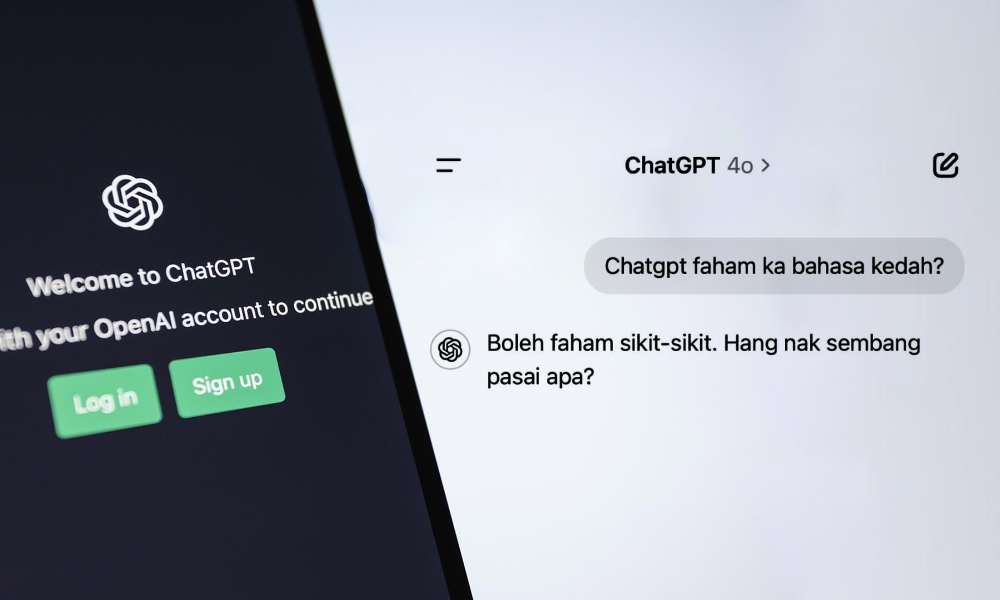
Yes, we all know that ChatGPT still gets some things wrong. AI supplements work performance rather than taking over jobs completely, said Ann Francke, CEO of the Chartered Management Institute (CMI), in a speech at Universiti Putra Malaysia (UPM).
She clarified that AI plays a role in filling in data but humans still needed to use their emotional and social intelligence to check and ensure that AI has done its work properly.
Will job retraining work?
But how many humans are “still needed”? The BBC recalls how writer Ben Miller once led a team of 60 writers and editors, publishing online articles to promote a company.
Then the boss used AI to “cut costs”. Most of his team was fired. The few remaining were left to edit ChatGPT’s clunky text to make it sound “more human”.
By 2024, everyone was laid off and Miller was left alone “doing everyone’s job.” Ah, how “efficient”!
Our human resources minister advised the soon-to-be jobless not to be “pessimistic or cynical” as they can do “upskilling and reskilling” for new jobs.
But as AI improves by leaps and bounds, can this retraining be done quickly and widely enough? For example, what will writers like me do? Flip burgers?
More importantly, how many people can spare, say two years, of “upskilling” when they must still provide food and shelter for their families?

Ideally, the government should make it compulsory that companies aiming to lay off workers provide part-time retraining while they continue to work part-time. This will probably need government subsidies.
No jobs safe from AI?
The next question is, retrain for what jobs? Can office clerks and call centre staff all be retrained as say, high-level computer programmers? Even if they were not good in studies back in school?
Even if that was possible, the bad news is that AI is replacing those jobs too!
Svenja Gudell, chief economist at Indeed Hiring Lab, pointed out that software and coding jobs are the most vulnerable as so-called “generative AI” can handle 95 percent of the skills required.
Even human resources jobs are in peril. Aquent Talent, a staffing firm, is using AI to read through workers’ résumés to find suitable job openings.
This still requires a human audit, but obviously, AI can do it much faster, thus cutting the need for staff.
Or maybe the jobless can be absorbed as content moderators for booming social media platforms? Sorry, in October 2024 TikTok laid off 481 employees in Malaysia as it shifted to using AI to moderate content.
In contrast, AI can only do 30 percent of truck and taxi driver jobs (thus far) according to Indeed Hiring Lab. AI will probably do worse in Malaysia given our haphazard roads and crazy drivers!
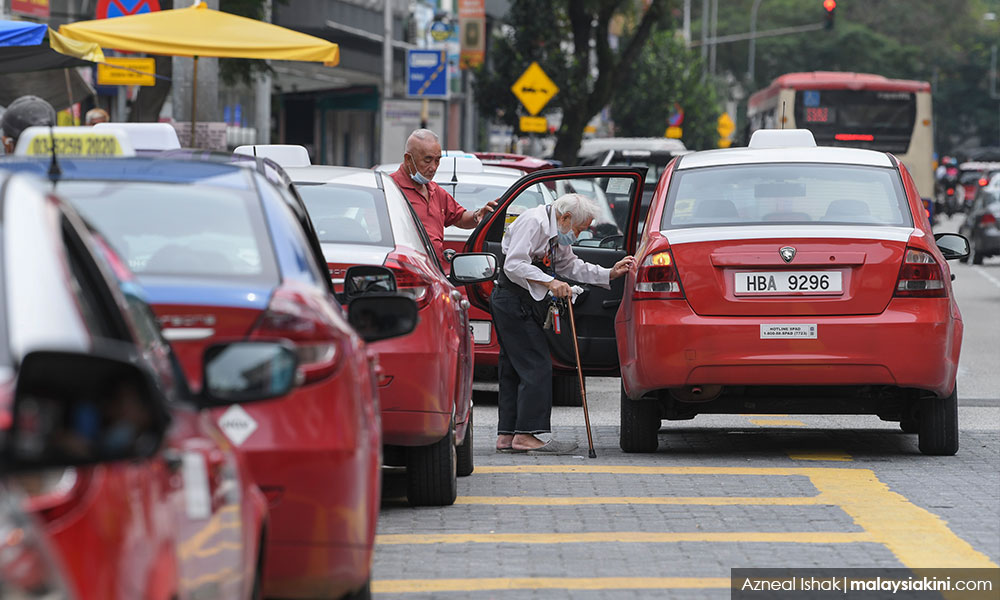
Ironically, it is manual jobs that are less likely to be replaced by AI – well, not yet anyway. These include hairdressers, beauticians, masseurs, plumbers, aircon installers, electricians and mechanics.
Will the Madani government retrain 600,000 people for these jobs? But whoops, masseurs may be deemed “immoral” though!
Workers as business owners
Better yet, help them start small businesses – for example food or pasar malam stalls. This means allocating more micro-loans and business locations.
Rather than constantly sweeping stalls off the streets, why not open up more low-rent areas for hawkers? This will also help lower food costs.
I have written before that people should pool their money and energy to start their own businesses.
An alternative is to give workers part ownership – rather than the 30 percent quota for bumi shares dished out to political cronies who do nothing other than bodek (bootlick) leaders.≈
At the very least, workers should be given a greater say in managing companies, as in Germany where workers elect up to half of corporate management boards.
‘Economic democracy’
This is what the Madani Economy should consider. An “economic democracy” that truly empowers the rakyat, unlike a carnival of ceramah every five years shouting empty promises.
Richard D Wolff, an American Emeritus Professor of Economics pointed out that if AI makes workers doubly productive, the boss may think, hey he can fire half the workers and still make the same profits.
But what if workers share ownership or decision making in the company? Then they can object to anyone getting fired. They now need to work only half a day and still maintain their pay, said Wolff.

It sounds idealistic. But it’s actually like a group of friends who put their money together to open a cafe. If new technology can make cappuccinos, pastries and pasta in half the time, no partner gets fired. Instead, they all enjoy the benefits.
Workers’ empowerment through small business, shared ownership or management is the best bulwark against AI taking jobs away.
The point is, that workers can control their own fate, not an uncaring boss who only wants a new luxury car or London condominium. It’s all about the balance of power.
Here’s the basic question: are businesses meant only to maximise investors’ profits? What about workers’ well-being?
The answer was given by Her Majesty Queen Raja Zarith Sofiah on Nov 16 – AI should be used to improve the quality of life and not solely for economic gains.
ANDREW SIA is a veteran journalist who likes teh tarik khau kurang manis. You are welcome to give him ideas to brew at tehtarik@gmail.com.
The views expressed here are those of the author/contributor and do not necessarily represent the views of Malaysiakini.
/file/publisher-c1a3f893382d2b2f8a9aa22a654d9c97/2024/09/52bd91bfb107c2a36d46886c87ab5b9f.jpg)
/file/publisher-c1a3f893382d2b2f8a9aa22a654d9c97/2024/11/2cc174332046f5ffaa5109a9fccb245d.jpg)
/file/publisher-c1a3f893382d2b2f8a9aa22a654d9c97/2024/10/d34daa2712c75180d703b03b4fcef1a5.jpg)
/file/publisher-c1a3f893382d2b2f8a9aa22a654d9c97/2024/10/de88499693accf02a86efac1d503757c.jpg)
/file/publisher-c1a3f893382d2b2f8a9aa22a654d9c97/2024/10/8d7925566402e089e30ade634353e575.jpg)


Report this comment
Are you sure you want to delete this comment?
This action cannot be undone.