


/file/1230/eb52569bd702825c9145b0bf06883ef5.jpeg)

COMMENT | Urban Renewal Act - a heritage perspective
COMMENT | The proposed Urban Renewal Act (URA) has arrived at our doorstep; but it is an awkward juncture; we are divided as to how to move our cities forward.
On one side are those that want everything flashy new, bright, tall and slick. And they - the Fast Food Gang - want it all now, not tomorrow.
On the other side, we have those that prefer a more considered, more humanistic approach to city design; the Slow Food Gang. If the former is all about tearing down the past, the old, the dilapidated and abandoned, the latter proposes co-existence.
Most of our cities were first settled well over 150 years ago. Kuala Lumpur started about 168 years ago.
From a small trading outpost of wooden shanties, it's now a shining beacon of a modern metropolis. KL is, without a doubt, a beautiful city. But its growth has been incremental over the decades, slow and steady, enclave by enclave.
URA
Not satisfied with the generally snail’s pace of development in the city or the piecemeal approach to urban design, the URA is a bold new tool to...
COMMENT | The proposed Urban Renewal Act (URA) has arrived at our doorstep; but it is an awkward juncture; we are divided as to how to move our cities forward.
On one side are those that want everything flashy new, bright, tall and slick. And they - the Fast Food Gang - want it all now, not tomorrow.
On the other side, we have those that prefer a more considered, humanistic approach to city design - the Slow Food Gang.
If the former is all about tearing down the past, the old, the dilapidated and abandoned, the latter proposes co-existence.
Most of our cities were first settled well over 150 years ago. Kuala Lumpur started about 168 years ago. From a small trading outpost of wooden shanties, it's now a shining beacon of a modern metropolis.
KL is, without a doubt, a beautiful city. But its growth has been incremental over the decades, slow and steady, enclave by enclave.

URA
Not satisfied with the generally snail’s pace of development in the city or the piecemeal approach to urban design, the URA is a bold new tool to hasten this process and do things in a big and fast way; it wants to take over multiple lots of land and transform them in one go, a new zeitgeist model for development.
So, the most obvious questions to ask in this context are do we really need a super-charged catalyst for our urbanity? Are the existing tools and processes inadequate?
Are they so inadequate that we need a prize-fighter of an Act to come and bulldoze what the ring leaders see as old, dirty, dilapidated or abandoned buildings in large tracts of prime developable land (PDL).
How it works
The red bull of this hard-hitting punch of an Act, is that it can buy PDLs “en bloc” meaning it can quickly, after defining the boundaries of a PDL, buy it in one swoop.
Previously, as a PDL consisted of a great many lots, the potential purchaser would have to painstakingly buy lot by lot and then amalgamate them.
This was time-consuming and layered with legalese. Multiple lots with multiple owners, were the bane of developers.
The URA is a gift from the heavens for it solves this dilemma by giving the purchaser the legal right to purchase every lot in the newly defined PDL; there is no need to wait till 100 percent of owners agree to sell, as is the case now.
Under the URA, as low as 51 to 80 percent is enough. The URA will be a game-changer that saves a ton of time and will make a lot of money. So yes, it hastens the whole equation of determining urbanity.
Is this good?
Yes and no. Yes, if a PDL can be defined and makes good urban sense, then a brand-new development utilising the best urban design strategies can produce a thriving new enclave.
Look at the Pavilion area; it works well on so many levels. It is well connected at all points and people can walk through anywhere and get different types of urban experiences.
Do we miss the old Bukit Bintang Girls School (BBGS) colonial buildings that were on the site? Some of us do.
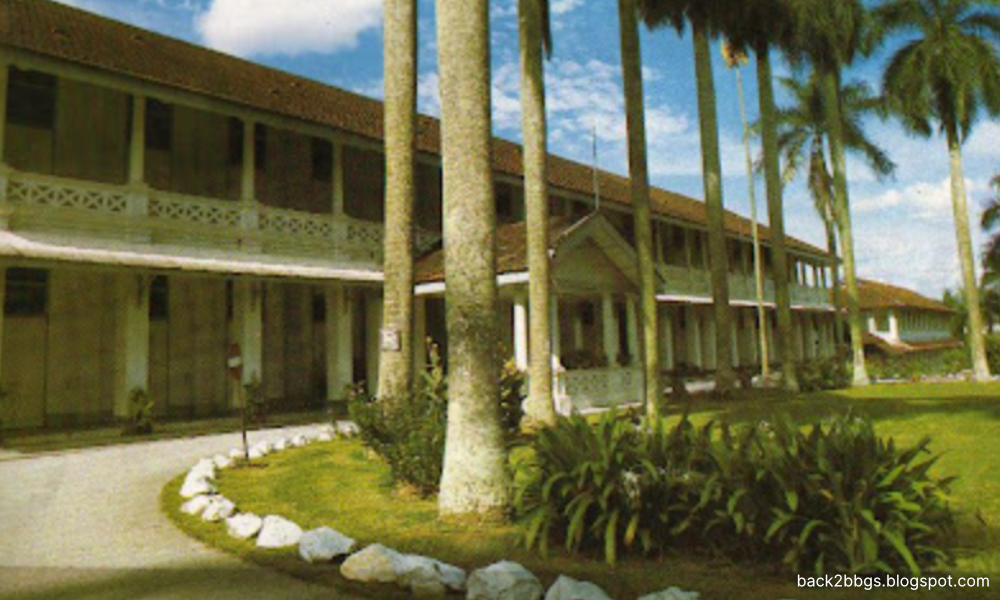
If the beautiful old colonial buildings were integrated with the new insertions, a richer urbanity could have been produced.
It was a pity that the whole school was demolished without any attempt to see how it could have co-existed with new buildings. Our built heritage was indeed compromised on that occasion but the city has moved on.
Heritage and the city
But we, as a city, can't make cityscape blunders like this all the time. We have to balance new development with a surgical re-purposing of our existing built heritage.
Every time an old building of heritage value is demolished in the name of development, we lose another bit of our collective soul.
And if conservation is neglected, in a hundred years, all we will have are stark icons of modernity everywhere, with ingrained sameness and hardly any vestiges of how we got there. Do we want that? Honestly? No.
Heritage has a purpose and that is about preserving the memories of growing up. Every city grows up and if these memories disappear bit by bit and are replaced by the here, there and everywhere, we can't get those memories back.
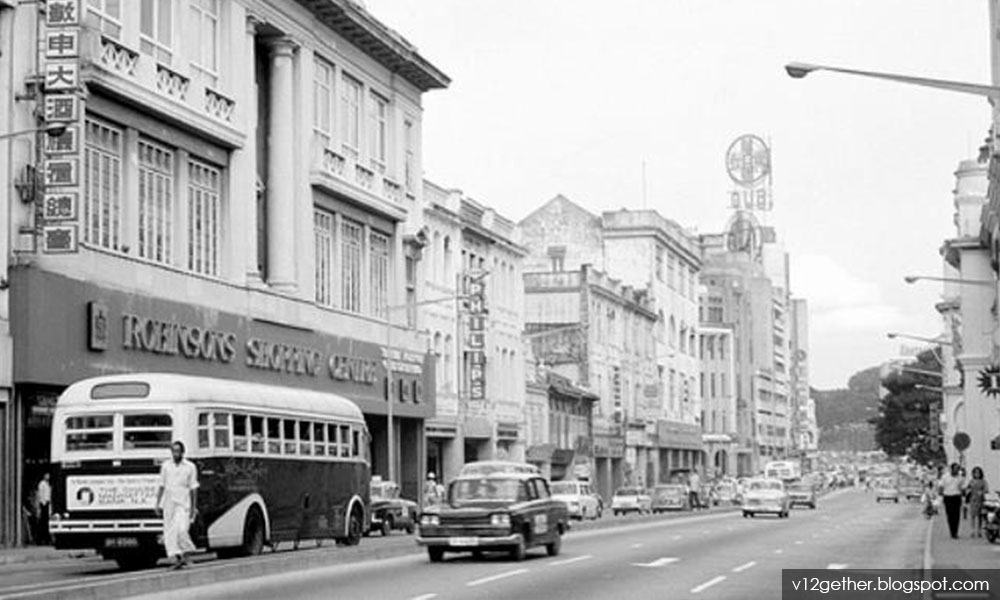
In this sense, heritage is not a static construct as many believe; it comes in many shades of time. Right now, we as a society, can only see colonial buildings as heritage: nothing else comes to mind. But in a 100 years, the good buildings of today will be the new heritage of that time.
So, we must endeavour to save some of these current buildings. They may look dirty, dilapidated, abandoned, forlorn, in dire need of a paint job, cluttered with signage of all shapes and sizes, but beneath this visual cacophony of neglect, lies a built form crying to be saved.
When the URA prize fighter comes in chest-thumping and valiant, it will demolish everything in its path. We cannot make blunders like the BBGS again.
URA meets PDL
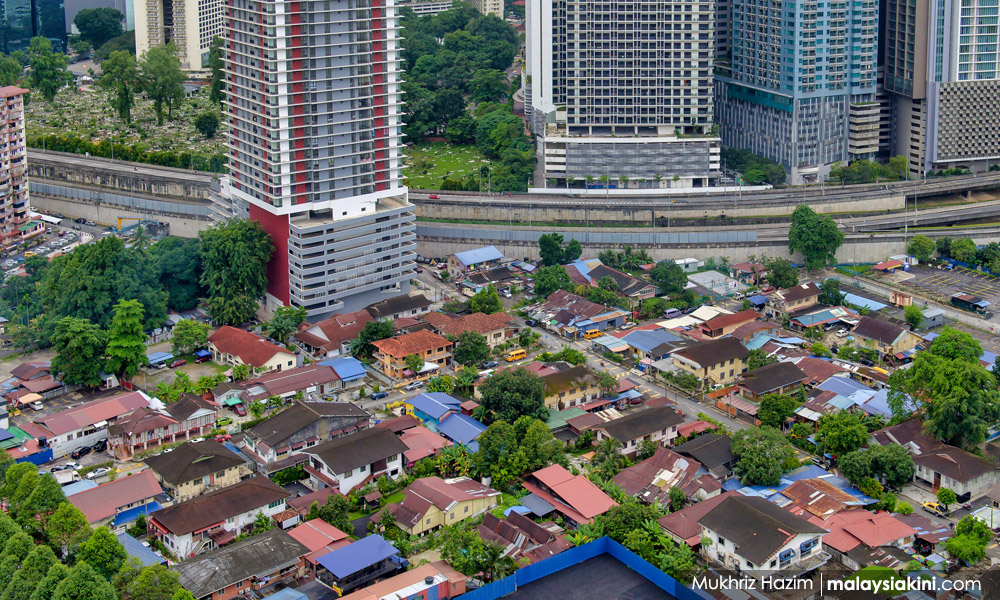
Let us look at a potential PDL - Kampung Baru - immediately above the KLCC precinct. (see Fig 1).
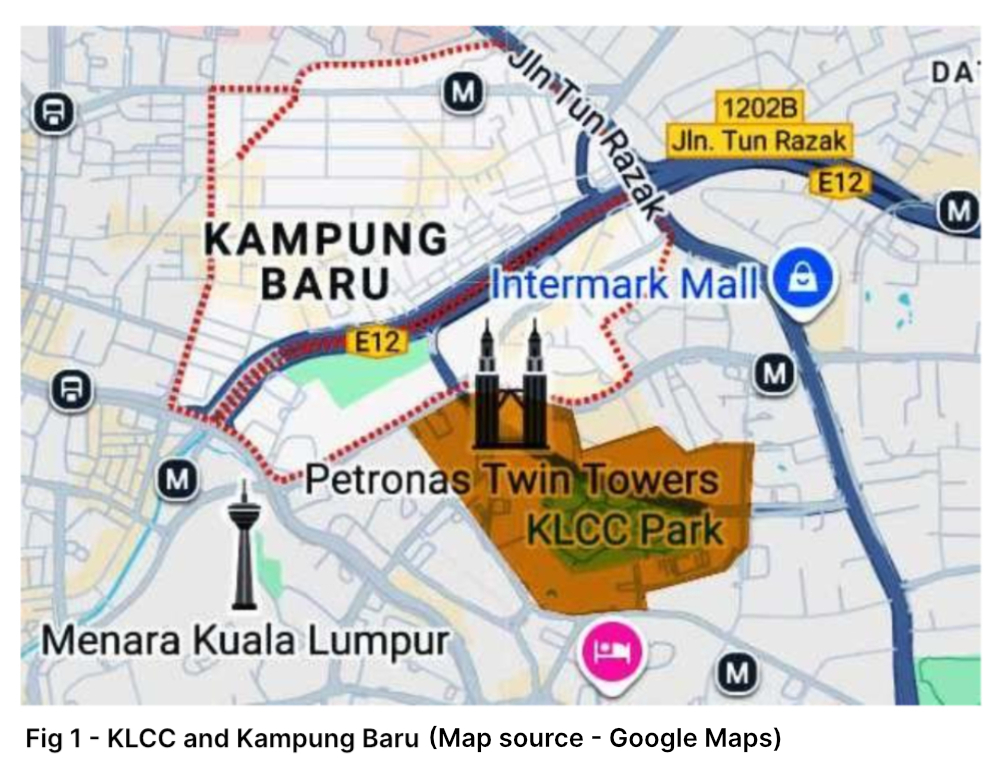
Its name is an irony; it is not a new village; it has been around for the last 168 years. It is a Malay agricultural settlement originally consisting of seven kampungs.
It once had padi fields and lots of kampung houses and was rural Kuala Lumpur at the time. While areas around it developed rapidly, it preferred growing at a slower, gentler pace.
Today, it is an urban anomaly, a low-density green enclave surrounded by high and very high-density commercial towers.
It has resisted urban encroachment as much as possible but the pressures of development bear upon its green soul in every conceivable way, every day.
If the URA comes knocking on its door, it is game over. The land, at 10.8m sqf, is 2.5 times bigger than the KLCC precinct (4.4m sqf). We now know what all can be placed in the KLCC precinct: there is the convention centre, a large park, condominiums, hotels, office towers, a shopping mall and two really tall towers.
Expand this 2.5 times and place it all on Kampung Baru; that is the picture. It will be the mother of all PDLs, the highest level on a proverbial multi-tiered urban renewal cake. It is a gold mine.
If the URA was conceived for urban renewal for all cities in the nation, this one prize could very well retire the prize fighter for good. There would be no need to urban renew anywhere else. That's how much of a victory this heavyweight prize fight would be.
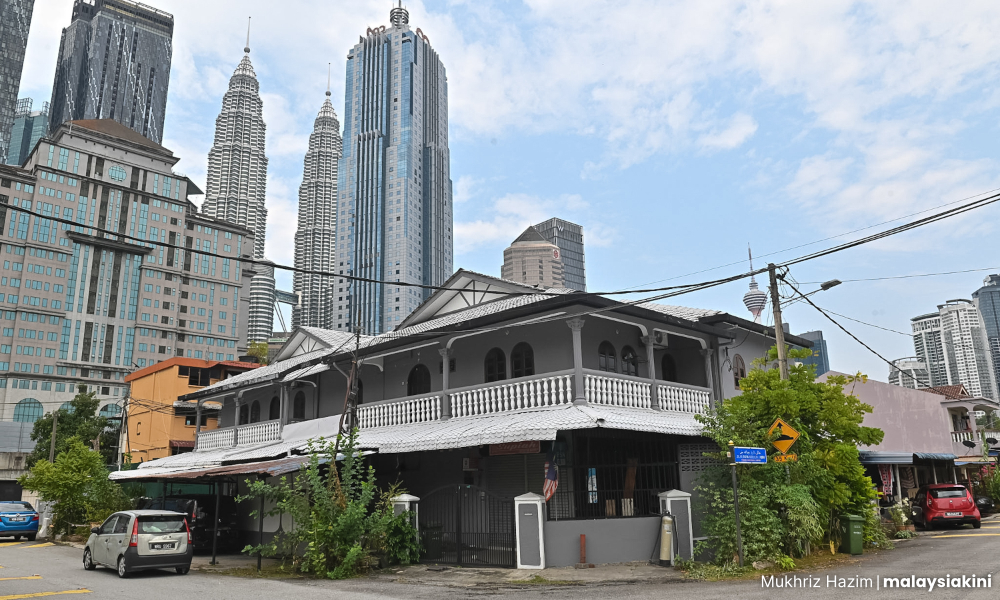
Imagine having the massive clout of Parliament to wrest away a historic piece of land belonging to a particular group of people for a steal, for high density development to achieve nothing more than expand the downtown of KL.
It is not so much urban renewal as it is land reclamation and it promises unimaginable riches to everyone connected with it, though possibly not its current inhabitants.
And the real icing on the cake? Well, Kampung Baru will be redeveloped, regenerationised and revitalised in double quick time.
The Fast Food Gang may even rename it KLCC North. How about the heritage houses there? They go. How about the people who live there? They go.
How about the historic streets? What historic streets? BBGS was tame compared to this. Given this scenario, can we allow this heavyweight prize fight? No!
KL can have a green lung in its heart. New York has Central Park. With good urban design, Kampung Baru can be repurposed to a beautiful and vibrant green enclave within a city.
The economics of making it successful doesn’t need to be an obstacle, rather it can be a means to a desired end.
In 100 years, when the Fast Food Gang are long gone, KL will be proud it took this decision. Kampung Baru is a gem waiting to shine.
Donut strategy
Given the massive power of the URA, we must use it sparingly. What if we employ a Donut Strategy to urban renewal?
We create donut rings around the city, rings that demarcate where urban renewal can take place but balanced with conservation (see Fig 2).
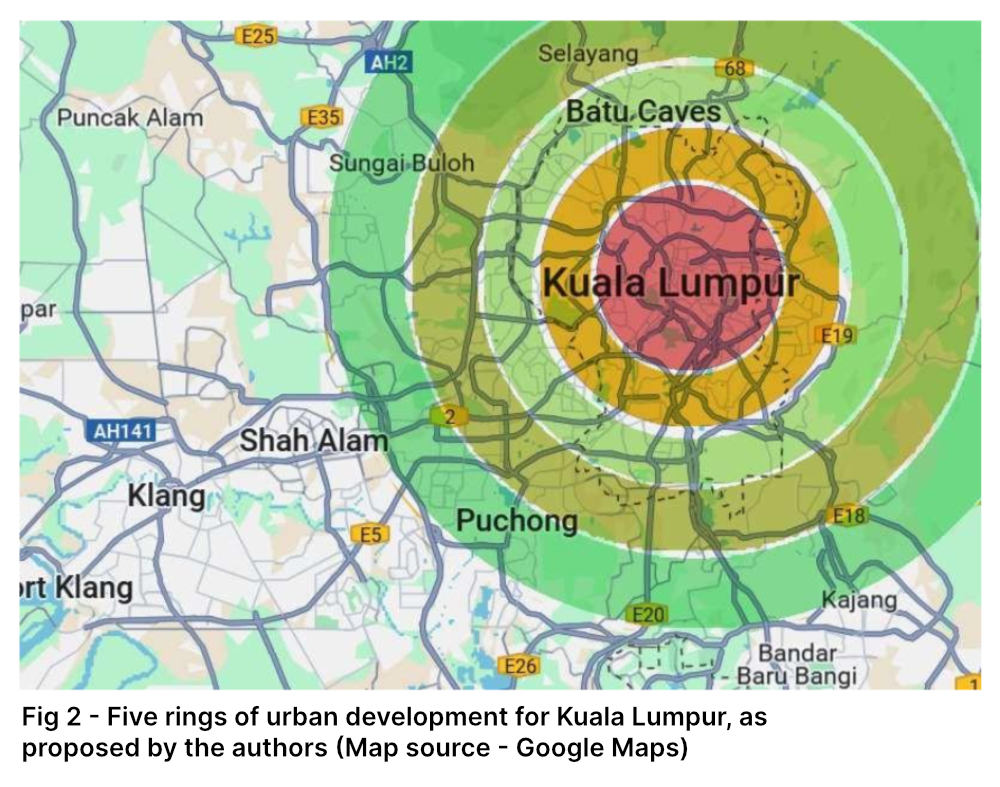
The first ring is around KLCC, the core of this narrative. Each ring is about 5km wide; we have five rings, starting from around Puchong.
We allow the URA to begin operations from the fifth ring, then the fourth ring, right up to the second. The first ring is preserved in perpetuity: no urban renewal, redevelopment, regeneration or revitalisation of the URA magnitude allowed.
Individual lots can of course be renewed but not as en blocs.
Urban design leadership needed
Development or even fast development is not bad, but irresponsible development is. We cannot just throw the old out because of age and replace them with a trophy partner.
Malaysia must eradicate bad development habits like constructing low-cost buildings, then let them deteriorate with little or no maintenance. Instead, we must do something well at the start so we do not need to demolish buildings in a couple of decades.
More than a paradigm shift, we need good urban design leadership, maybe even good political will.
The URA is single-mindedly powerful, but it is a reactive model; it has been created to react to poor development decisions made at the onset.
From a heritage perspective, it cannot be passed in its current iteration; it needs more work and more finesse. Right now, it is disappointingly short-sighted.
What will happen next? This is the awkward juncture we find ourselves in.
ANAND KRISHNAN is a Harvard-educated architect, urban designer and conservation advocate.
NORMAN FERNANDEZ is a lawyer and an outspoken political commentator.
The views expressed here are those of the author/contributor and do not necessarily represent the views of Malaysiakini.
/file/publisher-c1a3f893382d2b2f8a9aa22a654d9c97/2024/10/e9a0e6d79e11630b7e18db5b23f7d78d.jpg)
/file/publisher-c1a3f893382d2b2f8a9aa22a654d9c97/2024/07/98abc9778661734dcf622c00dcdc6528.jpg)
/file/publisher-c1a3f893382d2b2f8a9aa22a654d9c97/2019/10/5aa95287f19913507a7d4d7589e671be.jpg)
/file/publisher-c1a3f893382d2b2f8a9aa22a654d9c97/2024/09/587acafc97bf5f9fbab10020b7d58d5e.jpg)
/file/publisher-c1a3f893382d2b2f8a9aa22a654d9c97/2025/02/ece13da3395c02fc2a8bcd187e648e3a.jpg)
/file/publisher-c1a3f893382d2b2f8a9aa22a654d9c97/2024/08/8038b7e9d1c665cb8091c773a1db835c.jpg)
/file/publisher-c1a3f893382d2b2f8a9aa22a654d9c97/2024/07/9ecb4a439d53f28ddd4d633b78fb4797.jpg)


Are you sure you want to delete this comment?
This action cannot be undone.