


/file/publisher-c1a3f893382d2b2f8a9aa22a654d9c97/2020/12/05b5219ad3ec58bb4fdfcbfd0eab09c8.jpg)

COMMENT | Balancing M'sia's geopolitical role in volatile world
For Malaysia, a country strategically located in the heart of Southeast Asia, navigating this high-stakes environment requires a delicate balance between maintaining national sovereignty and leveraging the benefits of global partnerships.
This balancing act was brought into sharp focus during the 25th Shanghai Cooperation Organisation (SCO) Summit, hosted by China in Tianjin on June 25 and 26, 2025.
The summit, centred on counter-terrorism, regional stability, and economic integration, reflected the SCO’s broader agenda, one that aligns with...
COMMENT | In today’s increasingly polarised global landscape, small and middle powers face growing pressure to pick sides in the rivalries between major geopolitical blocs.
For Malaysia, a country strategically located in the heart of Southeast Asia, navigating this high-stakes environment requires a delicate balance between maintaining national sovereignty and leveraging the benefits of global partnerships.
This balancing act was brought into sharp focus during the 25th Shanghai Cooperation Organisation (SCO) Summit, hosted by China in Tianjin on June 25 and 26, 2025.
The summit, centred on counter-terrorism, regional stability, and economic integration, reflected the SCO’s broader agenda, one that aligns with Chinese and Russian interests and often positions itself as a counterweight to Western influence.
Meanwhile, the Quadrilateral Security Dialogue (Quad) made up of the US, Japan, India, and Australia, continues to push its vision of a “free and open Indo-Pacific.”
The Quad emphasises democratic values, maritime security, and rules-based order, offering a starkly different approach to regional cooperation.
Caught between these competing narratives, many smaller nations are being nudged toward alignment. However, Malaysia has chosen a different path.
Rather than siding outright with either bloc, it has embraced a policy of strategic hedging, engaging with both sides while avoiding full commitment to either.

This approach allows Malaysia to preserve its autonomy, avoid dependence on any single power, and extract economic and security benefits from both relationships.
As global power dynamics grow more complex, Malaysia’s diplomatic flexibility may serve as a model for other middle powers seeking to stay afloat in turbulent geopolitical waters.
History of non-alignment
Malaysia’s posture is rooted in its long-standing foreign policy doctrine of non-alignment and regional neutrality. Since the Cold War era, successive Malaysian governments have resisted the temptation of bloc politics.
Malaysia was a founding member of the Non-Aligned Movement (NAM), and its current strategies echo the same principle - engage, but not entangle.
This stance has gained renewed relevance amid intensifying Sino-American rivalry, of which both the SCO and Quad are by-products.
While Malaysia is not a formal member of either, its interactions with both camps reveal sophisticated diplomacy aimed at navigating complex power dynamics without compromising its national interests.
Economic and regional stability
Malaysia has shown openness to the SCO, particularly in areas of counterterrorism cooperation, economic engagement, and connectivity.
Although not a member, Malaysia has engaged with the SCO through dialogue platforms, particularly via China, which remains Malaysia’s largest trading partner.
For Malaysia, engaging with the SCO provides several benefits. First, it aligns with Putrajaya’s desire to diversify its security partnerships beyond traditional Western ties.
Second, Malaysia views the SCO as a potential avenue for fostering regional stability in Central and South Asia regions that impact Southeast Asia through trade, migration, and to counter extremism.
Moreover, Malaysia’s deepening ties with China under the Belt and Road Initiative (BRI), with investments in infrastructure projects like the East Coast Rail Link (ECRL), indirectly link it to SCO-aligned interests.
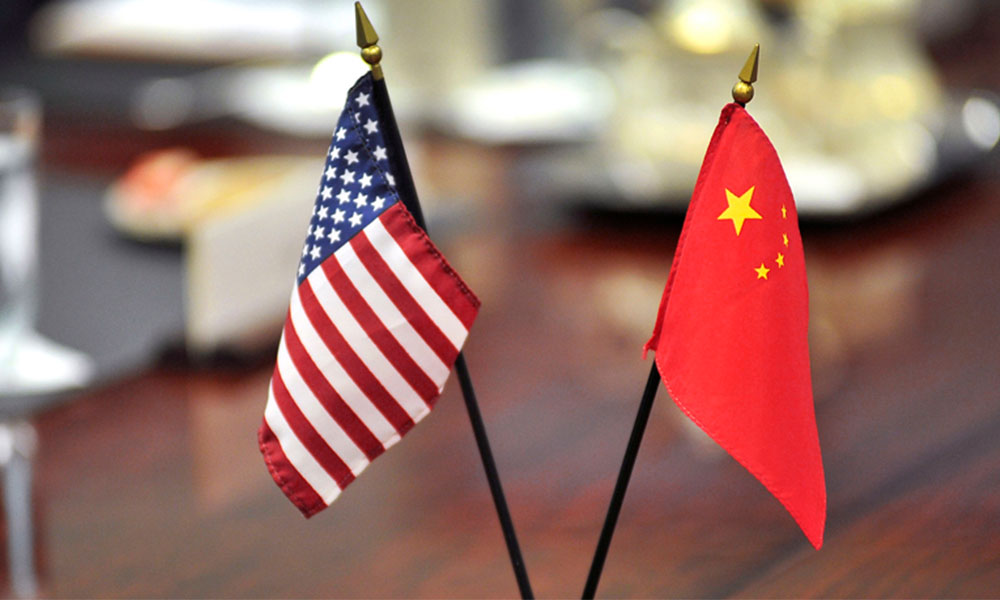
While wary of overdependence on China, Malaysia uses the SCO platform to reinforce economic cooperation without fully committing to the group’s strategic posture.
Embracing Quad
Simultaneously, Malaysia maintains strong security and economic ties with Quad members. It regularly conducts joint military exercises with the US, Australia, and Japan, and benefits from defence capacity-building initiatives.
These engagements are seen less as a provocation to China and more as part of Malaysia’s long-standing effort to modernise its armed forces and ensure maritime security, particularly in the South China Sea.
Malaysia supports the Quad’s emphasis on a rules-based order, particularly freedom of navigation and overflight principles critical to a trade-dependent nation like Malaysia.
Yet, it does so without explicitly endorsing the group’s more confrontational posture toward China. Malaysia’s goal is not to antagonise Beijing but to uphold its own maritime claims and sovereignty in contested waters.
Asean centrality as strategic shield
A key pillar of Malaysia’s strategy is its insistence on Asean’s centrality. Rather than align exclusively with either SCO or Quad, Malaysia consistently emphasises the importance of Asean-led mechanisms like the East Asia Summit and the Asean Regional Forum.
These platforms provide a multilateral buffer against great power rivalry and allow Malaysia to engage all major players on more equal footing.

Malaysia also champions initiatives like the Asean Outlook on the Indo-Pacific (AOIP), which, unlike the Quad’s vision, stresses inclusivity and dialogue.
This allows Malaysia to subtly push back against both Western and Chinese pressures while presenting itself as a constructive bridge-builder in a fragmented region.
Strategic autonomy, not indecision
Critics may interpret Malaysia’s dual engagement as indecision or opportunism, but such a view underestimates the complexity of small-state diplomacy. Malaysia’s strategy reflects a calculated effort to maximise agency in a crowded geopolitical arena.
By keeping both SCO and Quad at arm’s length, Malaysia retains the freedom to manoeuvre, leveraging economic ties with China and strategic cooperation with the West without overcommitting to either.
In fact, this approach has helped Malaysia avoid the fate of becoming a proxy in great power competition. It continues to attract investment from both camps, maintains robust trade across ideological divides, and asserts its regional priorities on its own terms.
Malaysia’s balancing act between the SCO and Quad illustrates the evolving art of middle-power diplomacy. In a time of heightened polarisation, it demonstrates that strategic autonomy remains a viable path for states unwilling to be drawn into zero-sum alignments.
Rather than picking sides, Malaysia is picking its battles which are focused on economic resilience, territorial integrity, and regional stability.
As great power rivalry intensifies, the Malaysian model of pragmatic neutrality could serve as a template for other nations caught in the geopolitical crossfire.
R PANEIR SELVAM is the principal consultant of Arunachala Research & Consultancy Sdn Bhd, a think tank specialising in strategic national and geopolitical matters.
The views expressed here are those of the author/contributor and do not necessarily represent the views of Malaysiakini.
/file/publisher-c1a3f893382d2b2f8a9aa22a654d9c97/2025/06/64ce91719d4091168ee465b67bd73da2.jpg)
/file/publisher-c1a3f893382d2b2f8a9aa22a654d9c97/2025/06/38c93e8877ce813002cecf568ed50d54.jpg)
/file/publisher-c1a3f893382d2b2f8a9aa22a654d9c97/2025/06/7087c00d174cc7a35bf1bfc29a59b4e1.jpg)
/file/publisher-c1a3f893382d2b2f8a9aa22a654d9c97/2025/06/9071d01d548f0f761dde452cdde04435.jpg)
/file/publisher-c1a3f893382d2b2f8a9aa22a654d9c97/2025/04/dfdd68147179d089593ea48758035cee.jpg)


Report this comment
Are you sure you want to delete this comment?
This action cannot be undone.