



COMMENT | Political illiteracy in Malaysia
COMMENT | The recent "Blunami" that took place in the US mid-term election resulted in excited interest on social media. Some Malaysians became hopeful that such a political upset could be replicated in Malaysian politics. They were hoping to use the political shift in the US to jumpstart a similar movement in Malaysia.
This was largely problematic as these Malaysians were taking all the wrong lessons from the US election and applying them improperly to the Malaysian context. This was due to an endemic issue plaguing Malaysia's political space, which is political illiteracy.
This article will use this example to explore how extensive this issue is and what the implications are in Malaysian politics.
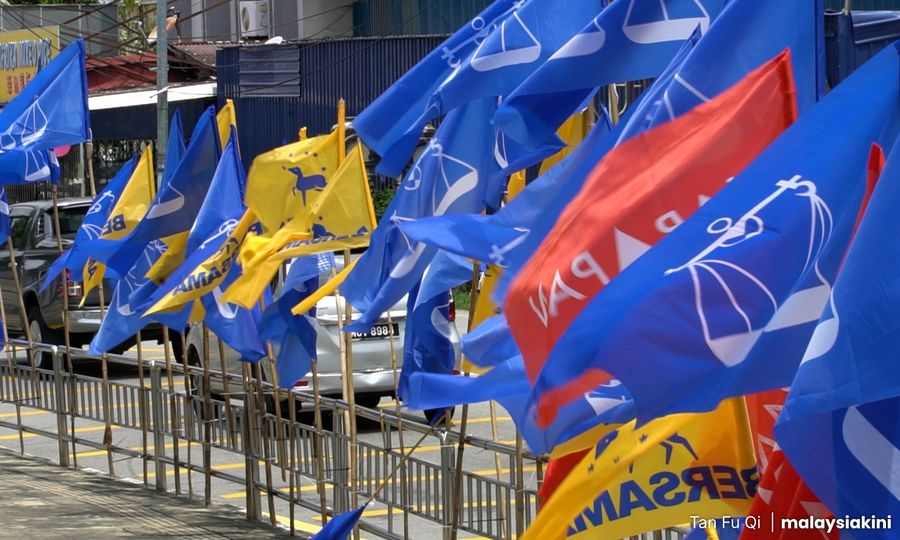
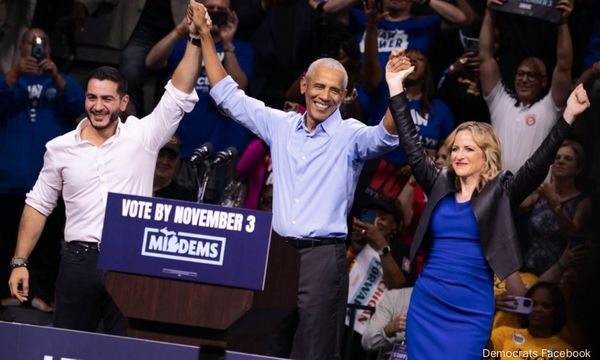
The biggest misread from the US midterm elections is just from colour association. In American politics, democrats are recognised as the blue party while the Republicans are red, hence why it was called a "Blue tsunami" as the Democrats scored huge wins and even flipped a few red stronghold states.
Some Malaysian X accounts misappropriated this victory to call out that Malaysians also need to return to voting blue as opposed to red. The blue parties in Malaysia generally refer to the old governing coalition of BN and the right-wing ethnonationalist Perikatan Nasional, while the red party generally refers to the governing Pakatan Harapan coalition.

To anyone familiar with Malaysian politics, this colour association is essentially the reverse of the American parties, as the more liberal and progressive Democrats have more in common with Harapan, while the conservative Republicans are more in line with BN and PN.
So, the Malaysians were just banking on a shift in politics just on party colour and ignoring that a similar blue wave should in fact favour the more liberal Harapan coalition instead.
El-Sayed’s victory
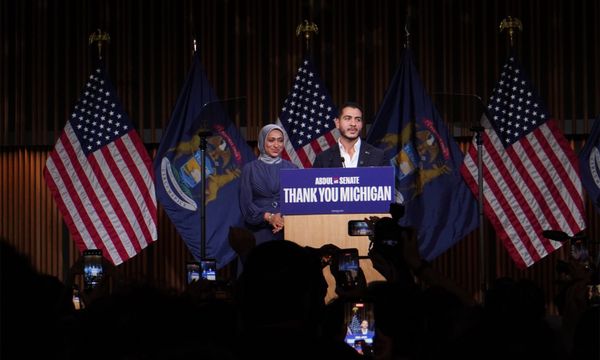
Another point of contention is also the inversion of minority/majority status, as many Malaysians lauded the success of Democrat senator-elect Abdul El-Sayed as a rallying cry that Malaysia should be more Islamic and reject non-Muslim politicians.
This again ignores the fact that El-Sayed is celebrated as the first Muslim senator, which means he is a religious minority candidate who triumphed in a predominantly Christian majority state.
Right-wing ethnonationalist Malaysians instead are using it to justify their majoritarian narratives without recognising why this was important in the US. El-Sayed's equivalent for Malaysia would be an elected politician coming from an indigenous animist background, something that has never happened in local politics.

These two situations are not the first time that Malaysians have adapted terms from American politics into our own without fully understanding them. The terms "woke" and "liberal" have become mainstays in our political space as slurs representing corrupting Western influences and culture.
They are often thrown around with reckless abandon by right-wing conservatives to attack Harapan and its allies for breaking from Asian cultural norms and traditions. If you ask the people who use these terms to describe it, Woke is commonly used to represent the so-called LGBTQ+ agenda, while liberal just means anti-Islam.
Just as these concepts are imported from America, so too is the thinking surrounding them, as there is little to no critical thinking to at least try to apply these issues to the Malaysian context.
Often, when I see arguments online where people complain about LGBTQ+ influences infecting Malaysian spaces and why it is so destructive for local society, they often cite American right-wing talking points that have no bearing on Malaysia, such as the false stereotype of drag queens reading to children to convert them and trans people sexually assaulting people in gendered bathrooms.
This is symptomatic of deep-set political illiteracy that was cultivated by our old governments by poorly integrating political education into our education syllabus.
Time for a change
That is why Malaysian politics, at its core, still revolves around ethnic divisions, as political ideologies, concepts, and even individual roles in a political democracy are not taught and are poorly grasped by many Malaysians.
While many have tried to improve political literacy amongst Malaysians (such as Sekolah Demokrasi and Fahmi Reza), these efforts only affect a small minority, leaving most of the majority still unknowingly politically illiterate.
From an ongoing study that I am doing on media and political literacy, while political parties are trying to educate their members about politics in Malaysia, these efforts tend to be quite parochial, with a focus purely on the inner workings of local politics and not enough about political science at large.
Most of the knowledge conveyed is purely about civic structures and the political ideologies in place, but very little about broader political approaches such as socialism, non-electoral forms of political participation or various other democratic practices.
Political fundamentals are not taught in public schools at an early enough age, and as a result, most of the foundations to understand politics are not present, making it difficult to pick up later in life.
Most Malaysians know the answer to this is that our governments have sought to keep the population politically illiterate for as long as possible to reduce political resistance. It is time for a change to this, as Malaysians will continue to copy and parrot foreign political movements with a very shallow and poor understanding of them.
Until we bolster our own political literacy, this will continue to grow and only benefit the status quo. Political education must be made a priority and something the government must be forced to make a priority.
BENJAMIN YH LOH is a senior lecturer at the School of Media and Communication at Taylor’s University, an associate with the Asia Centre in Bangkok, and a visiting fellow with the Iseas Yusof Ishak Institute in Singapore.
The views expressed here are those of the author/contributor and do not necessarily represent the views of Malaysiakini.



Malaysia has got the worst political scenario. With that our beloved country is doomed.
I coin the term collective stupidity to describe all of us malaysian doing our best to destroy this lovely nation. We are just plain stupid.
Political and social change in the west did not come from Politics. The Church and the Absolute Monarchy (which ruled) had absolutely no interest in modernising, as they would be the first to lose from it. Identical situation here. Even the changes in 2018, a first after SIXTY years, brought to power people from the same party that had been ruling!! The PM was the one who had been PM already over TWO decades before. His Deputy is now PM. Nothing has changed. The Laws that dont allow questioning almost anything sit unmoved on the statute Book. Nothing has changed. In the west the change was propelled by the Church being pushed to modernise by their own clergy questioning the Diktats and Edicts. Several revolutions became necessary to bring about not just Democracy but also Laws that were appropriate and put the people above the state. What this author is talking about is a very small part of the whole, and he is totally silent on the changes that are fundamental to a functioning Democracy and their status here currently.
Report this comment
Are you sure you want to delete this comment?
This action cannot be undone.