



LETTER | Law, heritage and public interest: Examining RM1k KLSCAH land premium
LETTER | The federal government’s decision to impose a nominal land premium of RM1,000 in connection with a new lease of up to 99 years for the Kuala Lumpur and Selangor Chinese Assembly Hall (KLSCAH) has generated considerable public and political debate.
While opposition critics have questioned the substantial reduction from the initial estimated premium of approximately RM4.67 million, a closer examination of the relevant land laws, heritage conservation priorities and principles of public administration provides important context for understanding the decision.
According to the explanation provided by Hannah Yeoh, Minister in the Prime Minister’s Department (Federal Territories), the reduction was not an arbitrary decision. It followed a formal administrative process and was approved by the Federal Territories Land Committee on Sept 14, 2026.
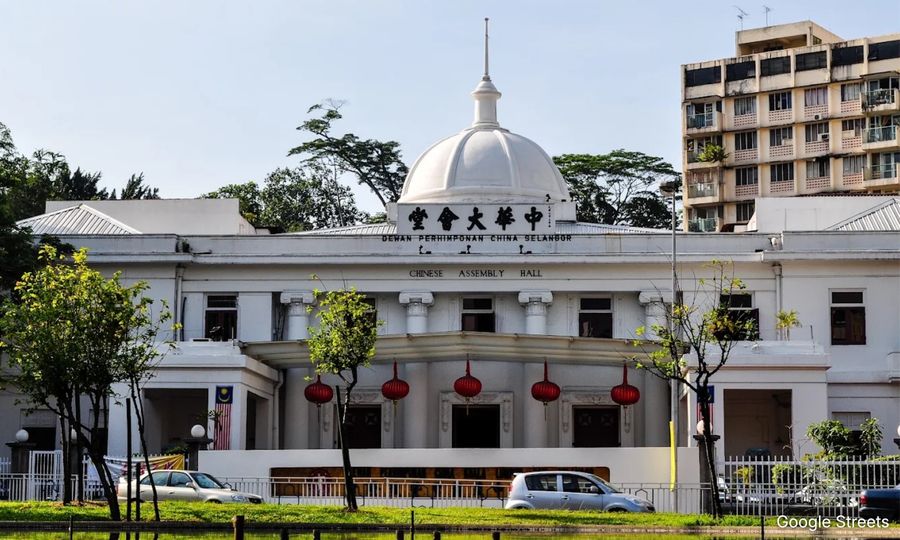
An important consideration is the historical and institutional significance of the KLSCAH building. Completed in 1923, the building is now 103 years old and has been gazetted as a National Heritage Building since 2007.
KLSCAH operates as a non-profit institution and reportedly faces an annual operating deficit of approximately RM400,000 due to rising maintenance costs, the preservation of its ageing structure, and the need to upgrade safety systems and technical facilities.
From a legal standpoint, land administration in the Federal Territory of Kuala Lumpur is governed by the National Land Code (Act 828) and the Federal Territory of Kuala Lumpur Land Rules 1995 [P.U. (A) 26/1995].
Based on the government’s explanation, the KLSCAH application was processed through the mechanism of surrender and re-alienation under Part XII of the National Land Code, particularly Sections 204B to 204H, together with a change in the land’s express condition from commercial to institutional use under Section 124.
Significant change
This change in land-use conditions is significant. The land is subject to restrictions that prevent commercial development, including projects such as condominiums and shopping complexes. Its use is instead confined to institutional purposes and heritage preservation. Consequently, its development potential and valuation must be considered in the context of these restrictions rather than solely on the basis of its former commercial classification.
Furthermore, Rule 10 of the Federal Territory of Kuala Lumpur Land Rules 1995 provides for the remission or variation of standard premium rates prescribed under Rules 8 and 9 in circumstances considered appropriate by the relevant authority.
This is an important aspect of the legal framework when examining the government’s decision. The exercise of such discretion, however, should remain consistent with the applicable law and be supported by proper administrative reasons.
Public discussion has also been clouded by comparisons between institutional land premiums, municipal taxes and rental payments under the People's Housing Programme (PPR). These payments serve different legal and administrative purposes and should not be treated as interchangeable.
A land premium is generally a one-off payment imposed in connection with the alienation or re-alienation of land. Quit rent is an annual payment to the land authority, while assessment rates are payable to Kuala Lumpur City Hall (DBKL) for local authority services and municipal administration.
Income tax is a separate statutory obligation payable to the Inland Revenue Board. PPR rent, on the other hand, is a residential rental payment associated with the occupation of public housing. Comparing these different forms of payment without considering their respective purposes and legal bases can lead to a misleading understanding of land administration.
Give due consideration
At the same time, concerns raised by opposition leaders from Umno and PAS regarding potential government revenue foregone and the need for transparent criteria deserve proper consideration. The exercise of discretionary powers in land administration must be accompanied by transparency, consistency and accountability.
Public confidence depends not only on whether a decision is legally permissible, but also on whether the reasons and criteria behind it are clearly explained.
The preservation of KLSCAH should also be viewed within the broader context of heritage conservation in Kuala Lumpur. The government has a responsibility to protect historically significant buildings and civic institutions, just as it does with other heritage landmarks such as the Sultan Abdul Samad Building and Carcosa Seri Negara.
At the same time, measures to support the livelihood of city residents, including rental discounts for traders and affordable Ramadan bazaar site rentals, reflect the wider responsibility of public administration to balance economic, social and cultural interests.
Ultimately, land legislation in a modern city should serve purposes beyond maximising government revenue. It should also provide a framework for protecting historical assets, supporting community institutions and safeguarding the public interest.
The government should therefore establish and publish clear, consistent and transparent guidelines for considering applications involving heritage buildings and non-profit institutional land. Such guidelines would ensure that other qualifying community institutions, regardless of their ethnic or cultural background, receive fair consideration under comparable conditions.
The KLSCAH land premium decision should be assessed objectively on its legal and administrative merits. The preservation of national heritage should not be turned into a political controversy or exploited to inflame racial sentiments. What matters is that the law is applied fairly, transparently and in the public interest.
The views expressed here are those of the author/contributor and do not necessarily represent the views of Malaysiakini.


Report this comment
Are you sure you want to delete this comment?
This action cannot be undone.