




Ex-S'wak MP Anek gives a Dayak take on 1Malaysia
Lawyer and three-time Sarawak MP Patrick Anek Uren, from the 70s, is among the many cynics, at least in Malaysian Borneo, who find nothing even remotely new in Prime Minister Najib Abdul Razak’s 1Malaysia slogan.
He feels compelled to come forward and raise the issue in public and 'expose the bluff in Najib’s 1Malaysia ... not a concept for change but for maintaining the status quo'.
Lawyer and three-time Sarawak MP Patrick Anek Uren, from the 70s, is among the many cynics, at least in Malaysian Borneo, who find nothing even remotely new in Prime Minister Najib Abdul Razak’s 1Malaysia slogan.
He feels compelled to come forward and raise the issue in public and “expose the bluff in Najib’s 1Malaysia ... not a concept for change but for maintaining the status quo”.
 He hopes that the alternative media and the blogging community at least will take serious heed of his views, as a political veteran, on the real content behind the slogan “which is claimed to be making waves even abroad”.
“It (1Malaysia) is merely a re-coining of the words (used before) just to show that there is a new guy on the block p Najib is the Prime Minister,” said Anek dismissively of the 1Malaysia slogan.
“His predecessor Abdullah came up with 'Gemilang, Cermelang dan Terbilang' (Honour, Excellence and Glory) and before that Mahathir promoted Bangsa Malaysia through Wawasan 2020 (Vision 2020).
“The past has come and gone with these slogans (which all promised the same things).”
Anek’s take comes in the wake of Najib reiterating in recent days that under his all-inclusive 1Malaysia, “no one will be left out or feel left out like before (despite various promises)”.
Does the aging Anek, a tiger in his time in the politics of Mas Gading and Tasik Biru - parliamentary and state seats respectively - want to prove, albeit belatedly, that he’s not that toothless after all?
Anek reckons that Malaysia has somehow always remained one since the federation came into being on Sept 16, 1963 and hence his line that Najib was merely stating the obvious - the need to remain united and ensure that everyone has a place in the sun since no one is going away anywhere anytime soon.
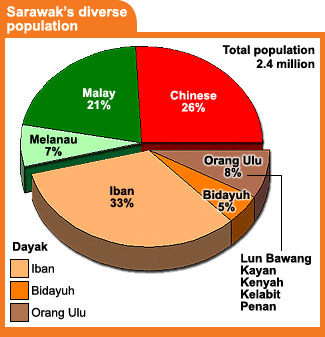 For example, added Anek, the statistics on the ratio of the various major communities - Indian, Chinese, the indigenous tribes in Sabah and Sarawak and the Malays - have generally remained the same and isn’t likely to change drastically.
In short, everyone has roots in the nation and should be given a stake and included in the mainstream “and there’s nothing new about this idea”.
Authorities need to show more tolerance
“My point is this: apart from the May 13, 1969 riots in Kuala Lumpur – and it happened only because certain quarters might have thought that the general election results of May 10, 1969 were not favourable for them – inter-racial relations (despite economic disparities) has generally been very good. Tolerance of one another has been very good for the most part,” pointed out Anek.
The ex-MP concedes that the Hindraf uprising, like May 13, was a blot on the nation’s hitherto unblemished history.
And according to him, “if there had been a little bit of tolerance prevailing on the part of those in power, it could have been resolved without the use of such harsh tactics and the ISA (Internal Security Act)”.
 The moot point - the response to Hindraf was not only the very antithesis of the 1Malaysia approach but didn’t quite tally either with similar promises made under the various other familiar slogans.
This includes the ostensibly colour-blind New Economic Policy (NEP) in the wake of May 13 which pledged the elimination of the identification of race with economic function and place of residence; and the eradication of poverty irrespective of race or creed, besides the stated goals for the bumiputeras in the corporate economy.
“People set up groups and identify themselves as with this or that group for various reasons but mostly to express their dissatisfaction over what they perceive as their being left behind (or out),” explained Anek.
“The real issue behind the May 13 incident and the Hindraf uprising is the economic disparity between the various groups in our society.”
Anek devoted much of his take elsewhere on 1Malaysia on the continuing Dayak dilemma in Sarawak, as one major example.
Here, it is noted, they remain marginalised after nearly a half century in Malaysia as the majority community in the state and holding the biggest block of seats in the state legislative assembly.
“Nadai nyawa kitai Dayak (We Dayaks have no life),” charges Anek, a Bidayuh from Kampung Apar in Singghei, in the widely-used Iban language.
Dayaks 'wallow in poverty'
Using the Finance Ministry yardstick of RM750 per month household income for the hardcore poor, Anek declares that the great majority of the Dayaks fall below the baseline and “wallow in poverty, reduced to being hewers of wood and drawers of water for others” when they are part of the money economy.
How do the Dayaks survive despite the trail of broken promises under the various slogans that preceded 1Malaysia?
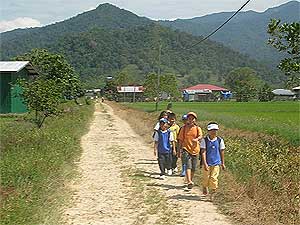
Anek attributes this to the subsistence nature of the Dayak economy which puts enough food on the table: planting padi with the seasons, fishing in the nearby rivers now increasingly polluted by chemical washdown and silting from logging activities and land development schemes, hunting the increasingly-scarce wild boar, and rearing the poultry and livestock fed mainly on a simple diet of tapioca harvested during the padi planting seasons.
However, man does not live by bread alone. The crunch is that the Dayaks have no money to put their children through school and secure a better future for them through education, which serves as an entry into the money economy and the urban life, if not the modern agricultural sector.
 “Agreed that primary and secondary education is free and textbooks are provided even if it’s usually quite late in the year.
"But beyond that, they need uniforms, school bags, shoes, socks, writing books, stationery and reference books and workbooks, all of which cost quite a bit of money,” said Anek.
“The problems are compounded manifold when children seek tertiary education.”
He echoes the oft-repeated Dayak lament that the Higher Education Fund is no great help for the community.
This is attributed mainly to the need for applicants to have guarantors who must have an established income or other assets, the fact that loans even if approved are not given straightaway, and that no assistance is given for the expenses incurred in getting to college.
'Sarawak government lies all the time'
Similarly, when it comes to business, “the Dayaks can forget it because they don’t have any assets or access to credit”, continued Anek.
“The Sarawak government lies all the time when it tells the Dayaks that they have a lot of land but remain poor.
“They should know better than to say such things. NCR (Native Customary Rights) land is considered government land and the Dayaks have no title and therefore they (the land) are no assets.
"Even the timber on their land was considered state property and concessions were issued to others who made billions and left out the Dayaks.”
He noted that during the recent Batang Ai by-elections, many Barisan Nasional leaders told voters that “titles cannot be issued to Dayak land because they might sell them and then they would be without the land”.
Citing the example of Dayak land in Tapah, Siburan and Beratok, he notes that these NCR land “are now in the hands of Chinese and they all have titles. When the Dayaks had them, they had no titles.”
Anek doesn’t explain how Dayak NCR land ended up as titled land in Chinese hands but the places mentioned were initially settled by Dayaks during the communist insurgency years
“The Dayaks will pass through this 1Malaysia phase under Najib and life for them will still remain the same,” said Anek, predicting a picture of gloom and doom.
“There is no evidence that the community will ever become economically viable. They remain mere squatters on NCR land without titles. Unless each Dayak is given title to his NCR land, they will not have assets which they can put to economic use and multiply.
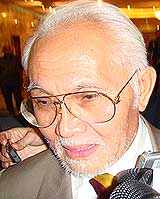 “Of course, that (titles) will not happen unless the present chief minister (Abdul Taib Mahmud) goes.”
Anek ends on a dismal note when he suggests that “by concentrating on asking for our (Dayak) right to the land to be recognised beyond what is provided for under S.5(1) and (2) of our Land Code, we will expose the bluff in Najib’s 1Malaysia if the status quo is maintained”.
“For 1Malaysia to really work for the Dayaks,” stressed Anek, clutching at a straw, “Najib must address the NCR problem. This will help prevent us from ending up doomed as a community of squatters on our own land forever".


Report this comment
Are you sure you want to delete this comment?
This action cannot be undone.